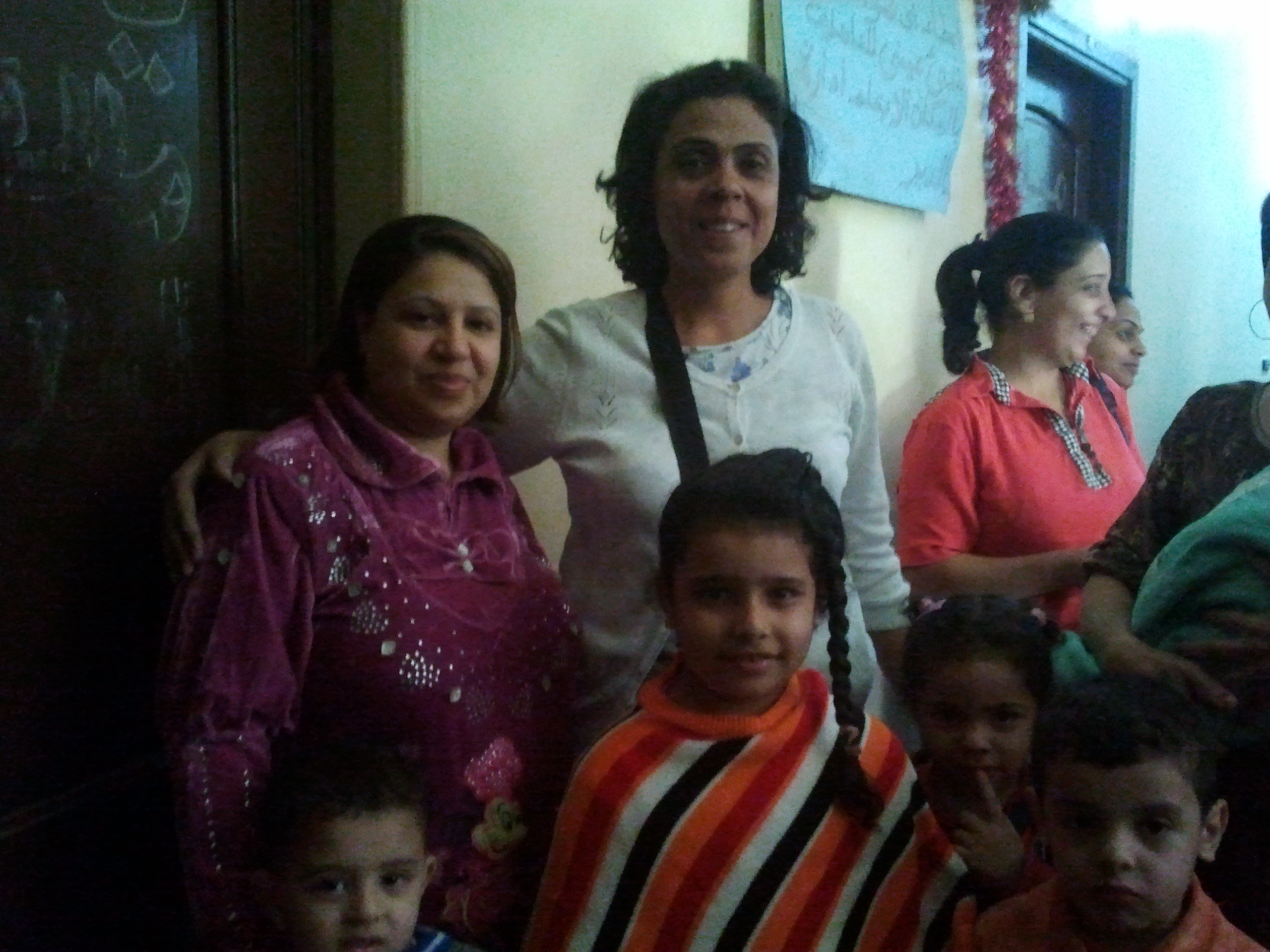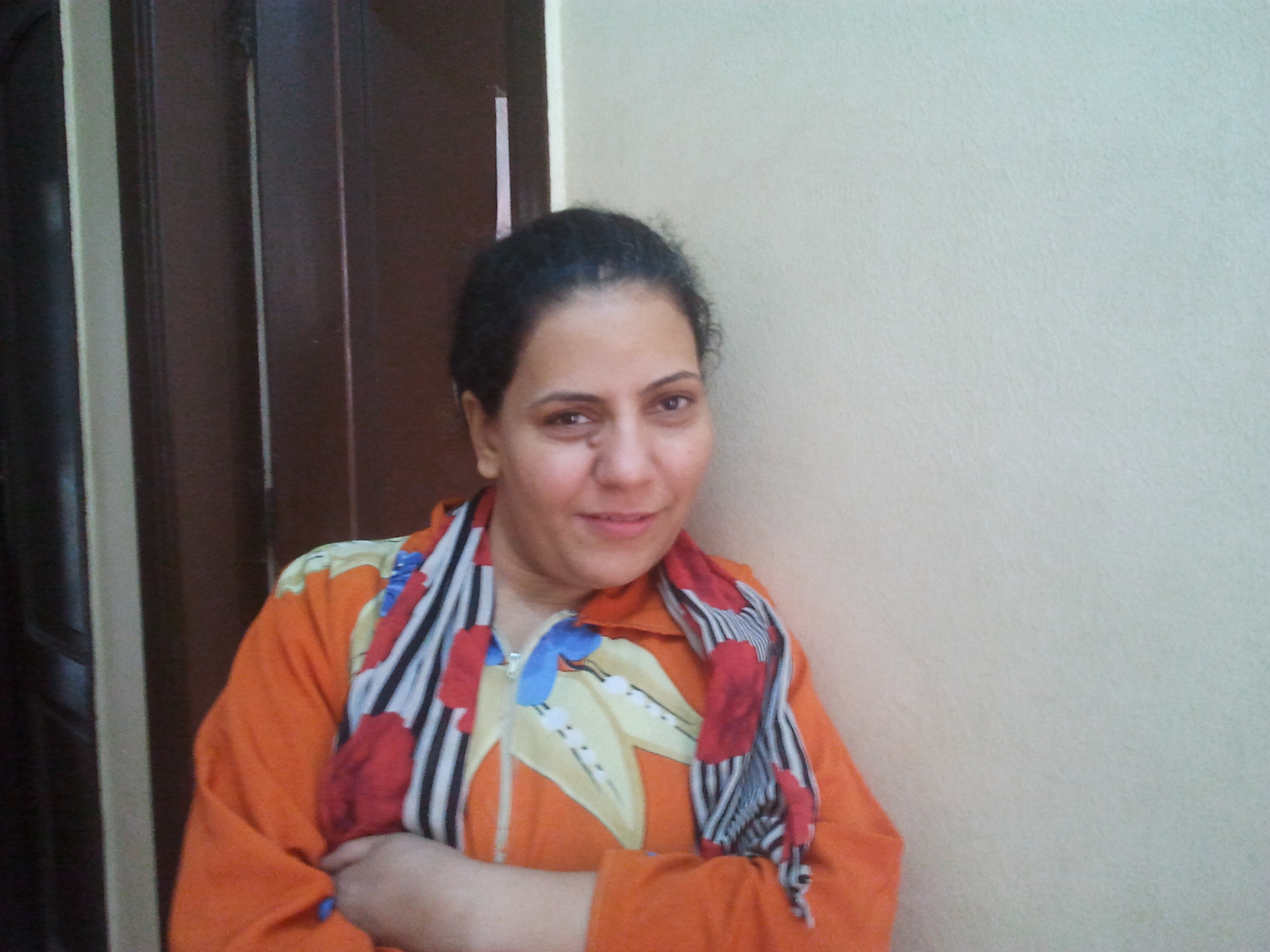
• About
  • Creative Writing
  • Recipes

Mileage Plus Pilgrim

~ Flying through Life

Mileage Plus Pilgrim

Tag Archives: travel

Rubies in the Rubbish – Day Seven

18 Monday Nov 2013

Posted by noreennanz in Uncategorized

≈ Leave a comment

Tags

Cairo, Christianity, Copts, Egypt, Pilgrimage, Spirituality, the Better Life group, the Better Life team, travel

I am so happy, my heart is so full, I can’t sit still.  I can’t concentrate.  I can’t believe I’m doing the very things I have been longing to do – in Egypt.  My gifts are being used, just like the broken parts of the wheelchairs I see piled up in the parking lot.  And I’m learning to value them.  In Germany I have often thought being an English teacher to be beneath my level of intelligence.  Not only is my life as an English teacher reductive, I keep getting the lowest level students, reducing my vocabulary still further!  My once vast vocabulary has been reduced to a few hundred words.  When I speak to native speakers of English, I think I must sound like a simpleton, my English has become so basic.  But here in Egypt, that is exactly what they need.

This morning, a new thought emerges.  It is so beautiful and new, I think it is God speaking to me:  “These are my beloved children.  I am so pleased that you are open to them, I am opening your heart up, just as you have asked me to do.”  It is as though my openness to the poorest of the poor opens me.  As I close myself to the weakest, the most broken, my heart closes in direct proportion.  What an amazing principle.  I have asked God to open me up more and more to God’s love.  And it is happening.  I tingle.  My heart burns.  The condition for receiving this love is to be open to all of God’s creation.

Today is Friday, the Sabbath of the Muslims, and everything is closed.  Most of the sisters are fasting, and there are no activities scheduled for today.  All I can report of this day thus far is that Sister Mariem has prepared a magnificent breakfast for me – breaded fried eggplant, French fries, noodle soup, tomato slices with rucola, and bread with molasses.
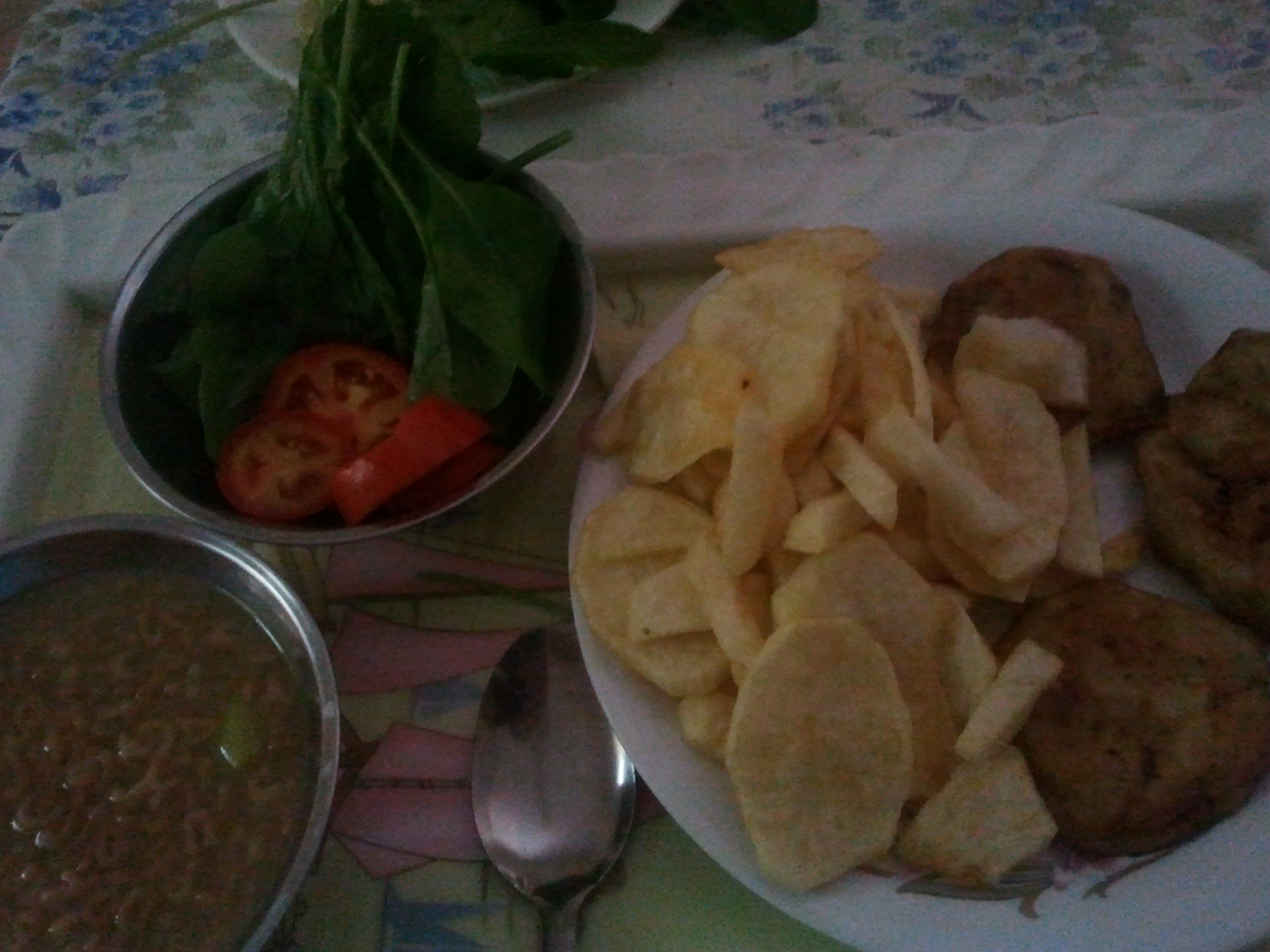
Egyptian breakfast

An Egyptian breakfast, made just for me

Sister Ologaya sits across from me, eating foul – cooked fava beans and pita bread, her favorite breakfast.

Each day I am more impressed with these sisters and their work.  I recall a Bible passage about the worth of a woman.  In Proverbs 31:10 it says, “A wife of noble character who can find?  She is worth far more than rubies.”  These women are celibate, but I believe that in the Catholic Church, when a nun makes her vows, she becomes a bride of Christ.  So, these Sisters are also, in a way, wives.  They are beautiful gems, and I find them models of what I admire in a woman.  I find myself calling them rubies – rubies who have chosen to live in the rubble near the rubbish heap.

Sometimes I wander into the dining room and discover a sister or two working in the kitchen.  They’re often humming pretty songs, which I assume are Egyptian songs worshipping God.

One day when I was in the dining room I showed them that I had Egyptian worship music in my computer – music from a group called “Better Life“.  “Oh, I know that group!” they all exclaimed.  Since then, when I come into the dining room to check and write emails, they ask to hear the music, and then translate the lyrics for me.  Sister Marina even owns the same CD as I, and Sister Elleria sings a song for me.  What a beautiful voice she has, and how lovely these songs are.

Each day they overturn assumptions I had made the day before.  Now I know that the entry to the convent is filled with sand piles because they need the sand for laying the terracotta tiles.  There are plans to turn the garden I thought was so messy into a little paradise.  Parts that look as though they are randomly lying around, are actually there for a reason.

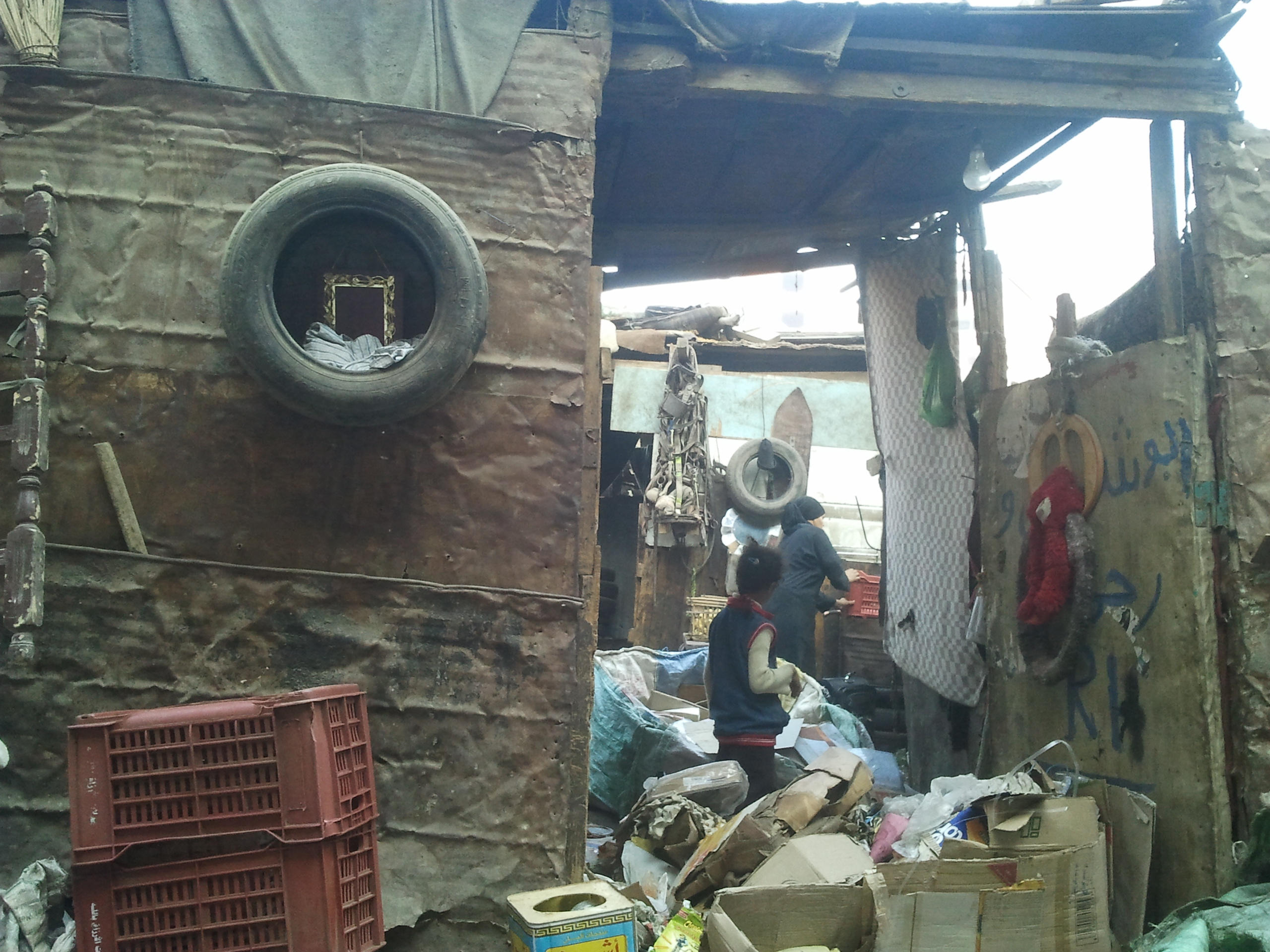
The washing machine I thought had been discarded into and defacing the garden was placed there because it is next to where the handicapped children live.  These children are helping to load trucks with things like the washing machine, as well as the wheel chairs now sitting in the parking lot, for repairs.  They are helping load lumber and furniture onto trucks for delivery to a new school/dormitory the Salam center is opening.  Nothing is wasted here – not the gifts of the handicapped children, and not the leftovers from the meals.  Sister Mariem’s dog gets all the chicken bones.  I thought dogs couldn’t eat chicken bones, but this dog does, and is not harmed.

It seems I am not harmed from the food either.  I tried a little rucola the other day, and my stools were fine afterward, so I’ve been increasing my intake of raw vegetables.  I’m still in the best of health.  At breakfast I look at all the food in the garbage and ask if this is for compost.  No, it’s for the chickens.  You have chickens here? I ask.  Oh, yes, they’re Sister Mariem’s chickens.  I ask to see them.
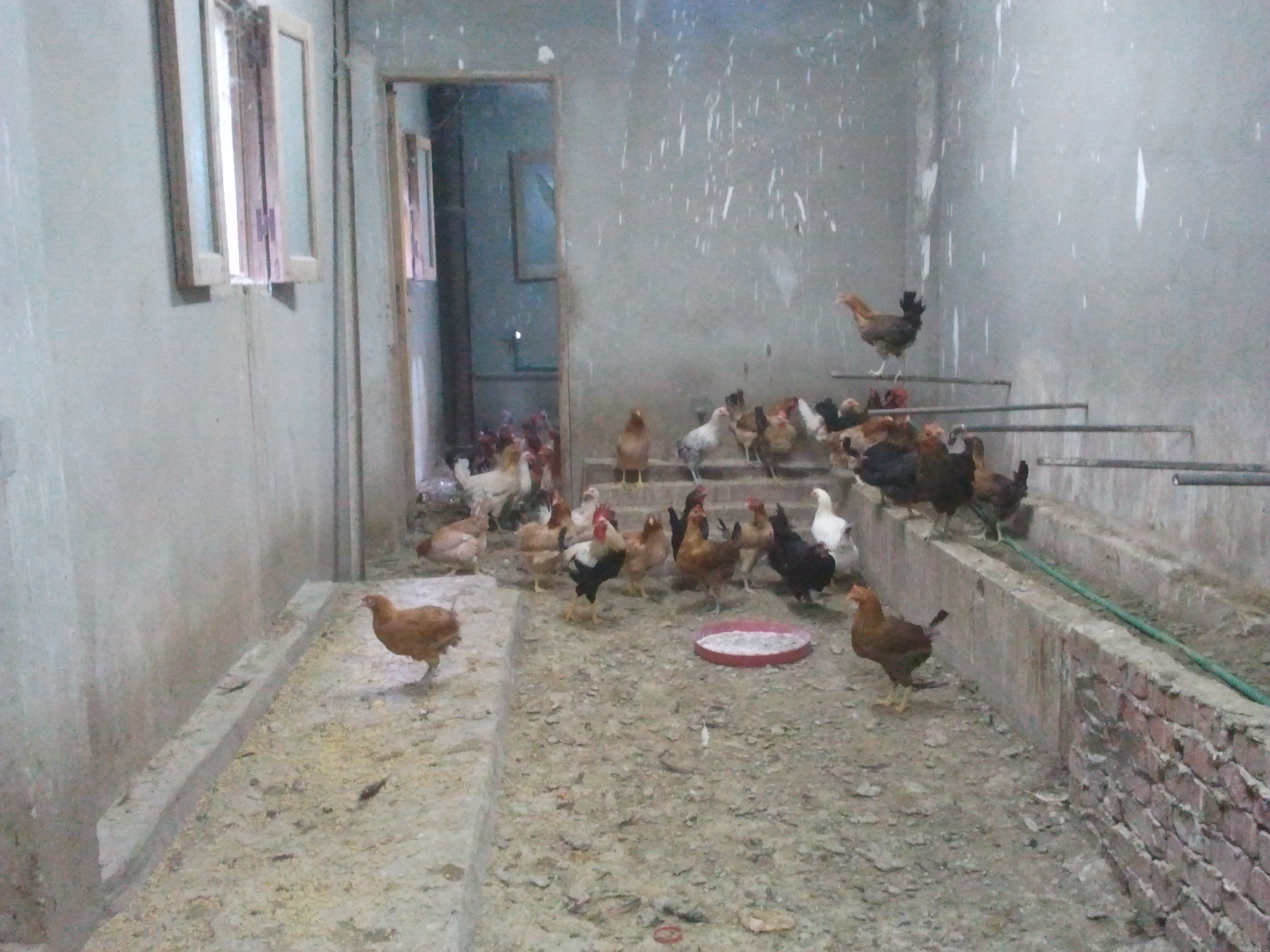
Sister Mariem's chickens

Sister Mariem’s chickens

I am ushered outside to a dilapidated building, where the chickens are kept.  We have delicious eggs nearly every day here.  Turns out these eggs are from Sister Mariem’s chickens.  So I ask Sister Mariem, whose English is the best of anyone’s here, if the garden is organic.  “Oh, yes,” she answers.  “We don’t use any chemical fertilizer on the garden.”  I found out that the tap water is safe, just unpalatable.  So the food here is also safe for Westerners to eat.
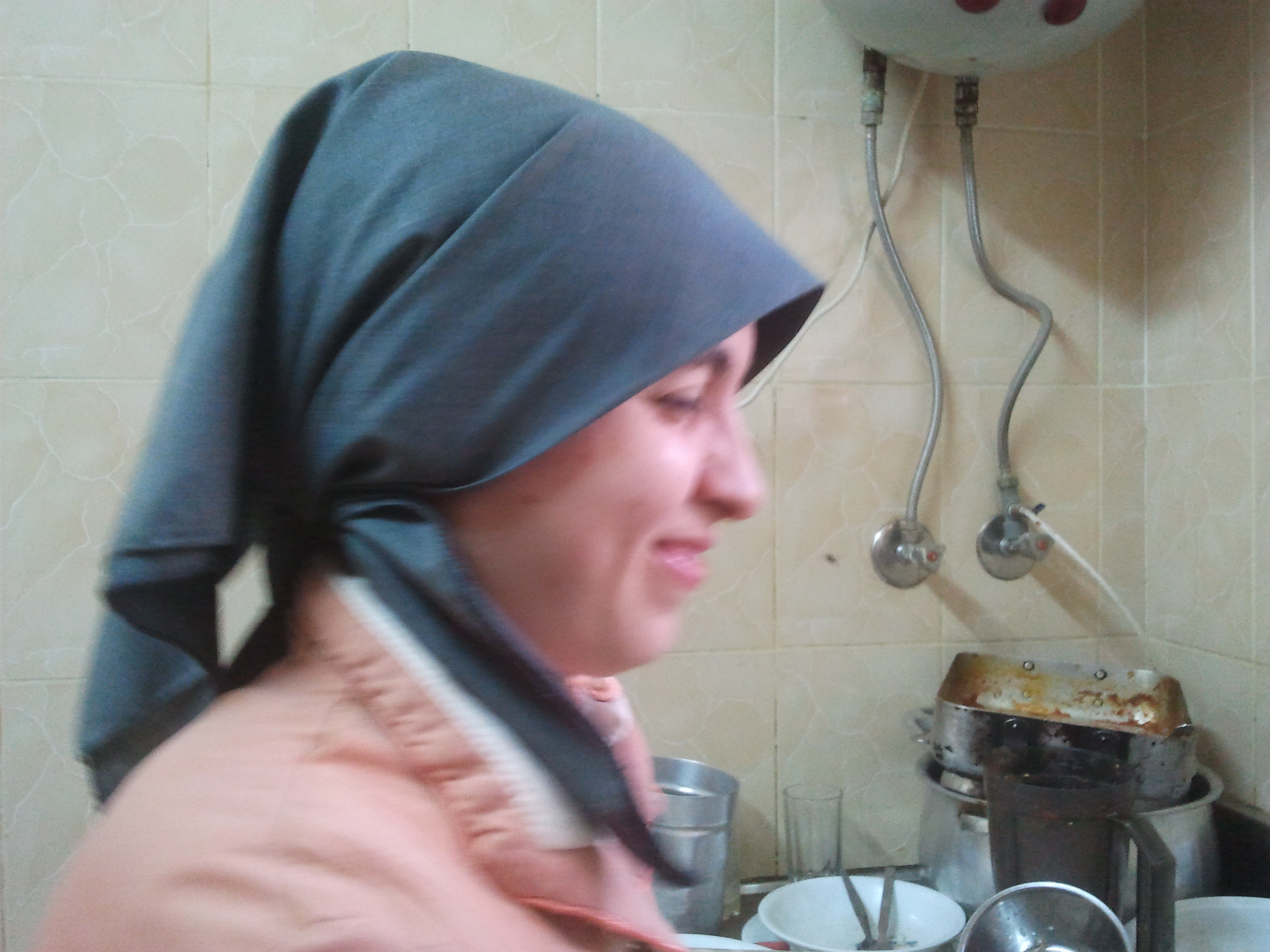
Sister Mariem

Sister Mariem

One day Sister Ologaya shows me the garden.  We discuss the names for herbs and vegetables.  Sometimes her English fails her, and she resorts to French.  Either way, I’m learning so many new words for these things, I can’t keep track of them all, although I write down and practice new words every day.  Green beans, fava beans, lettuce, cabbage, rucola, molokhaya (the vegetable that tastes like slimy spinach), mint, sage, onions, mango, date and orange trees, and more.  She leads me to a stall, where I discover a beautiful young cow and a goat.  They plan to inseminate them so that next year they can have their own fresh milk.  Knowing the sisters, they’ll probably find a nice male cow somewhere and put the two cows together.  The cats have the run of the garden.  My first day I discovered a cat resting on one of the chairs in the dining room.
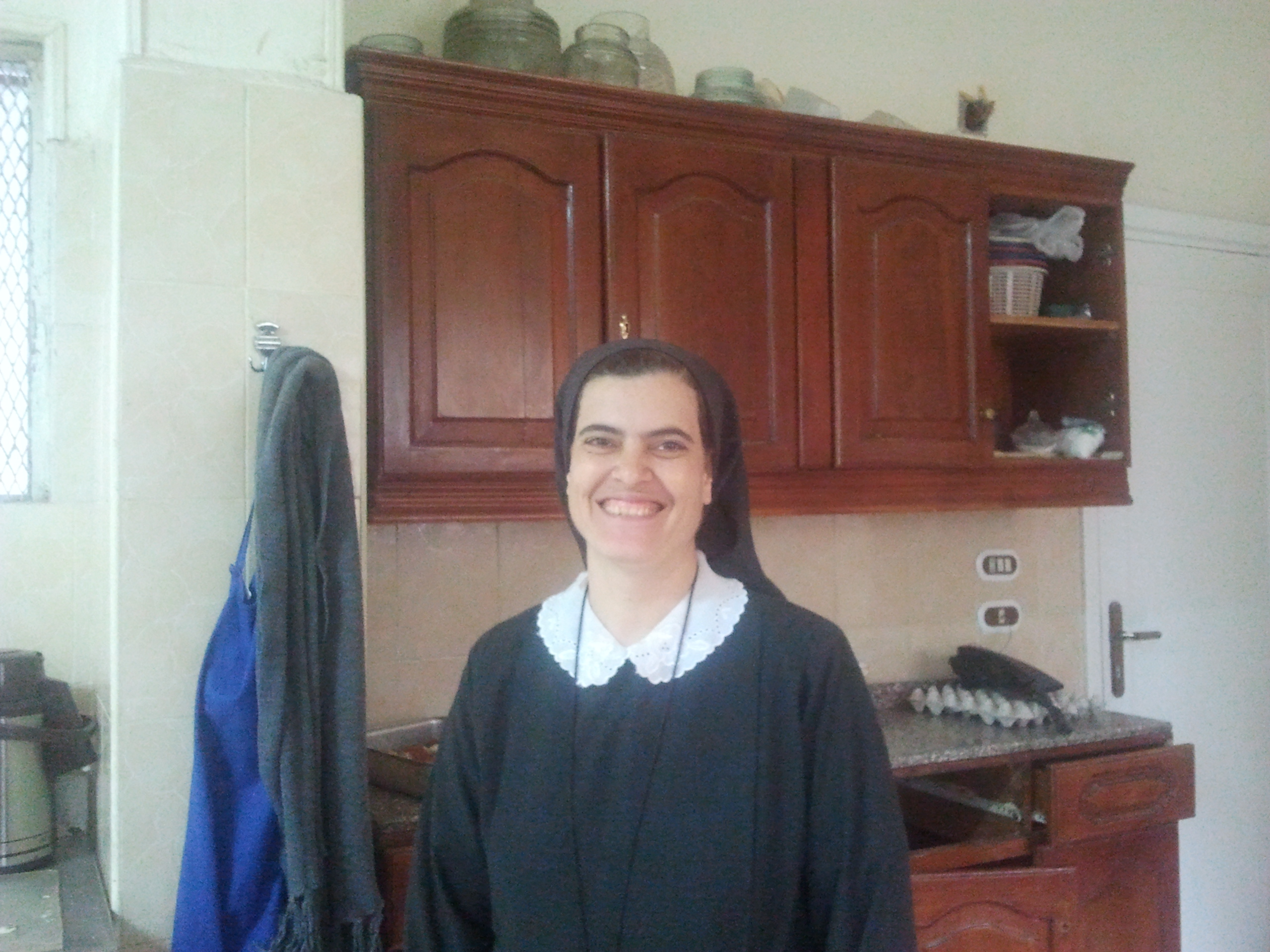
Sister Ologaya

Sister Ologaya

I love this place that converts old apartments into chicken stalls, old hospitals into schools, and lets cats run around the dining room.  I find myself, for the first time, wholeheartedly accepting a Christian community.  I feel like I belong here, and that I want to belong to these women who are so full of love and joy.
Rubies in the Rubbish – Day Six

17 Sunday Nov 2013

Posted by noreennanz in Uncategorized

≈ Leave a comment

Tags

Cairo, Christianity, Education, Egypt, Garbage Area, Pilgrimage, travel

Time is flying and, as the McDonald’s ad says, I’m lovin‘ it!  I am so happy here.  Everywhere I go, people greet me with a smile, and I have to smile.  Maybe I smile first and they smile back.  I don’t know, but I end up smiling all day, and then the people here think I always smile.  It’s not true, sadly.  But inside of me there is a joyful woman, and she comes out here; full of life, love and joy.  She is in love with these people.  I’m not sure I would want to live forever under these material conditions, but for now, I can’t imagine a place I would rather be.  These are the people I want to be with, at least for now.

Today I am bold – I wear my black flowered flip-flop sandals to the garbage dump.  Everybody else wears sandals; I want to risk it too.  The only problem is, just before the school, the road is blocked because of a building under construction, so Rohmy and I have to walk over a pile of gravel and another sand pile.  My sandals and feet are full of sand by the time I reach the school.

I go back to the same kindergarten class I had two days ago.  The same child is sleeping, but he wakes up for the lesson today.  Marleen, the school principal, wants me to teach these children to say the Lord’s Prayer in English.  Five-year-old children who don’t speak any English.  I look at her for a second, doubtfully, but she assures me that these kids know it in Arabic and that it will be good for them to know this prayer in King James English.  Okay…

“Our Father”…I interrupt myself.  “That means ‘Papa”.  They all know the word “Papa”.  “Our Father”…and they all repeat after me a few times.  “Who art”… They repeat this.  “In Heaven.”  They repeat.  How to explain what Heaven is?  I point to the sky and all around me.  We get as far as “Hallowed be Thy Name”, repeating many times, when I decide that’s enough for today.  We have several more days to learn this prayer.

Marleen comes back into the classroom and says to the children, “I love Jesus!”  They all repeat after her, making motions for each word.   This reminds me of the song I learned in Sunday school, decades ago, “Jesus loves me.”  I once heard a sermon about this song that I will never forget.  The preacher said that this song contains some of the best theology in existence, and it says it all.  He said it is a song that says all we need to know.  I would agree, except my prayer for myself is that I will love Jesus more and more, with all the love I have.

I ask Marleen if she knows this song.  No, she’s never heard it.  I sing it to her, and she is amazed.  She finds this song incredibly beautiful.  So I begin to teach it to the children, using the same motions she used, but in reverse, and adding a few others.  Then we continue to the lesson we had two days ago, writing the letters of the alphabet.

Suddenly I am called out of the classroom.  Sister Maria has called the school and told them that I am to visit another school.  She has already told me she wants me to have a look at all the programs this center provides, so I’m not surprised by this sudden change of schedule.

Another woman and I walk a block or two, past people sorting through garbage, past shops, past donkeys carting garbage and goods for sale, to another school.

rubbish processing center

a rubbish processing center

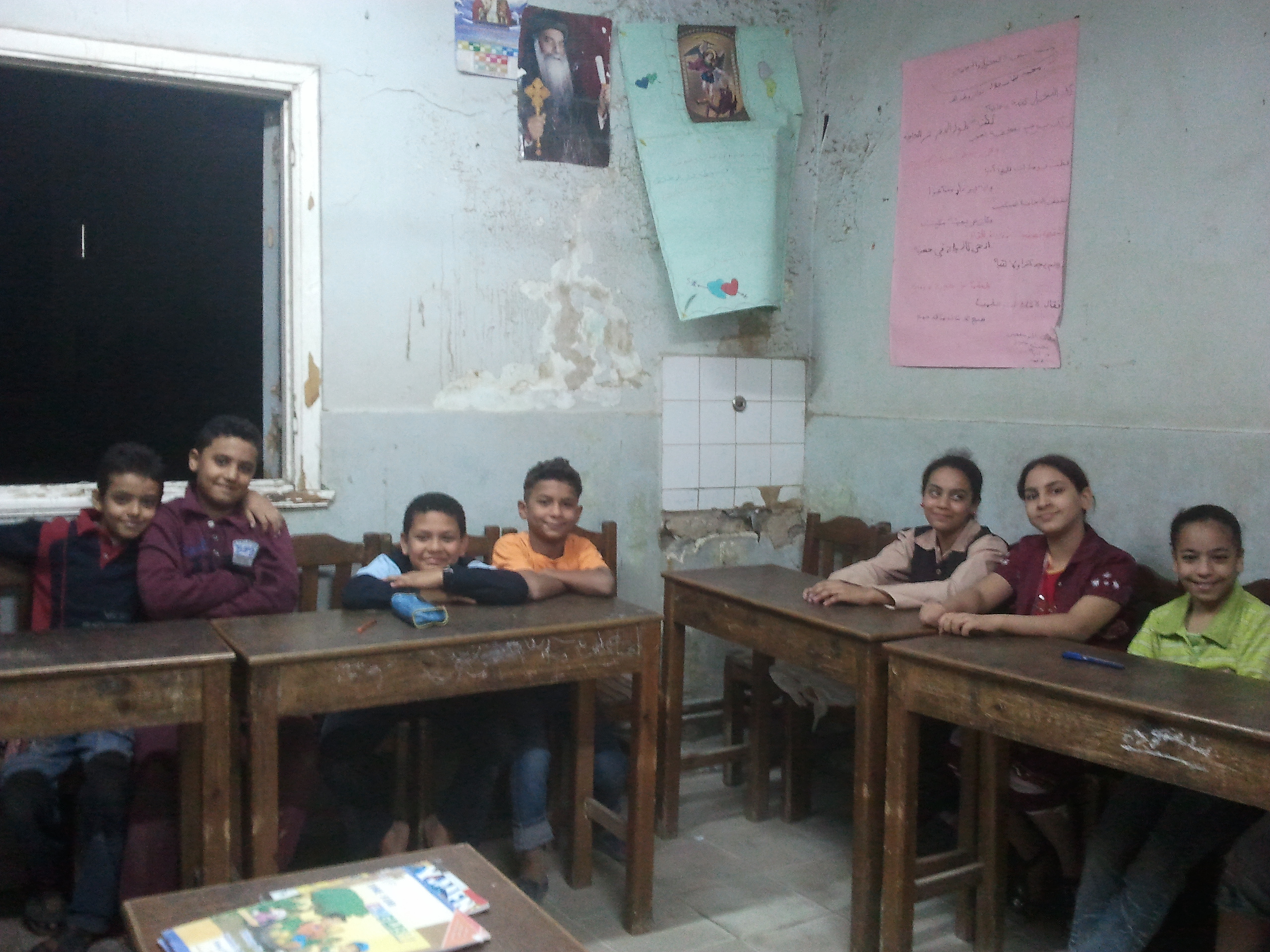
As soon as I enter the school, I see that someone has taken pains to beautify it.  The walls are clean and freshly painted in lovely contrasting shades of pink and maroon.  I glimpse a sign in English, “Literacy Program”, and we enter a classroom with children about eleven years of age.  The teacher, Mariem, invites me to sit down.  I wonder what I am supposed to do here.  She seems to have no idea, so I ask if I can see what the children are doing.  Yes, certainly.  These kids are writing words like “dog”, “cat”, “fish” and “apple” over and over again, each word on one page of a notebook.  Sometimes their method is unorthodox.  Some of the children start from the right side of the page, or the word, and work left, or write only the “a” of apple, for example, all down the page, then get to “p” and so on.  I try and help them see that they need to go from left to right.  They already know this, at least in theory.  And then I help them write an entire word before going on to the next.  I am impressed that these children haven’t given up.  They are proud that they can write these words.

kids in the literacy program

kids in the literacy program

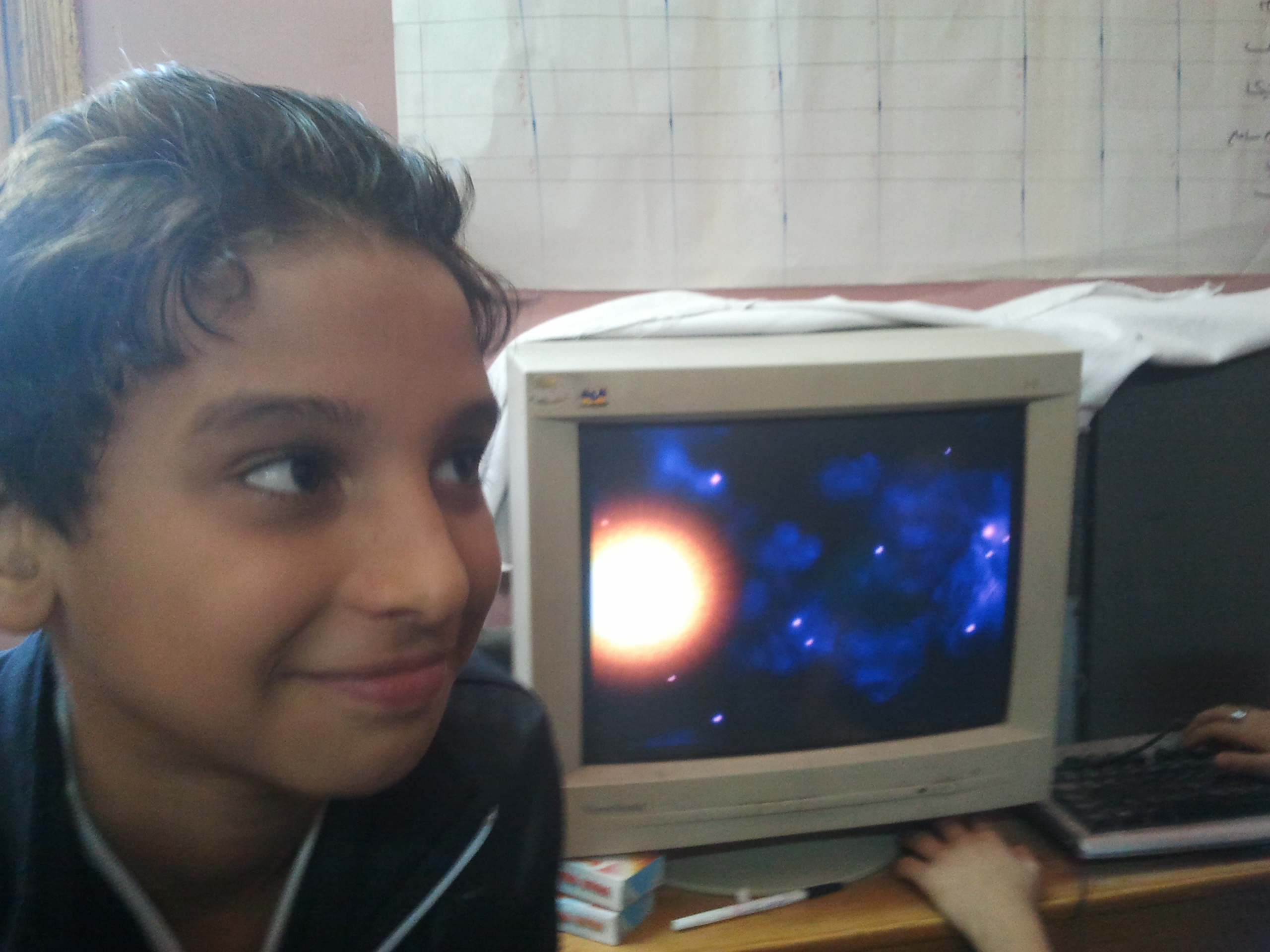
There is also a computer in the classroom.

computer in the literacy program classrom

computer in the literacy program classroom

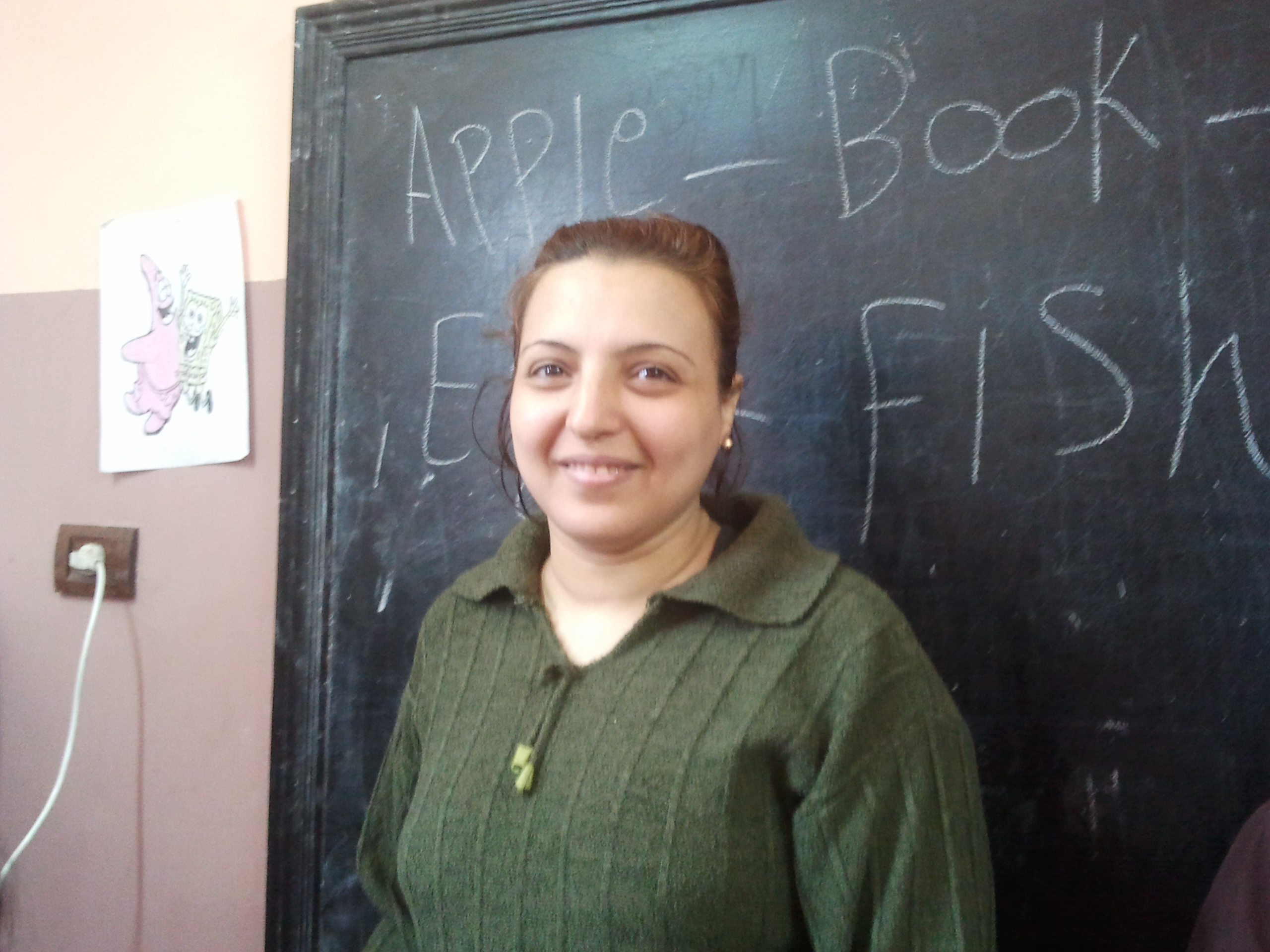
One of the girls in the class gets to play a computer game when she’s finished writing her words.  Mariem comes every day to teach these children math, Arabic and English.  Perhaps more too.  Her English isn’t very good, but it is adequate to teach these children all they need to know.  Some of my students in Germany could come here and teach these kids to speak English.  Mariem is living out a principle I started learning a few years ago.  Give back what you have received.  Don’t wait for it to be perfect.  It is good enough if you know just a little more than your students.  And this applies to anything in life.  Give back what you know.  Don’t wait to be perfect.

Mariem

Mariem, the teacher in the literacy program

It’s time to leave.  As my escort walks me down the stairs, I look out the window.  Just behind the school walls, I see the garbage dump.  But the courtyard before it is magnificent!  Someone has made a basketball court/soccer field, and painted the walls sky blue with pictures of people playing sports.  As yesterday, I am struck by how much love, care and attention is given to these children, most of whom are garbage pickers themselves.

beautiful gym behind garbage dump

A beautiful gym right behind the garbage dump

On the ride back, as we pass shop after shop, I look – just for fun – to see how many apples I can find.  Usually I see oranges, guavas, bananas, pomegranates, peppers, even potatoes for sale, but rarely apples.  Finally, we pass a shop that sells both golden and red delicious apples.  Now I know these kids aren’t writing “apple” in vain.  They do eat apples in Egypt.

Rubies in the Rubbish – Day Five

15 Friday Nov 2013

Posted by noreennanz in Uncategorized

≈ Leave a comment

Tags

Cairo, Cairo Education, Christianity, Copts, Education, Egypt, Pilgrimage, travel

Isn’t day five the day you always get frustrated?  I remember this from my zen days, doing week-long meditations.  Day five was always the day when I was in a bad mood.  Day five, when you’re on vacation, and everything starts to become routine, and you notice the things that aren’t right.

The first thing I notice today is that Sr. Maria is nowhere to be seen, and I need a driver to take me to the school.  There is nobody today in the convent dining room who speaks English.  Marsa has her few words, like “I like you”, and “You are beautiful,” and “We are happy to meet you.”  But I want to know where Sister Maria is, and whether I can get a ride to the madrassa.  They’re waiting for me, after all.  Marleen said I could come every day.  They’ll be asking what happened to me.

I reach into my pocket for the phrases I’ve written down on a piece of paper.  Ah, yes, there it is.  “Where is…”  Where is Sr. Maria? I ask Nagette.  She points upstairs and mimics “sleeping” with her hands.  Sr. Maria asleep at 8:30 am?  I can’t believe it.  I decide to go outside and look for Rohmy.  I just saw him on my way to the convent!  But now he is nowhere to be seen.

I walk into the ornamental garden, looking for Rohmy.  From my room, looking down, the garden looks beautiful.  From inside, it is a mess.  There is dirt and dust everywhere, the fountain seems to be broken, and there are little bits of garbage lying around.  There is only one chair in the garden, and it appears to be filthy – and broken.  There is an abandoned washing machine in the middle of the path.  Why doesn’t anybody maintain or fix the things that are broken?

I ask Magdy, the elevator operator, “Feyn Tesoni Maria?”  Today my new word seems to be “where is…?”  He rattles off something in Arabic, and says something in English about two o’clock.  When I ask about Sr. Maria, he says, “Nine or ten o’clock.”  I don’t know how to ask politely in simple English, so I ask, sounding like a commander, “Could you tell Sr. Maria that I would like to see her?”

One of the things I notice here is that there is a lot of sitting around.  Women sit on benches outside the hospital and wait for someone.  The steps of each floor of the hospital are so crowded with people sitting, sometimes I can hardly wriggle through them to walk downstairs.  Why don’t they sit on the chairs in the waiting room?

And it’s not that much different with the workers.  They seem to have plenty of time on their hands.  The other day, a doctor in the ER had enough time to show me the entire complex.  Yesterday, Aowny told me that life is hard in Egypt; people have to work twenty-hour days to support their families.  He told me he has to work from 9 am until 10 pm every day.  Yes, he was on duty.  But he also had a few hours to sit and chat with Sr. Elleria and me.

On my second day here, the lock on the door to my floor of the hospital broke completely.  The door is metal, and the lock as well.  Some of the metal on both the door and the lock appears to be rusty, and screws are loose on both sides of the lock.  I was unable to lock the door.  Behind the door there are offices with valuable office equipment.  It took me two days of asking Sr. Maria before someone actually repaired the lock, and then only from one side.  I have found that if I use the key to pull on the door, I can get in and out once I’ve unlocked it.  But why doesn’t someone repair the entire lock?

I know that new stairs for the convent are being built, but why is there sand everywhere?  Why don’t they pave the parking lot instead of leaving the sand there and letting it blow over everything?

On my floor I can’t turn on the light in the bathroom that doesn’t stink because the light bulb is broken.  There are chairs in the lobby of my dormitory with broken rungs on the back rests or missing seats.  The convent kitchen has cupboard doors missing and knobs broken off.  The knobs on one of the stoves are missing.  But people make do.  As Dr. Boussar said, “You see, it works!”

This morning, since neither Sr. Maria nor Rohmy is anywhere to be found, I have plenty of time on my hands.  How to fill this time?  I decide to clean my room.   But I don’t know how.  There are no buckets anywhere, no mops, no dustpans, although I have found a broom.  I don’t know how they clean rugs here, and my rug is full of sand.  The floor is coated with a film of sandy dust after having lived here for five days.  I ask a girl in the office for someone to help me clean my room.  I find a girl in one of the offices.  It turns out we have already met.  I should remember her, because her name is similar to mine – Shereen.  Almost sounds like Noreen.  But I have met so many people, I can’t remember her well.  Marleen, Sabreen, now Shereen.  I apologize.  She smiles and says it’s okay, and that she will send the cleaning lady in a few minutes.

Soon the cleaning lady arrives.  I show her the bathroom with the broken light bulb.  I tell her the other bathroom stinks, but even I can’t smell it any more.  Have I gotten accustomed to the smell, or is it truly better, after I have poured at least two liters of water down the drain?  I don’t know.  But the cleaning lady won’t let me do a thing.  I learn that there is no vacuum cleaner here, so the cleaning lady simply replaces my rug with one in another room.  She cleans the floor, the toilet, the shower, the sinks.  There are two things that will not happen.  She will not let me clean my room myself, and the light bulb will almost certainly not be replaced.

As I stand around, watching her work, I feel like a bossy colonialist.  I am embarrassed.  But after decades of sacrificing my needs to others, and years of working on myself, I have learned that I need to take care of myself and my needs, and that self-consciousness will lead to only more inhibition.

As I write, I think I sound like a spoiled, petulant Westerner who thinks her culture is superior to this one.  True, there is a strong perfectionist streak in me.  One thing about learning to express my wishes and needs is that I think I have gotten bossier and more dominant than I was when I was compliant and submissive.  So be it.  I have also learned that God loves me as I am, and that I am allowed to be a bit bossy if that is the only way I can find to have my needs met.  As long as I think I’m being reasonable, it should be fine.  I wish the Egyptians would let me clean my room myself.  I wish they could see and wish to replace broken light bulbs and fix smelly drains.  I think they see, and yet they don’t see.  Germans love the friendliness of Americans, but I doubt Germans will ever be known for their friendliness.  I know the Egyptians long for a country that works better, but they don’t seem to know that they have be on the look-out for what needs fixing, and then somehow get working on it.  But maybe this is too much to expect in a country, in a continent, that is known for being laid back.

On my way to lunch, I pass a truck with two very old, dilapidated wheelchairs on a sort of platform in the back of the truck.  A man sitting on a wheelchair is sitting inside the belly of the truck, and two men are trying to repair two wheelchairs that look beyond repair.  I remember something Mohammed, Peter’s and my tour guide on our last trips to Egypt, said:  “Egyptians will salvage anything.”  Maybe the washing machine in the garden is also awaiting repair.  Who am I to judge?

I also learn that Sister Maria was indeed not sleeping.  She left the convent at 6 am today, and was relying on another sister to bring me to my work.  The other sister and I never met up.  No matter, Sister Maria has found work for me in the school here in the compound for this afternoon and evening.

*

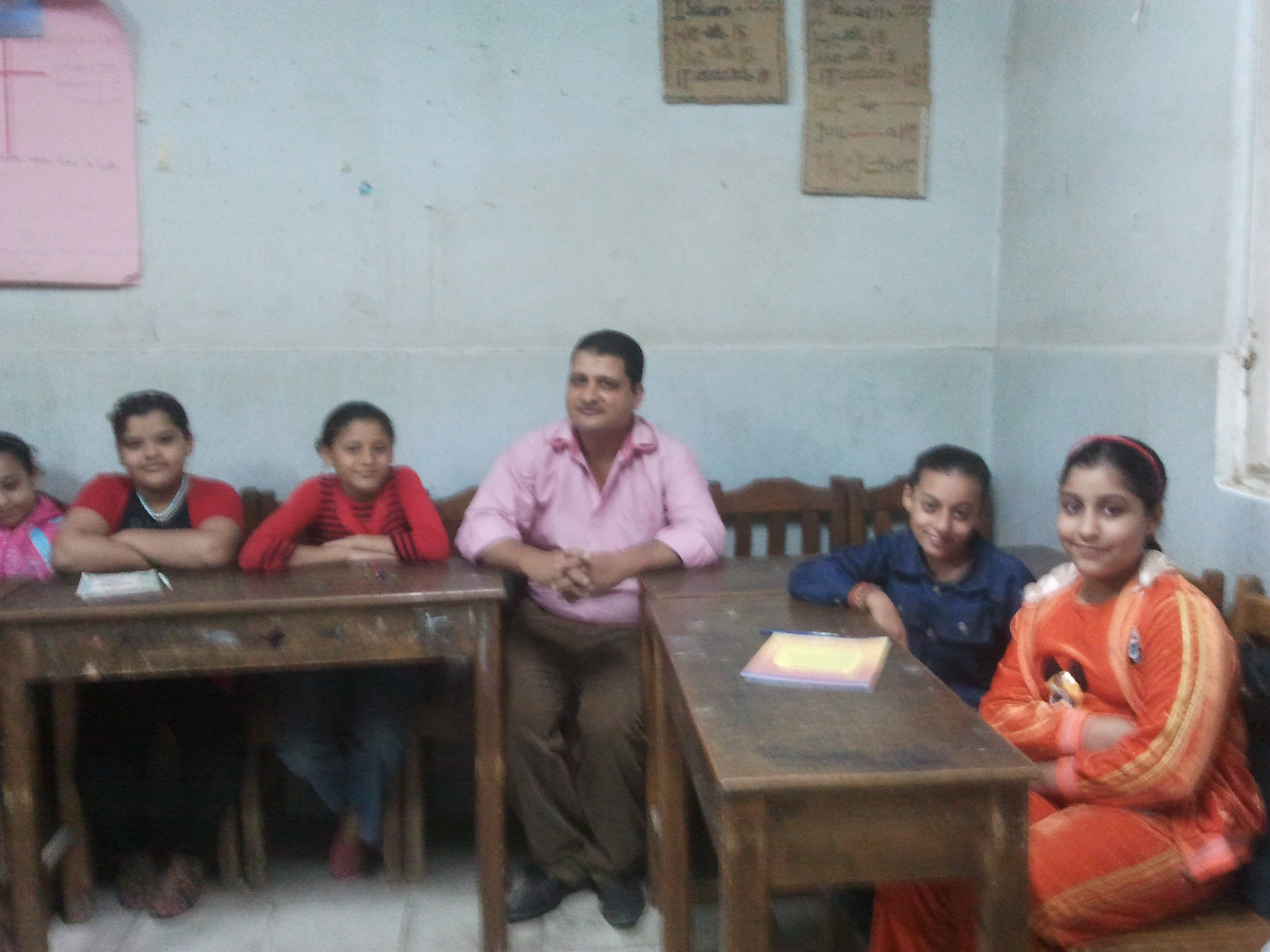
I’ve just spent three hours working with the children, and it is wonderful!  They are so friendly, so eager, so polite.  Their teacher, Reda, allows me to do most of the work teaching the class.  He’s unbelievably humble, asking me how he’s doing as a teacher.  What I see is a really loving man who loves his kids.  Love is what comes across to me the most in this entire center.  I see love wherever I go, whether in the hospital, the schools, or in the convent itself.

I find myself standing in the same classrooms that looked so incredibly filthy and decrepit on Sunday.  Filled with kids, they are filled to the brim with life and joy.  In Reda’s class, every time a student gets an answer right, everyone claps.  Reda tells me that these kids are weak students.  Their books are meant for private school students at the same level, with role plays like someone calling the operator at the Egyptian Museum, asking when the opening hours are.  These kids will probably never know enough English to be able to call the Egyptian Museum.  I wonder if they’ve ever been to that part of Cairo and seen the mummies.  I live in Germany, but I’ve seen the mummies in the Egyptian Museum.  (They have been there, I later learn.)Image

I teach one of the classes the present continuous form of the verb “to drive”.  I’m driving a car.  This is supposed to be review.  Then we get to the past tense.  I start asking the children, “Did your father drive the car yesterday?”  Child after child answers, “No, he didn’t.”  I look at Reda.  He tells me, “These kids are poor.  They don’t have cars.”    So he and I adapt the question to, “Did your father sit in a bus yesterday?”

Reda tells me that even though these kids are weak, he doesn’t hit or punch them.  The fact that he is telling me this makes me wonder how many teachers in this country hit their pupils.  “These kids are my brothers and sisters,” he says.  I never had a teacher who called us students his or her brothers and sisters.

Reda's (and my) fifth graders

Reda’s (and my) fifth graders

I have to revise what I said about Egyptians not working very hard.  It is nearly 8 pm and Reda is still teaching.  He got up at 4 am today to teach in another school, taught there all day and then came to this school to teach in the evening program.  He’s there every evening, five days a week.  He has to take three buses to get to this school, and he often gives private lessons as well.  Sometimes he only gets four or five hours of sleep because he has to work so hard.  “I’d come here, though, even if they didn’t pay me.”  What would make a person miss out on three hours of sleep, just to be able to work there?  This must be a very special place.

Rubies in the Rubbish – Day Four

14 Thursday Nov 2013

Posted by noreennanz in Uncategorized

≈ Leave a comment

Tags

Cairo, Christianity, Coptic, Education, Egypt, Garbage Area, Pilgrimage, travel

Rohmy picks me up at 8:30 to drive me to the garbage dump.  Today I will be working in a Coptic mission school a block away from the garbage dump closest to the Salam Center.  He walks me up some dark stairs to the school director.  “Nice, isn’t it?” he says.  It is nicer than the abandoned hospital/school I saw on Sunday.  Actually, I’m getting used to this.  It’s not bad at all.  The walls are straight, the floors are smooth, there are functioning fluorescent lights along the corridor, and the usual sparkly garlands decorate various areas.  Today I see a sparkly crepe paper cross in the entrance to the school.  I meet Marleen, the school director, who takes me to the classroom where I’ll be working today.

Marleen

Marleen

From my experience of schools, I expect Marleen to be authoritarian, and she does look serious, but she’s not strict at all!  I’m going to love it here.  I have a group of adorable kindergarten kids, and their beautiful teacher, Bosma.

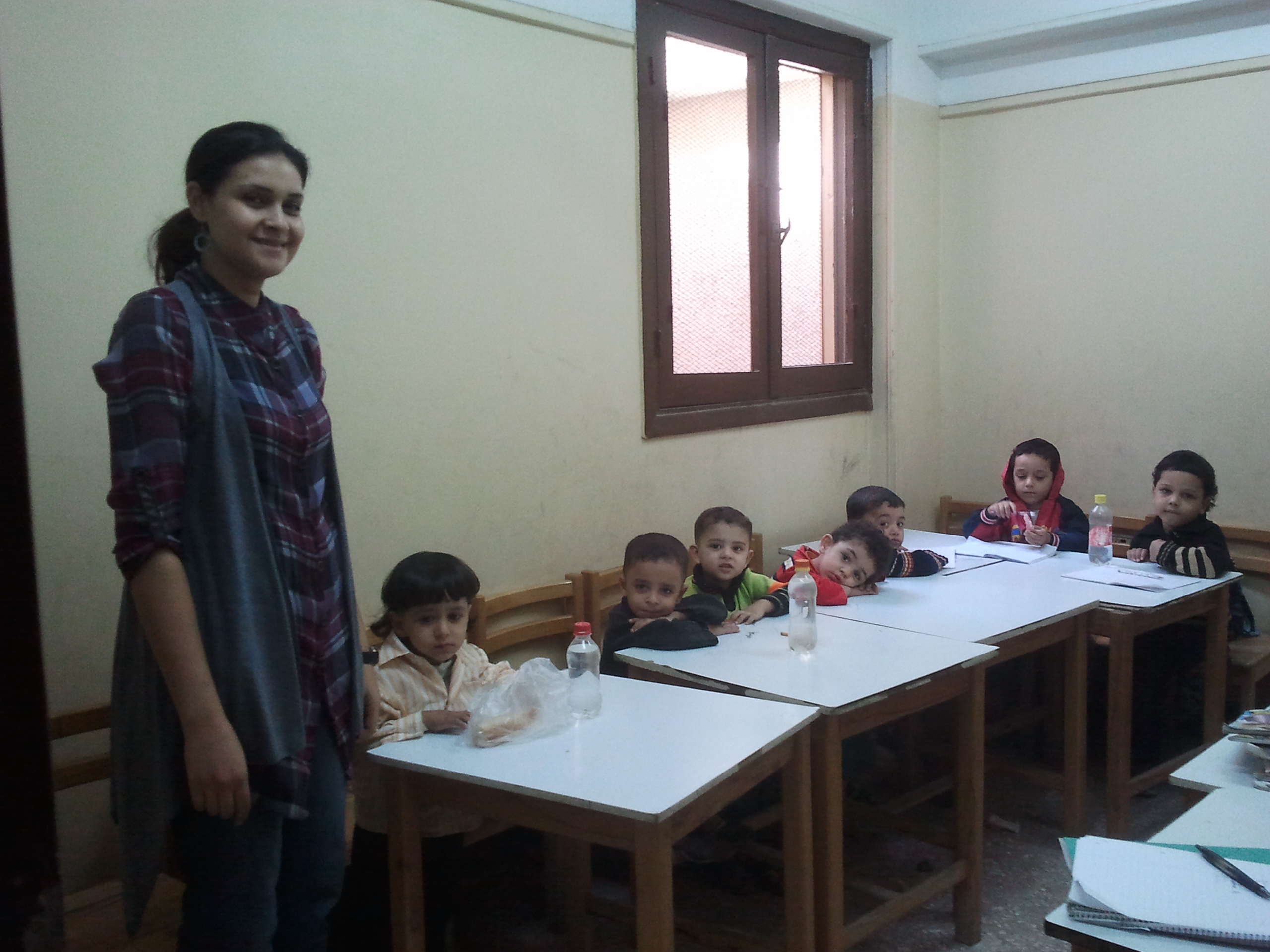
Bosma and her kindergarten class

Bosma and her kindergarten class

Bosma tells me she doesn’t speak any English, but she knows enough to get these kids started.  I’ve had images of helping them to identify objects, but I quickly learn they aren’t nearly far enough.  They stand up and yell, “Good morning!” in unison when I enter the classroom.  And suddenly, they are very shy.  I know enough Arabic by now to say to them in Arabic, “My name is Noreen.  What’s your name?”  But they won’t answer me.  One little boy is sitting at his desk, fast asleep.  Gradually, I learn each child’s name and then try and get them to say, “My name is….”  It sort of works.

Then I learn that they have already been working a little on English, learning to print the letters of the alphabet.  They know the words, “capital letter” and “small letter”.  Some have only gotten to “A”, while others are already as far as “I”.  And I thought they could learn to write their names.  Perhaps in two weeks they’ll be this far.  Some can’t even hold a pencil, while others are very quick.  Some write neatly on the page, while others have their letters willy-nilly, all over the page, with huge small e’s, for example, rivaling the capital E’s in size.  It is difficult teaching them words like “small” and “large” when I don’t know any Arabic.  But fortunately, yesterday at lunch one of the sisters taught me “little spoon” and “big spoon”.  So I say something like “kebir” for “big” and “sua’aya” for small.  I have great difficulty trying to show one girl how the small “f” is different from the capital “F”.  She has huge angular lines for both, or she puts the curve at the bottom of the letter, like a backwards “j”.

Gradually, as the hour passes, the children warm up to me, looking into my eyes with long smiles.  I adore them!  We review the sound of the letters they’ve just written, and say our names once more.  I teach them a few words I’ve either just learned in Arabic myself, like “water” or “bread”, “table” and “chair”.  I think I’m finished with the lesson, when another teacher walks into the classroom to observe and says something in Arabic about something we’ve forgotten to do.  But she acts so reverent, I figure it must have to do with praying, when she turns off the light and the children stand up, hushed.  I somehow surmise that we’re going to do the sign of the cross.  I learned that yesterday too at lunch.  It’s amazing – each day I’m being prepared ahead of time for what is to follow.  I don’t know how to do it in Arabic, but I say the words in English, and the children follow me.  Apparently I’m doing it right!  “In the name of the Father”, and I touch my head with my right fingers, “and the son”, and I touch my belly, “and the Holy Spirit”; I touch the left shoulder and then the right; “in me”; I touch my heart; “amen”; I fold my hands over my heart in a praying motion.  I don’t feel like an imposter, even though Protestants don’t cross themselves. I think this is a very good idea.

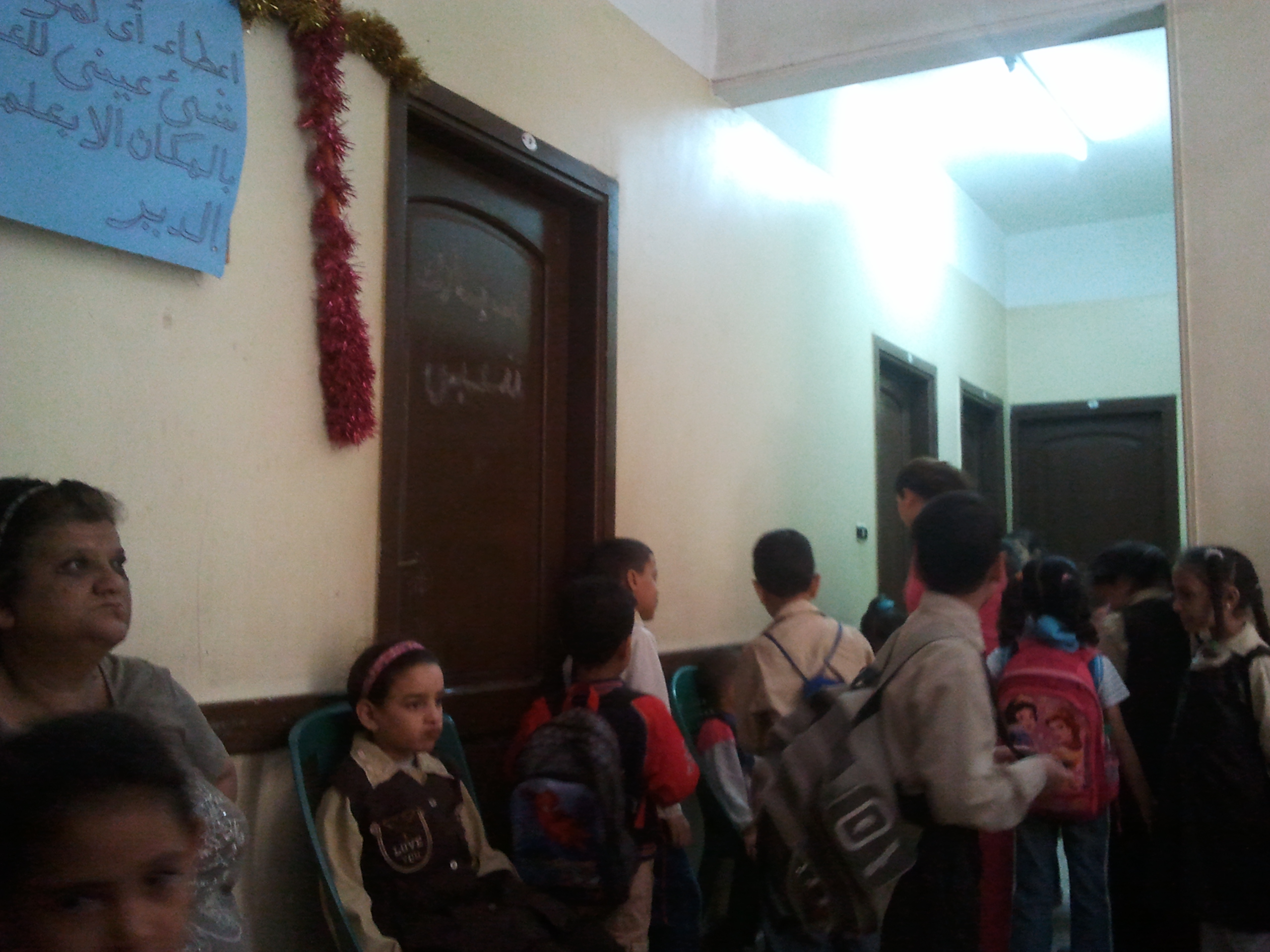
Apparently there is no more time for me to teach a lesson today.  At 10:30 the children from every grade go home for the day, all of them crammed into the lobby as they wait for their parents to arrive.  kids waiting to be picked up.

kids waiting to be picked up.

kids waiting to be picked up.

The little boy who was sleeping now wants a hug.  I pick him up and he kisses my cheek.  I’m in love!  Some of the older students smile at me, and we converse in English.  They’re doing pretty well!  One of the teachers, or assistants, or parents, I’m not sure what she is, but her name is Sabreen, motions to me that she will be walking me back to the convent.

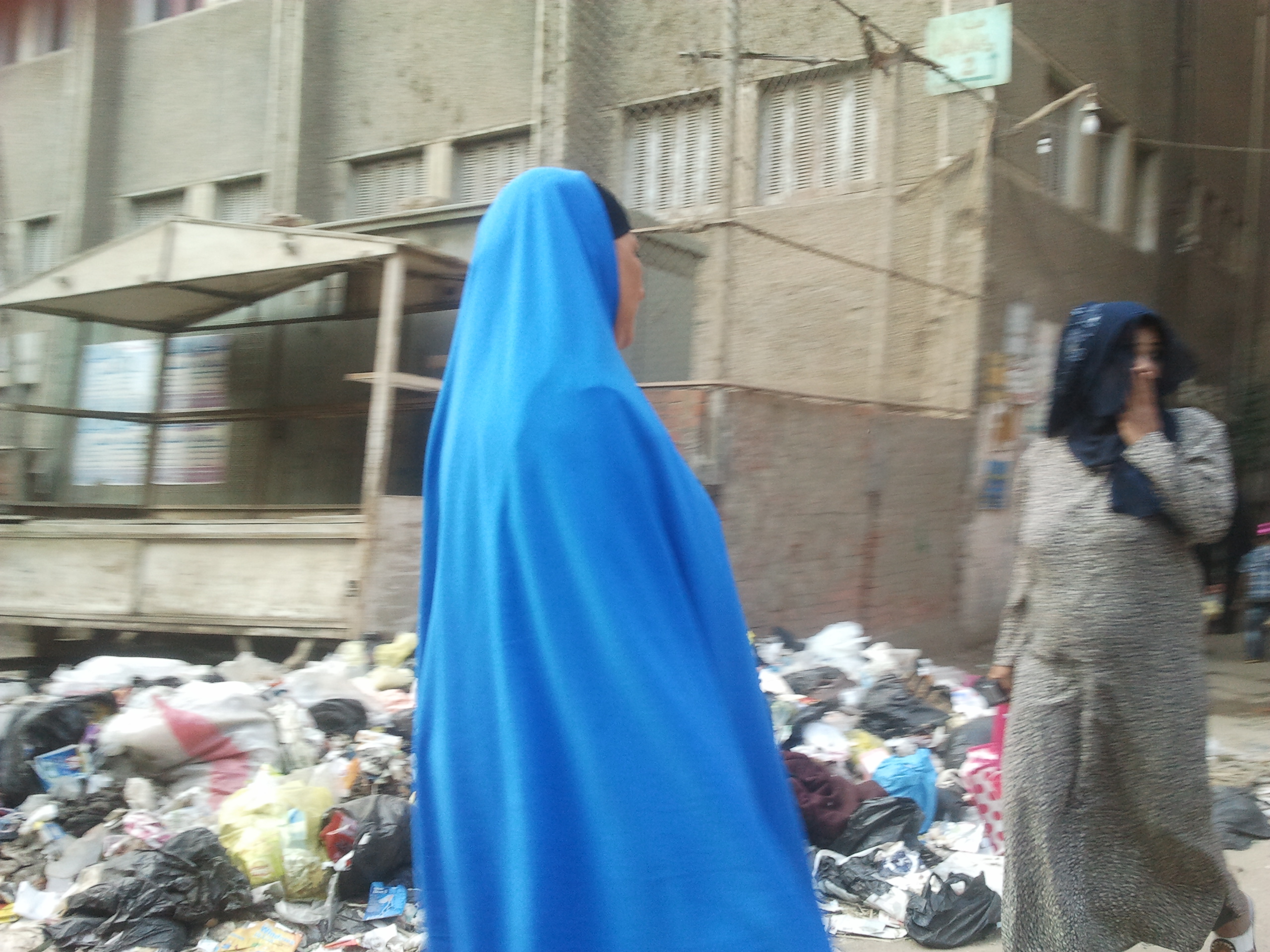
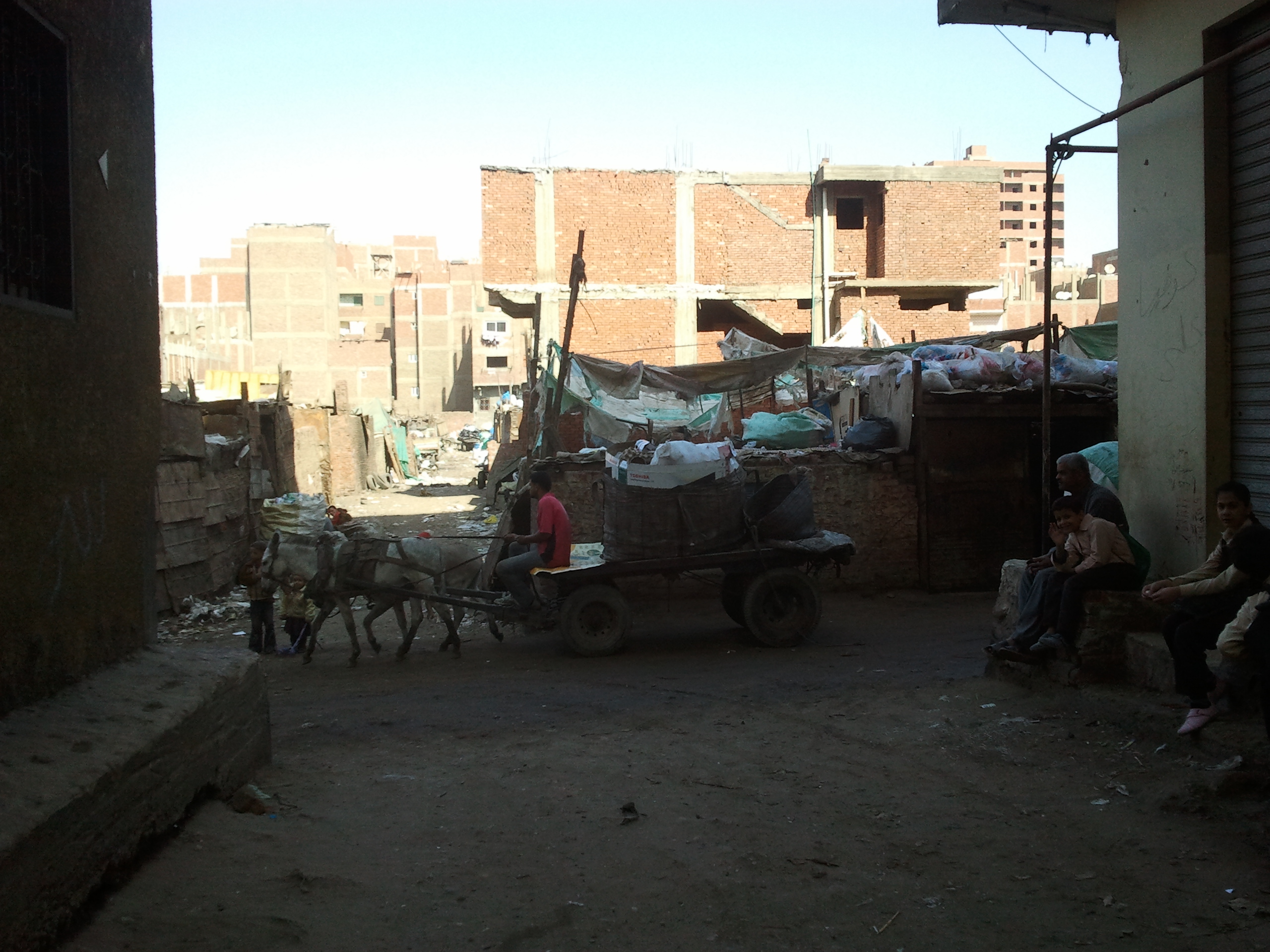
Wow!  Now I am in a real Cairo neighborhood, outside the locked gates of the convent and hospital.  It is an amazing walk.  I see the garbage dump, walled in, with trucks and donkeys in the streets, carrying garbage.

Donkeys carrying the rubbish

Donkeys carrying the rubbish

I see a few people picking through the garbage to sort it.  The roads are dirt, uneven, with little hillocks and gullies.  Now I see that they are actually in a grid pattern.  This must be what New York City looked like 150 years ago.  Every now and then there is an indentation with a tire covering it.  I ask Sabreen what that is.

Sabreen

Sabreen

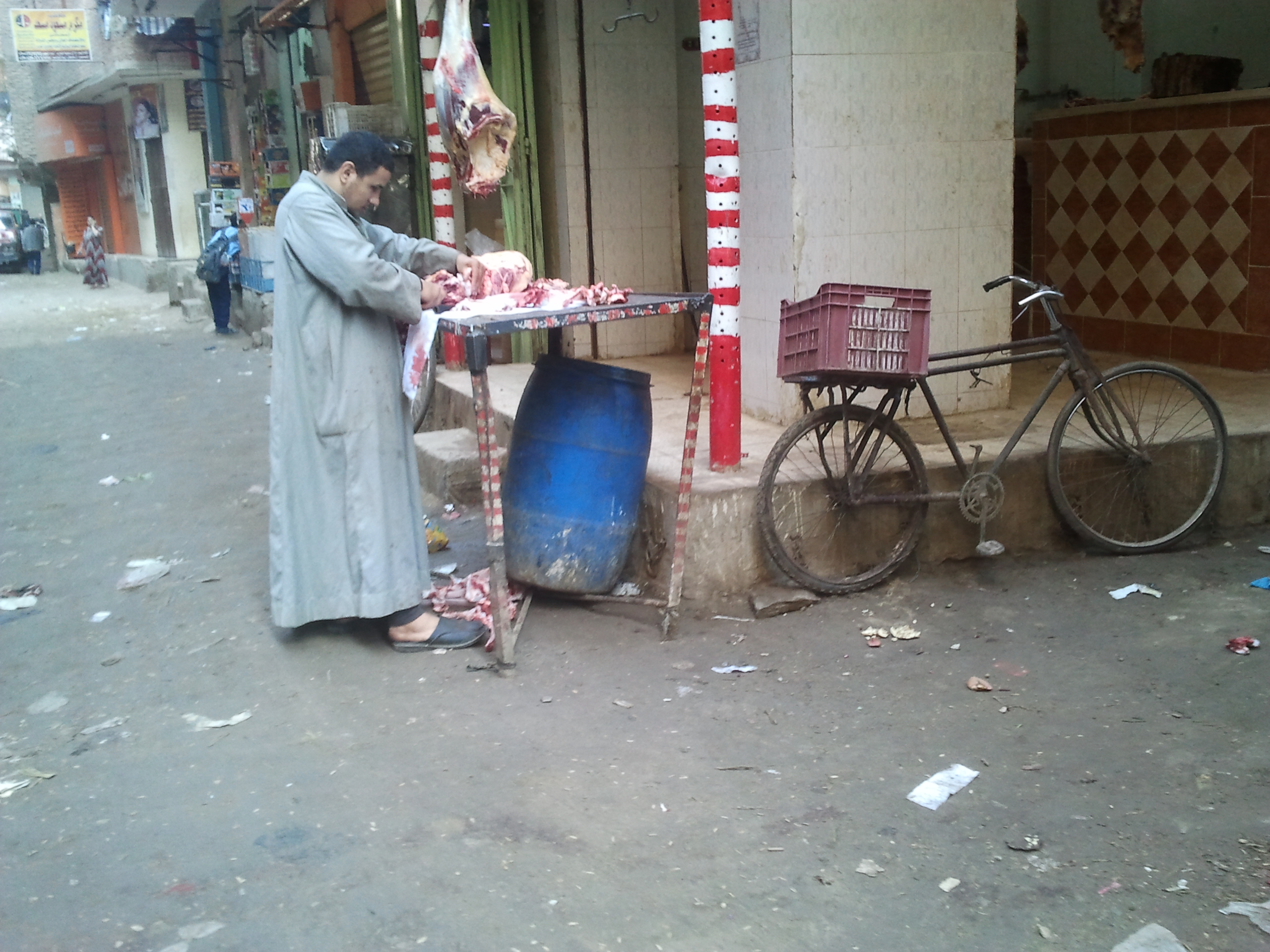
She holds her fingers over her nose.  Sewer.  I wonder if it’s in use any more.  On the sides of the street, we see normal Cairo business.  We walk past a butcher, coffee shops, stands where they sell falafel or bread or other baked goods, and little grocery stores with fruit and vegetables or staples such as rice.

a butcher

a butcher

When we walk along what is a bit broader, like a main road, I see that underneath all the dirt, the road is paved.  The unpaved roads are part of the attraction of this city, however.  And I am also an attraction to them.  Sabrine keeps greeting people, and I smile and say “Good morning” in Arabic.

What an adventure this is!  And I get to go back to the school tomorrow.  Maybe I’ll get to teach two classes.  Won’t that be exciting!

*

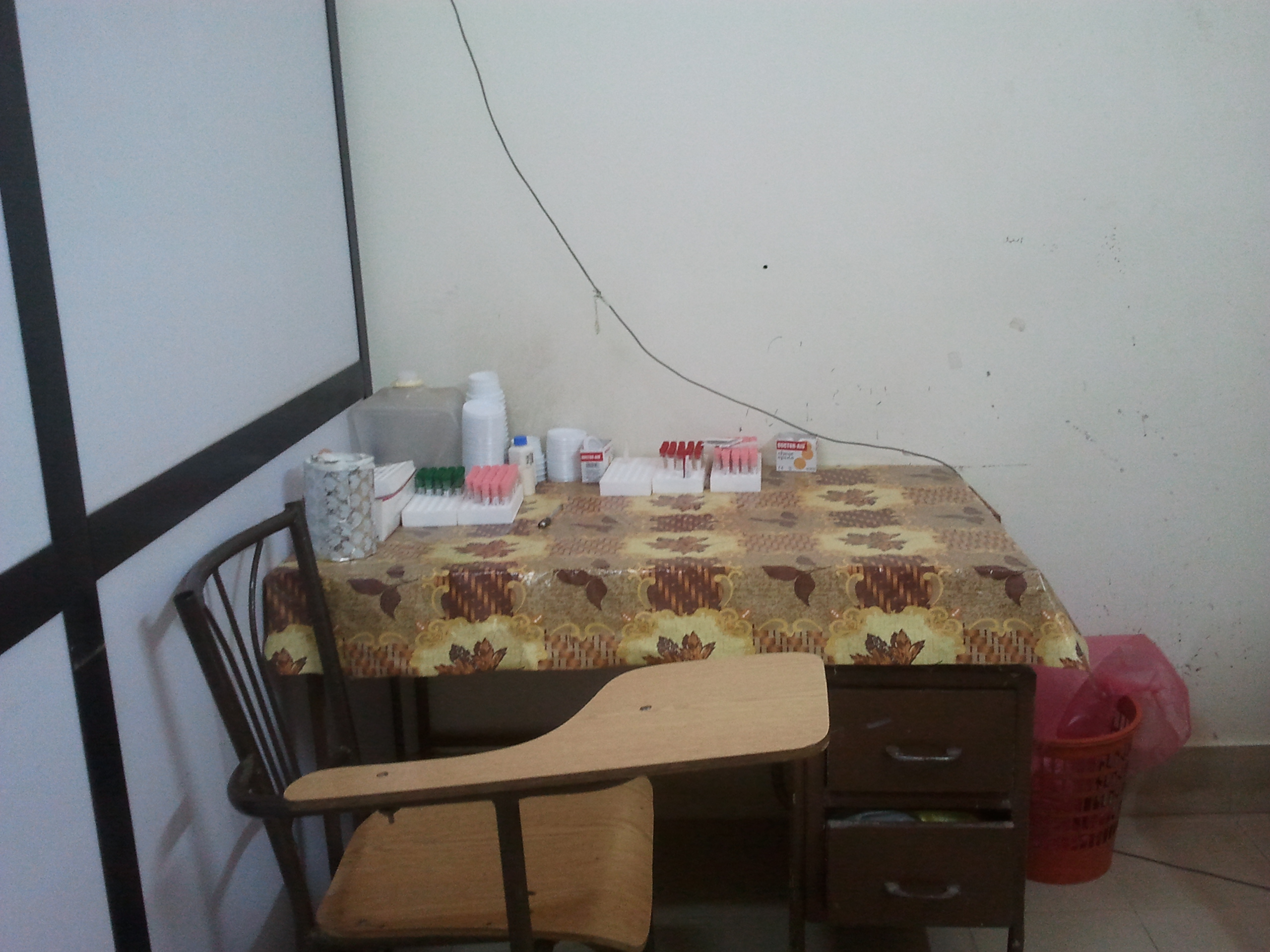
 I have an infected finger.  The infection began back in Germany, when a nail split and I pulled at the hang nail.  I’ve been trying to treat it myself, but it’s gotten worse.  I show it to a couple of sisters, and Sister Elleria, who works in the lab at the hospital, offers to help me.  She treats my wound herself, telling me she’s watched so many doctors do this, she knows exactly how it’s done.  And then she, who has no more training than as a lab assistant,  proceeds to write me a prescription for antibiotics and an anti-inflammatory tablet! “No problem,” she says.  “I’ve seen this done a thousand times.”

Sister Elleria's blood lab

Sister Elleria’s blood lab

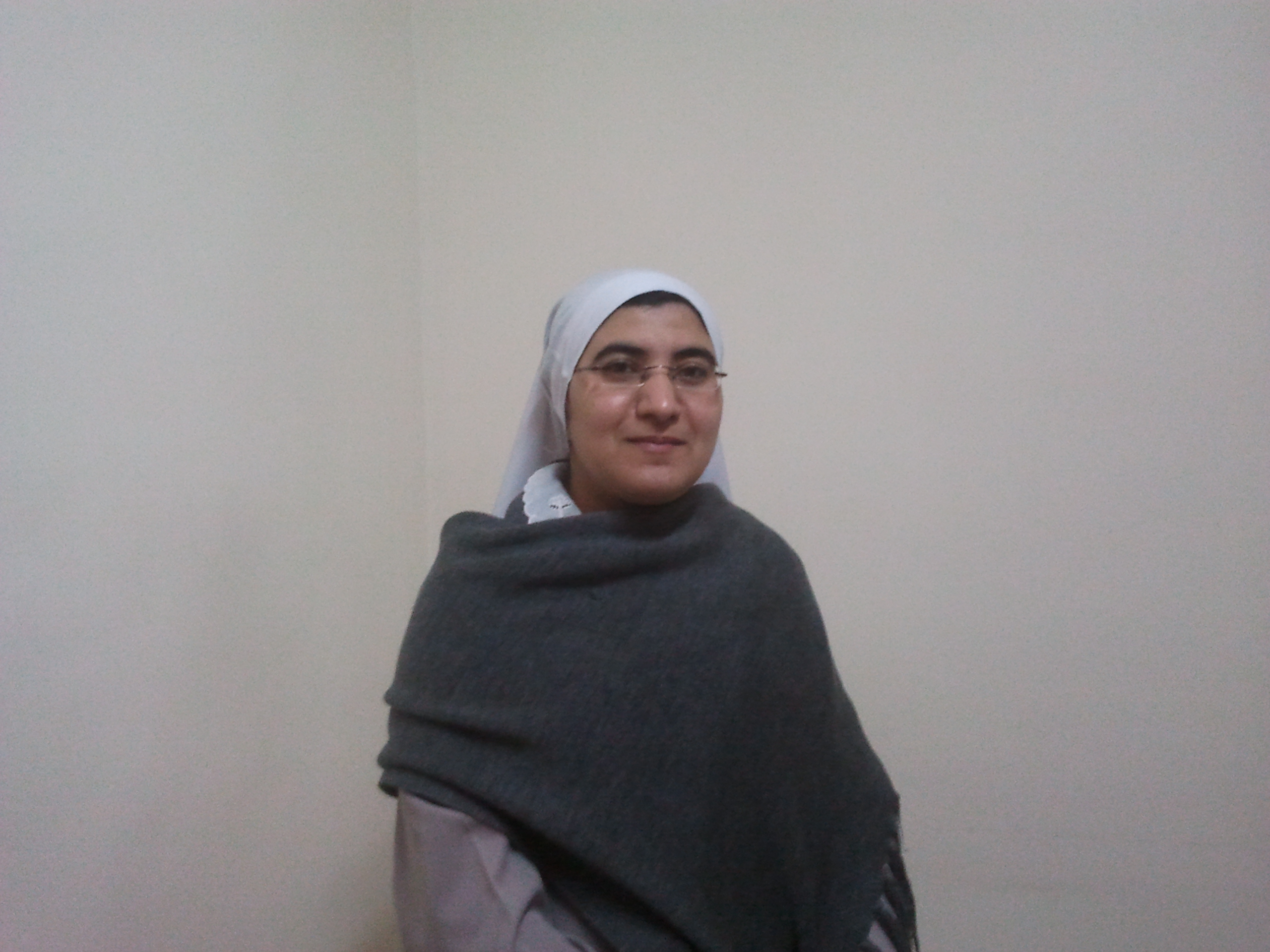
I really like Sr. Elleria.  If my heart were more open than it is, I could even say I love her.  She tells me that talking to me is like talking to an old friend.  And I feel the same with her.  I like all the sisters very much, but she actually makes the effort to speak English with me.  She wants to improve her English.  She tells me the convent has a vision, she has a vision too, to receive more foreign visitors like me, and the sisters will have to learn to speak better English.  We sit in her lab and chat and chat about so many things.

Sister Elleria

Sister Elleria

A young man, Aowny, her colleague, comes and joins us.  We talk a lot about matters of faith.  I can see in his eyes and expression that Owny is also a devout Christian.   Elleria’s eyes simply radiate Jesus.  They are amazing eyes!  They are so full of love and joy.  She is also self-confident.  Was she always so positive?  I wonder how she can work there with Aowny day after day and not fall in love with him.  But then, she is called to be a nun and I am not.  But I would love to know Jesus’ love deeply, to drink deeply of Jesus, to breathe Jesus.  She shows me a music video she has, an American worship song, showing Jesus standing by, walking with people in all their activities, crying with them, rejoicing with them.  He looks so beautiful in that video.  I’ll have to ask her to send it to my email address.
She and Aowny are so incredibly suspicious of Obama.  Their suspicion makes me doubt.  Does he mean well for Egypt?  For this continent?  For Israel?  Or is he really supporting the Muslim Brotherhood, as they say?  I can’t imagine him choosing to do such a thing.  They both see a dark future for Egypt.  I think Aowny would love to leave Egypt, if only he could.  But Elleria has chosen to stay here, in Egypt, with her sisters.

Rubies in the Rubbish – Day Three

13 Wednesday Nov 2013

Posted by noreennanz in Uncategorized

≈ Leave a comment

Tags

Cairo, Christianity, Egypt, Islamists, Melody Beattie, Pilgrimage, travel, Women in Islam

Mourners after the Al Warraq shooting, courtesy of Egypt Daily News

I awake this morning refreshed.  I went to sleep before 10:30 pm and here it is, 5:30 am.  The sun is rising and the roosters are crowing.  I feel good in my body, ready for whatever the day will bring.

I have plenty of time for my “quiet time”, a precious time for me.  At home, I drink a cup of coffee and ease myself into the new day by reading some inspirational literature, some of the Bible, praying and meditating.  Here, I have a delicious instant coffee drink to enjoy as I read the same literature and dive into this special space.  First of all, I begin with Melody Beattie’s The Language of Letting Go.  Then I read today’s entry from the Open Doors prayer journal.   Today we are asked to pray for Christians in Syria.  Christians around the world have signed a petition demanding that Christian rights in Syria be recognized.  The goal is to reach 500,000 signatures.  Mine is one of them.  Today I pray in general for Syrian Christians.  Then I read today’s reading from Sarah Young’s Jesus Calling.  These readings encourage me to simply live my day in the presence of God.

After finishing these readings, I sit on my bed and let my thoughts drift before God.  If a thought comes, I pray about it.  Today my thoughts are drifting around Egyptian women.  In one of my emails to Sister Maria, as I prepared to come to Cairo, I suggested that I could talk to women about what it means to me to be a woman in God.  I have no idea whether I will find any women, but no matter.  These are my thoughts today.  A question pops into my mind.  What is the most important thing about who you are?  I don’t even know the answer to that myself.  What is the most important thing about who I am?  Surely that I am being transformed by Jesus Christ.  But this is the time to simply let my thoughts float, not to dwell on them.  I let the thought float back to God.  Another question floats into my mind.  What is the worst thing that ever happened to you?  That is hard to say, in my case.  Having had Christian parents who were unable to bless me or to teach me the truth about how much I am loved?  Perhaps.  But that is also being changed.  A bad story is becoming a beautiful one.  Another thought drifts into my mind.  Tell them your story.  Which story?  My story is long.  Ask them to tell you their story.  More questions appear like on a movie screen.  What is God like for you?  Is God good or cruel?  Another question.  How are you like your mother?  How are you different?

I ask God what I can do today.  I tell God that the thing I would especially like to do during my stay in Cairo is to talk to women about who we are really created to be.  But anything would be great.  Speaking English to the sisters, tutoring kids, helping in the kitchen, whatever.  I am ready to be of use.

After a while, I get up, get dressed and walk over to the convent for breakfast.  Sister Maria comes into the dining room.  She has heard that I am looking for her.  I want to know what I can do today.  “Today you can talk to some women,” she says.  I can’t believe my ears.  Sister Maria has it all prepared.  I will be speaking to about forty women, and she has organized a translator for me.  I haven’t even prepared my talk!  What will I say, now that I’ve told her I want to speak?  God almighty, how am I going to do this?  But there is no time to worry about it.  I will be speaking in half an hour.

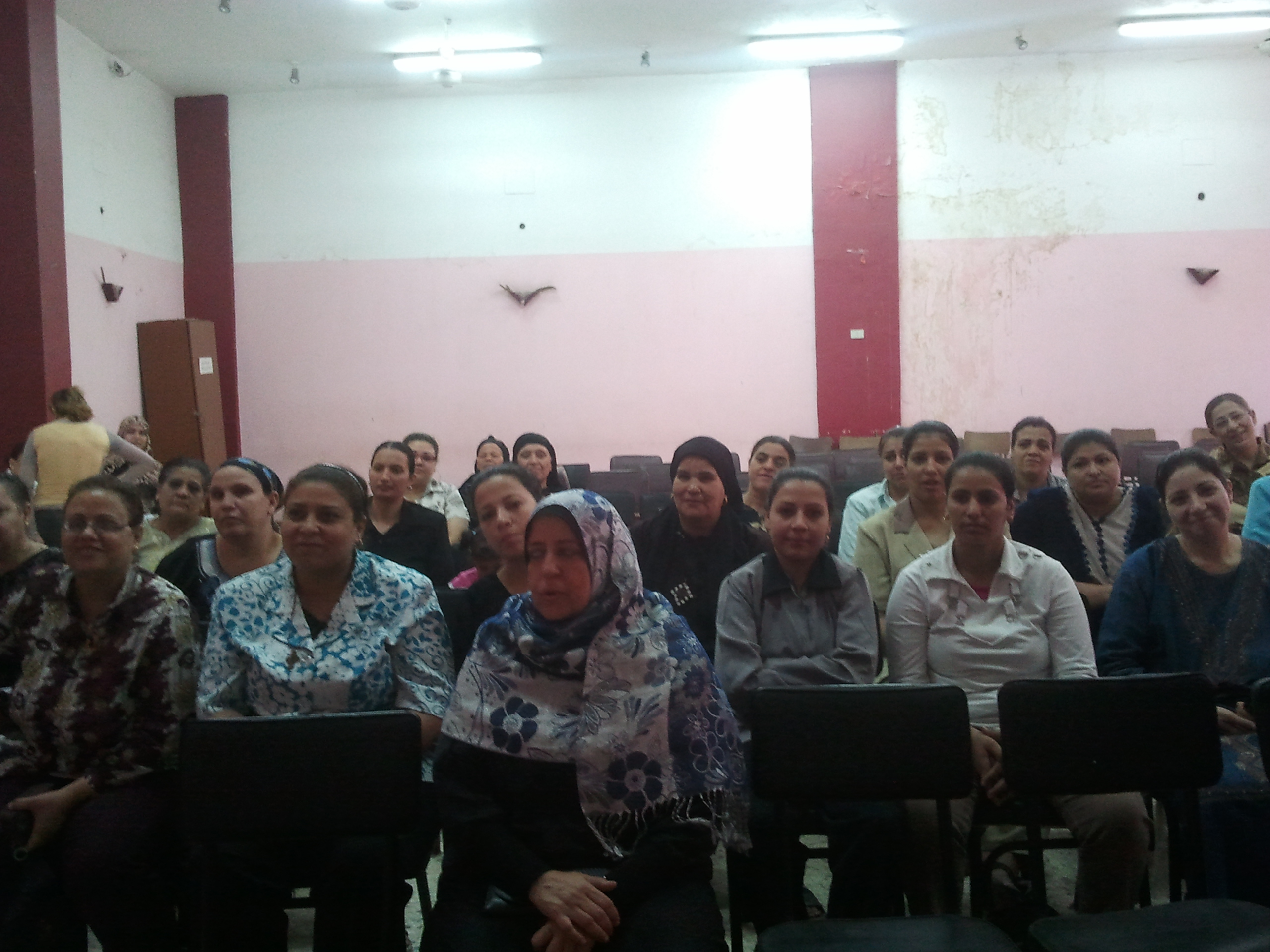
I am escorted into an auditorium, where several women are gathering.  I see both Muslim and Christian women.  Sometimes it is hard to tell.  Some women are wearing galabayas, but their heads are uncovered, or their hair is partly visible.  Others are wearing jeans and blouses.  They are all beautiful, with perfect makeup.  They look like queens, friendly and self-confident.  Do they need to hear my message?

The women I speak to

The women I speak to

Sister Maria says I have a half hour to talk to them.  A half hour, including translation.  What shall I say?  Thank God, I wrote down my questions earlier this morning.  I decide to simply relay my questions back to the women.  When I ask them who they are, I hear answers like, “I am what my goals are.”  “I am the person whose life I am living.”  I wonder if these women have any idea of what I am going to try and say.  I ask them if they are Muslims and Copts, whether any other religion or denomination is represented here.  A woman jokes, “Nowadays we have a third religion in Egypt – the Muslim Brotherhood.  Nobody here belongs to that religion.”  Everybody laughs.  I ask if she likes the Muslim Brotherhood.  She answers that as people, yes, as a religion, no.

I tell them some of my church story, raised as a Baptist, in a strict church, lots of rules about what I could and especially couldn’t do.  I was told to obey at all times.  My father was a leader in the church, a man in authority.  At home, he beat us children, was cruel to us, spoke very harshly, and my mother tolerated it all.  I tell these women I grew up to be fearful, afraid of men, afraid of authority, afraid of God, even though I was told in church that God loved me.  I had no self-confidence.  The church did not help me very much to find out who I was truly created to be.  I am trying to tell these women that God, and by extension, I, am not what I learned in church, in school, from my parents, from the press, or from television.  My job is to find out and to live in the person I was created to be.

Much of what I am trying to say seems not to be coming across.  My translator understands most of what I’m saying, but sometimes her face looks blank.  I tell the women about hindrances to finding out who we are.  Hindrances like the church, school, parents, all the things I’ve been saying.  I need a stronger example.  Then, I am inspired!  Today I am wearing both a tank top and a blouse with sleeves, covering it.  I remove my blouse.  I’m undressing in front of these women!  I stand before them in my sleeveless tank top and say, “This is like the real me, the one God has created me to be.”  I hold my blouse before them and point to it.  “This is the person the church, my parents, the school, newspapers and television have told me to be.”  I put the blouse on again, but cover my head with it.  The blouse obviously doesn’t fit.  The women get it, and start to laugh.

I decide to go further in my explanation.  I tell them more about my father’s beatings.  Surely these women will understand that.   This respected leader in the church who beat his children and his wife, in her belief in submission, helped him to abuse the children.

Women are responding to what I’m saying.  One says, “It is not like that here.”  I am not convinced.  I say, “Really?”  Then a Muslim woman, beautifully dressed, with a gorgeous scarf and perfect make-up, asks to speak.

“In our community, it is okay.  We Muslim women are taught that we are to obey our husbands in everything.  This is our job to do that.  But if some man goes too far with his wife or children and beats them, a strong woman in the community will go to him and say, ‘That’s enough.  Stop it.’  And then he stops.”  At least, this is what I think she has said.  I ask her if she is the strong woman in her community.  She looks it.  “Sometimes I am strong, sometimes I am weak,” she answers.  From her comment, I see that my message has not come across.  I’m trying to say that we ourselves can grow strong in ourselves, in the power of Christ, not necessarily needing a strong woman to intervene for us.  I tell the women about Jesus, how the Jesus I have come to know is different from the one I learned about in church, where I was taught simply to obey.  I tell the women that Jesus is strong, and through his death and resurrection he has power to help us become who we were meant to be.  I tell them we need to learn to be honest and tell God exactly how we feel, to give God our fears, our anger, our feelings of weakness, and that an exchange takes place.  We can give God our shyness and God will gradually make us strong.  We can give up our anger and become loving and compassionate.  And so on.  I tell them we need to ask God to show us how to forgive.  I tell them this is a daily practice, and that we are to live continually in trust that God is doing this.  I hope this is coming across.

Someone asks if I was able to receive an education.  Oh, dear.  Do they think my  father was so cruel that he forbade me from being educated?  It was more subtle than that.  He wasn’t really that bad, even though I bear scars.  I tell them I have a master’s degree in social work, that was not the problem, that my father paid for my education.  My problem was that I grew up to doubt myself.  This seems to come across.  Then I realize that these women need to hear something positive about my dad.  I tell them that when he was old, my husband gave him a book about God’s grace and mercy.  As he read the book, tears streamed down his face.  He finally started to understand that God loved and accepted him.

My time is done.  How much of what I have said has really sunk in?  It doesn’t matter.  I’m learning to let go.  I let go of my talk, and pray that God will speak to those who need to hear, and that my words will be understood.

Later in the day, I bring my computer into the convent dining room, where there is wifi, so that I can receive and write emails.  I tell one of the sisters that I have Coptic worship music in my external drive, and I play the music.  She says she has the very same music.  Sister Mariem starts to interpret the songs for me.  This is beautiful!  Sister Marina brings me tea and we listen to the music together.  I feel so completely at home with these sisters.  Then Sister Marina’s phone rings.  It’s Sister Mariem, who has left for her room, telling her to tell me to go to a website called CTV.  I try it but only get Canadian TV.  Sister Marina seems to be urgent abot finding this website.  At four o’clock there is a sermon at this church, and we should watch it!  Finally, after much trial and error, we find the website Mariem means.  Coptic TV.  I wonder what the urgency is.  I won’t understand anything, anyway.  Soon people are crowded around my monitor.  I soon learn why Sr. Maria was talking to someone in hushed tones last evening.  Sr. Ologaya tells me that yesterday in a church called St. Mary in Warraq, in Giza, there was a wedding.  http://www.dailynewsegypt.com/2013/10/21/investigations-into-church-shooting-begin/

After the wedding, as people were leaving the church, some Islamists rode up on bicycles, shot into the crowd, killing four people and gravely injuring eight others.  What we are watching is the funeral!  From my computer monitor, we can see that the church is packed full.  People are chanting, “Why, God, why?”  Marsa, the cook, who is sitting next to me, is also asking God why.

Eventually, Marsa brings us a huge pile of molokhia stems to remove the leaves from as we watch  the service.  Sr. Ologaya jokes, “Please God, don’t take me before I can eat the  molokhia this evening!

I am concerned.  We are all concerned.  For ourselves, yes.  I’m concerned for my husband Peter and all my loved ones who will have heard the news before I did, and will be worried about my safety.  All I can tell myself and others is, “Our time will come when it comes.”  I wonder if Peter’s and everybody else’s, who said I shouldn’t come to Egypt, are justified.  Will I get out of here safely?  I don’t understand this Islamic craziness.  But in the Bible, Jesus said things like this would happen to his followers.  I sit back and join the sisters, letting whatever may come, to come.  After all, I have no other choice, do I?


Link

Rubies in the Rubbish – Day Two

12 Tuesday Nov 2013

Posted by noreennanz in Uncategorized

≈ Leave a comment

Tags

Cairo, Christianity, Coptic, Copts, Egypt, Pilgrimage, travel

I had already been to Egypt twice before with my husband.  Once we had a wonderful cruise on the Nile, just after the January 25 revolution.  The sites were empty; we had Egypt to ourselves.  You can read about this trip at my old blogsite: http://noreen-masterpieceinprogress.blogspot.de/2011/11/shukran-means-thank-you.html is the first entry of that series.  It was wonderful and inspiring.  We wanted to go back.  We did, and I wrote a series about that trip beginning here:  http://noreen-masterpieceinprogress.blogspot.de/2012/02/if-youve-drunk-from-waters-of-nileday.html

That was a wonderful trip, too, but not enough for me.  I felt a strong need to come back to Egypt and do some sort of volunteer work, especially as an expression of my Christian faith.  I wanted to do something to help Egyptians to move on in their revolution, to somehow be of assistance in their journey to freedom.  And God did lead both my husband and me to a gathering of like-minded people who also had Egypt on their minds.  I heard about Sister Maria, who runs the Salam Center, I sent her an email asking if I could come, she answered saying yes, and the rest is history – the story you will read here.

*

The beginning stage in a relationship is perhaps the loveliest.  You smile a lot, and everyone is nice to each other.  Wouldn’t it be nice if relationships were always this way?  Here, I struggle with the words.  Of course, I can’t read them in Arabic, but I’m learning to say “good morning”, “good evening”, “see you later”, “what’s your name” and “my name is …”  I write them down on a notepad in my normal Roman script.  That is enough to keep me busy a whole day.  People smile when I attempt to speak Arabic.  They are indulgent with me.  Will we get past the beginning?

I have met Sr. Maria by now.  She sat with me last evening at the dinner table.  I asked her where in Cairo we are.  “We’re in the north of Cairo,” she said.  “This is one of the seven garbage dumping areas of the city.”

Today Sr. Marina takes me on a tour of the hospital and the other buildings connected to the Coptic Sisters’ Center.

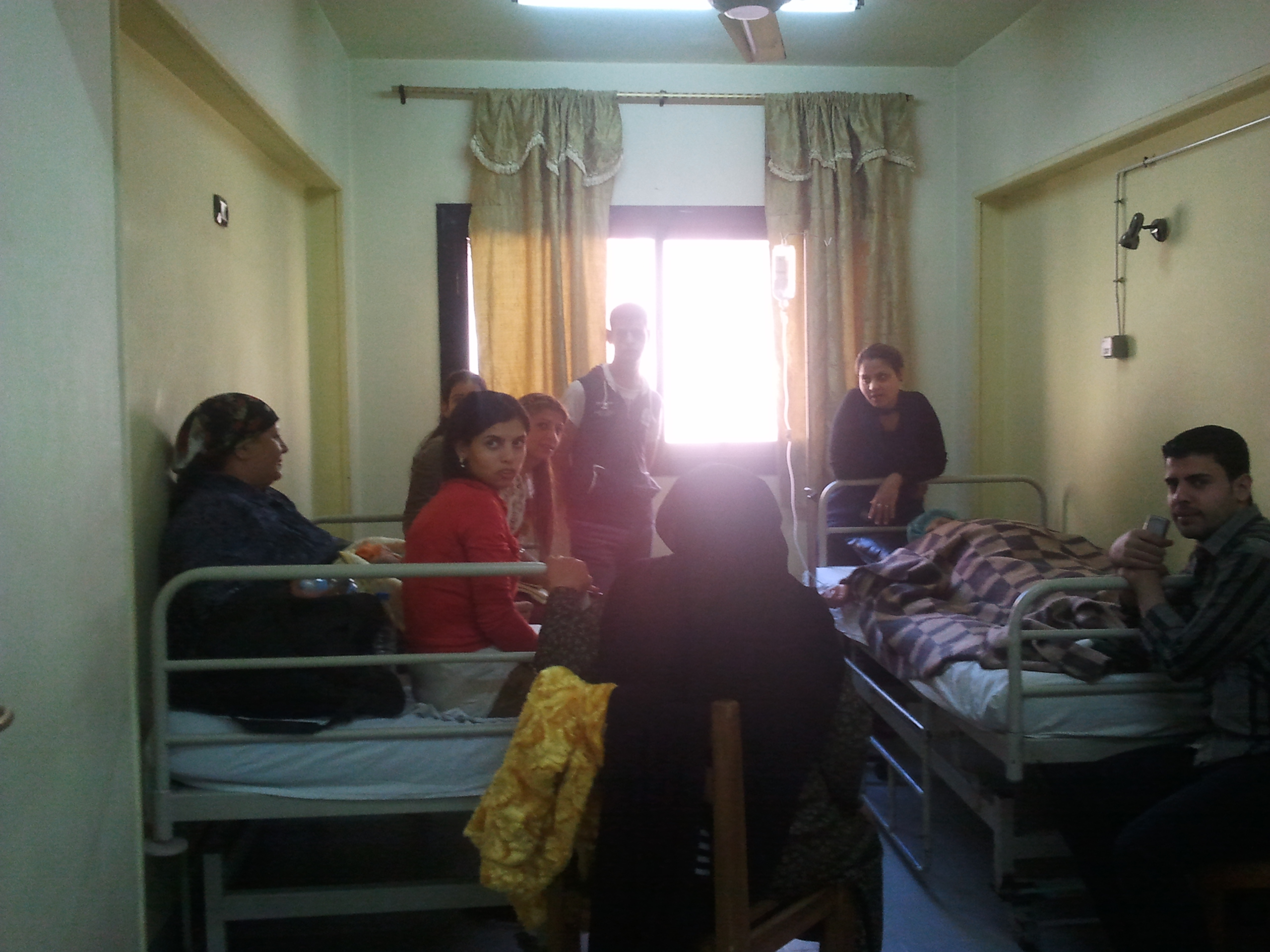
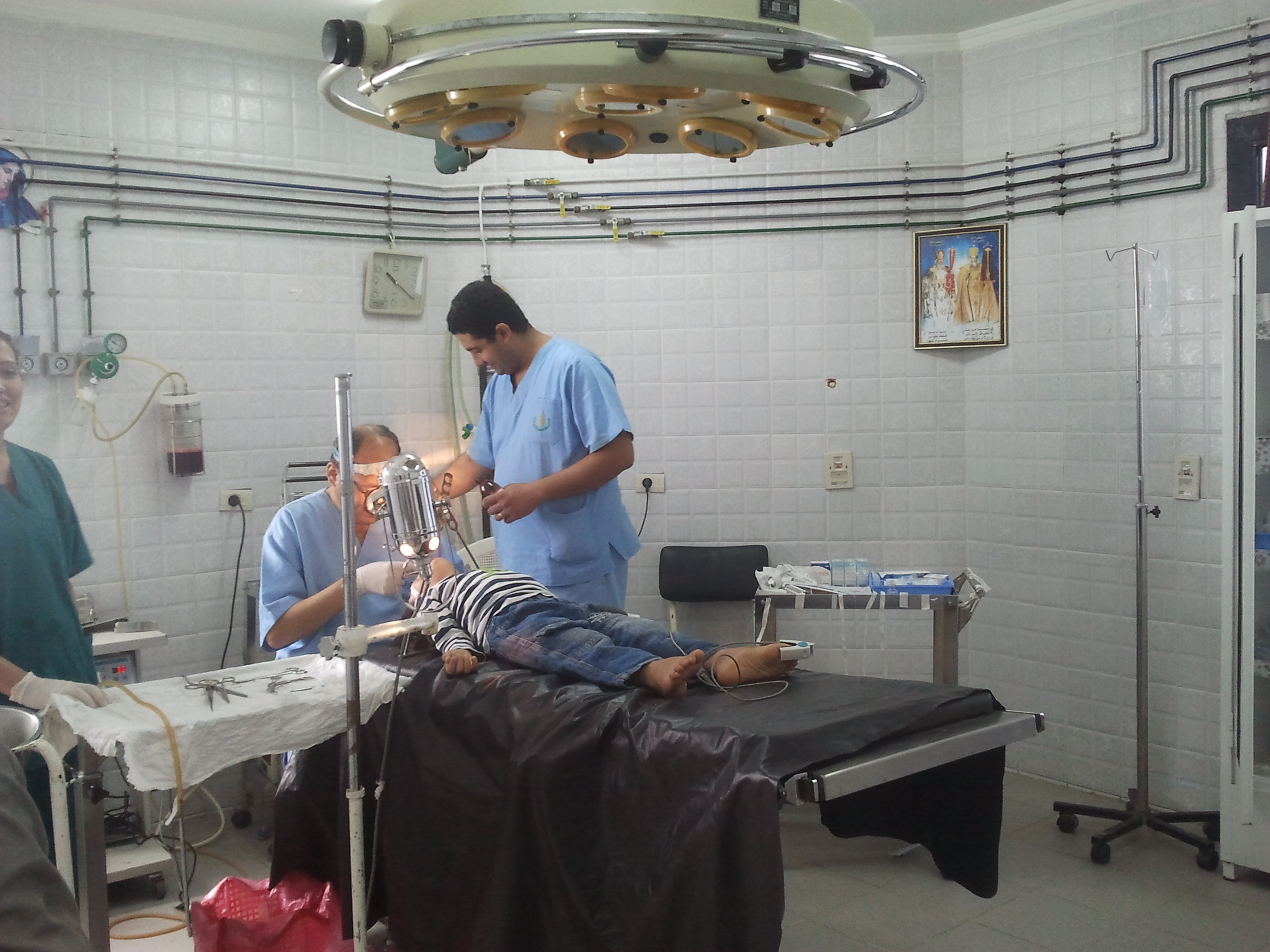
My room is in the hospital building, and today I have already seen that there are also administrative offices on my floor.  Sr. Marina begins with surgery and admissions, on the first floor.  My first impression is of friendly chaos.  Today is a Sunday, officially a holiday, but that doesn’t matter here at the hospital.  Patients, visitors, I don’t know who all, are all sitting on the sandy stairs.  Since many of them are men and some are smoking, I figure they’re on the steps so that the men can smoke.  I see Muslims and Copts.  Everyone smiles at me, a woman in a black gallabia, her head completely covered except for her eyes peering through glasses, touches me on the shoulder and says in English, “Welcome”.  Her eyes are smiling, merry.  And suddenly I am inside the operating theaters.  There are five in this hospital.  There are also a few rooms where patients can stay as in-patients.  Those rooms are spilling over with visitors.  In one room I count nine visitors visiting a child.

SAMSUNG  SAMSUNG

Most of the patients here today seem to be children.  One is having an ENT operation.  I witness my very first caesarian in another room, where I see a woman lying on the operating table, blood flowing all around her.  Somewhere inside her belly, I hear the faint sound of a baby crying.

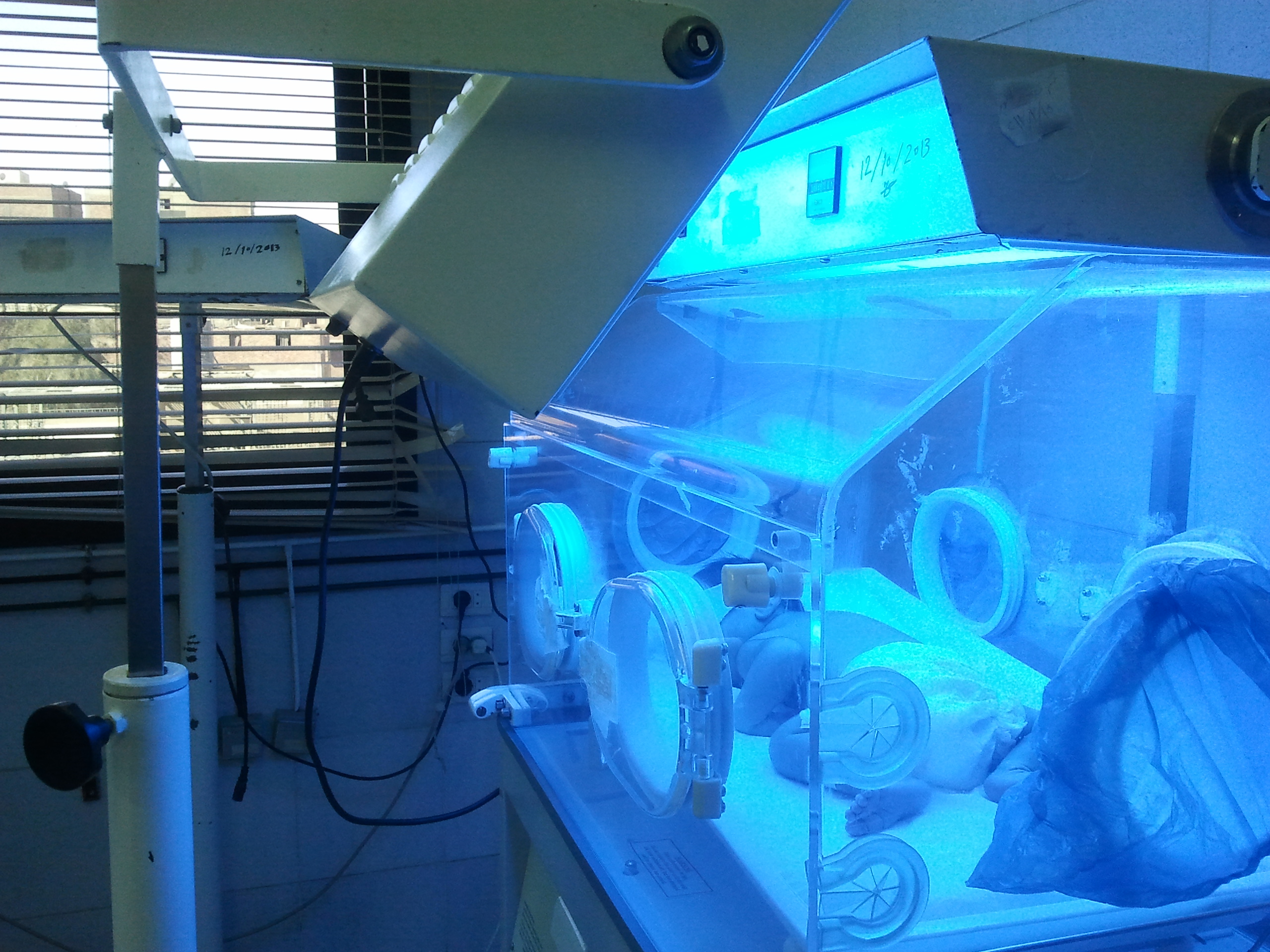
Upstairs, I look inside the neonatal clinic.  All the infants today but one are there because of jaundice.   A doctor and nurse are busy trying to insert a canule into the tiny foot of another infant, whose lung is underdeveloped.  I say a quick prayer for him.

neonatal station

neonatal ward

I see that all the equipment is sterilized, and that is reassuring.  I am also told that I have to put plastic covers over my shoes when I walk in the operating area.  The doctors are dressed in spiffy scrubs and would fit into any hospital in the west.  In all other respects, though, this hospital is unlike any I have ever seen.  In a corner of the each floor where operations take place there is an altar with burning candles, and plastic flower-framed pictures of a blonde Jesus, the now deceased Coptic pope Shenouda and other figures I don’t recognize.  Inside and surrounding the doors of each room thee is always at least one picture taped to the wall – of Mary, Jesus, Pope Shenouda or other holy figures in the Coptic church.

The hospital is bigger than I initially thought, occupying all five floors of this building.  I wonder if the part I’m living in isn’t designated for mothers who have run away with their children from their husbands.  Sister Maria told me yesterday that Egyptian law allows a husband to claim his wife back, even if he has been beating her and/or the children.  The wife has no legal recourse.  Here, the sisters shelter and hide them from their husbands.

Some of the upper floors are out-patient clinics.  One area is the emergency room.  I meet one of the ER doctors, Dr. Beshoy.  Sr. Marina asks him to help guide me through the complex.  Her English isn’t adequate to the task.  Still, it’s good enough to crack a joke.  “His English very good.  My Arabic very good,” she tells me.  I see an opthamology clinic, an X-ray area, an ENT clinic, an orthopedic clinic, a dental clinic, and much more.   All the equipment is there, but the tables or desks are all covered with printed oil paper.  And some of the equipment is a bit rusty.  Instead of gleaming stainless steel waste baskets, they have to do with those flimsy plastic ones you can buy at a one-euro or dollar store.  To ensure privacy for the patients, they have covered some of the windows with red transparent foil.  And everywhere there are pictures of Jesus, Mary, Pope Shenouda and other saints, taped onto the walls and doors.

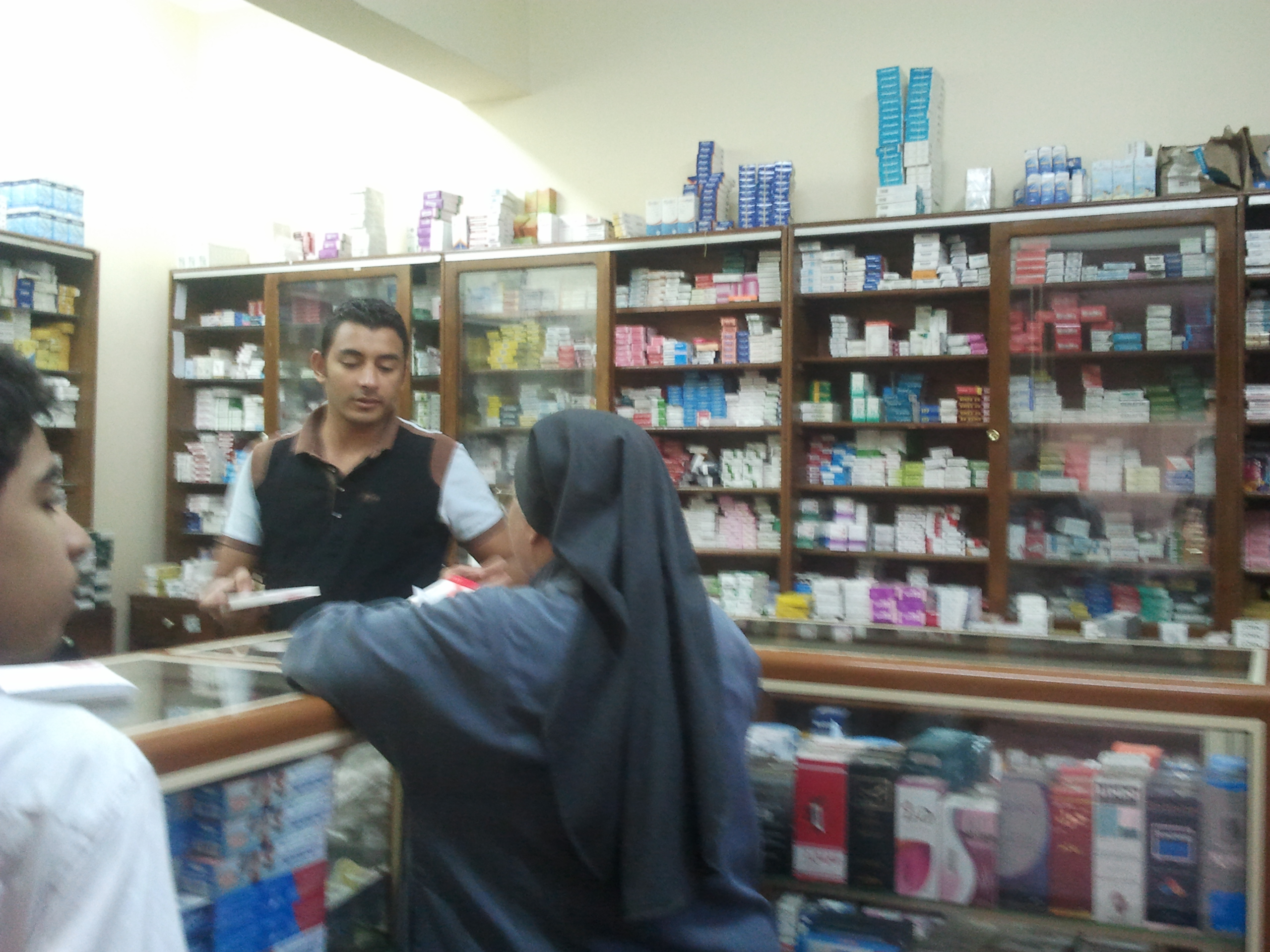
Sr. Marina and Dr. Beshoy take me outdoors to other buildings.  I see a pharmacy.  Someone is buying medication on a Sunday.Hospital pharmacy

Hospital pharmacy

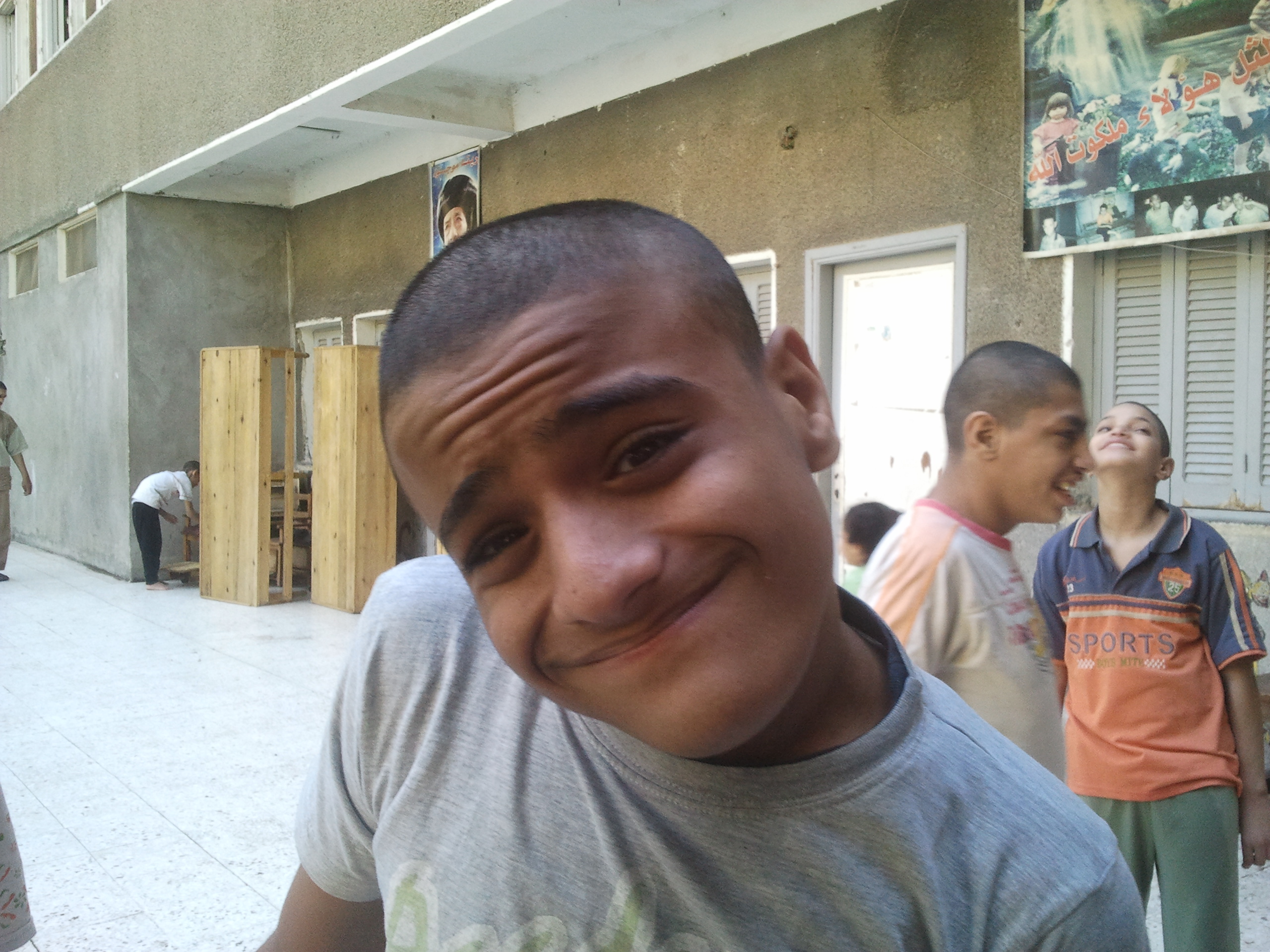
Behind the pharmacy is what looks to be a permanent home for children whose parents are unable to care for them, a sort of orphanage.  These children all appear to me to be mentally retarded.  One boy is obviously microcephalic, for example.   They run to the gate to greet us, and then Dr. Beshoy takes us inside.  They hug us, touch us, hold us by the arms.  They can’t get enough of us!  I begin taking photos of them.  They are enchanted, and each wants to see their photo immediately.

intellectually disabled boy

The pharmacy is at the edge of the compound, and a guard is sitting at a table there, letting people in and out.  I ask about this.  “It’s not very safe here,” says Beshoy.   Indeed.  That’s all I’ve been hearing before my trip.  “About a kilometer from here, some people threw Molotov cocktails into a cathedral and also poured oil on people.  About four were killed.”  I vaguely recall hearing something about this.  “But it’s all safe right now,” he assures me.

guard at the Salam Center

guard at the Salam Center

We greet Sr. Monika, who is instructing some workers working on the granite steps of the church building.  I tell her what Beshoy has told me.  “These workers are Muslims,” she says.  “Most Muslims hate what the extremists do.  Most Muslims like it here.”

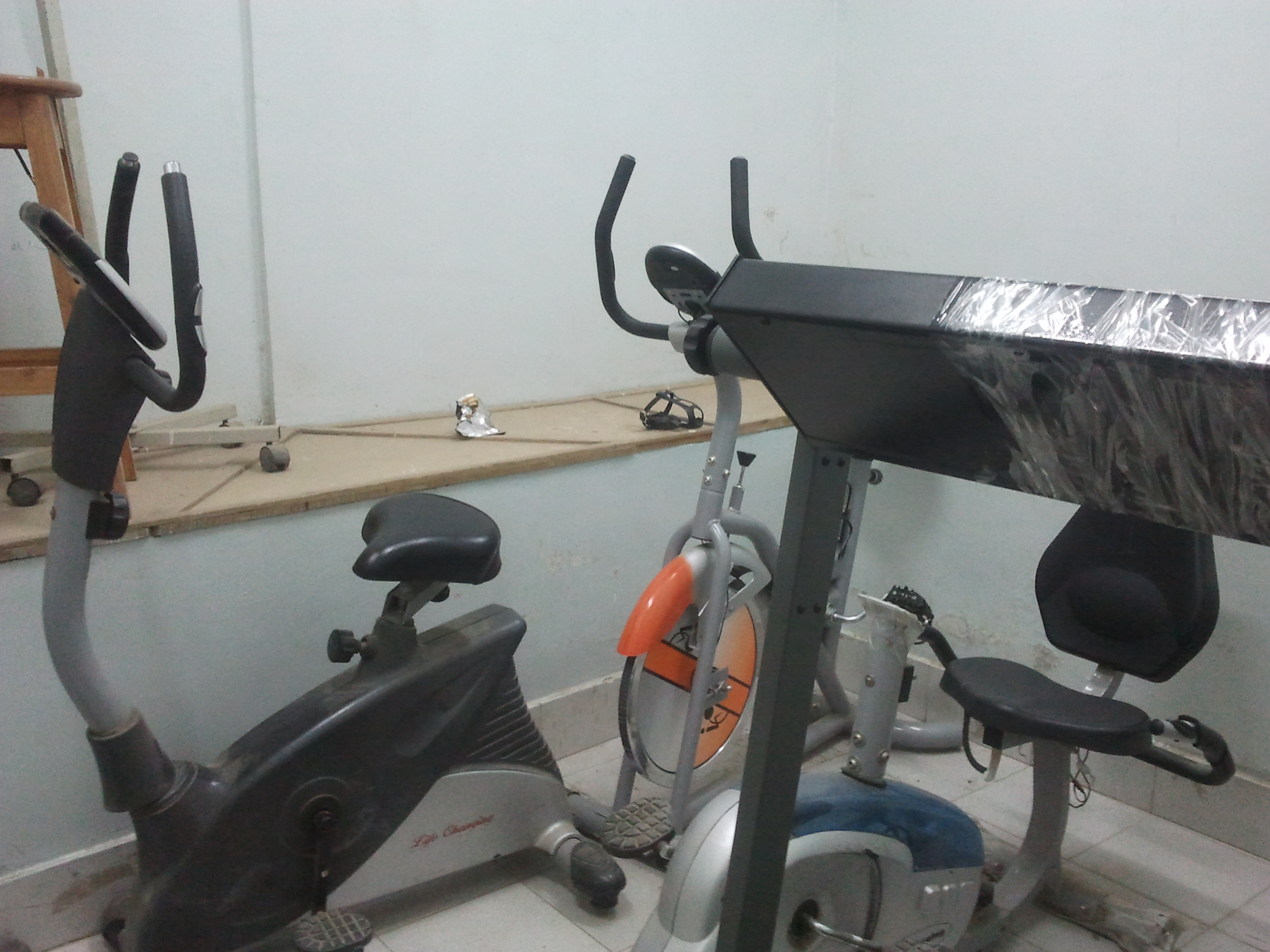
We see the physiotherapy department, tucked into the corner of another building.  It is hard to tell how old the equipment is, but there are machines galore, crammed into a dusty room.  It reminds me of an English lesson I recently taught, where we listened to a discussion on a CD about buying equipment for a company gym.  “We’d better not buy used equipment,” one of the speakers says, “or we’ll have insurance issues.”

 physiotherapy departmentphysiotherapy department

Then we go to the nursery school.  It’s closed today, but the staff are there anyway, cleaning and organizing the school.  “We have both Christian and Muslim children who come here,” the sister who directs the nursery school tells me.  “They all love it here.”

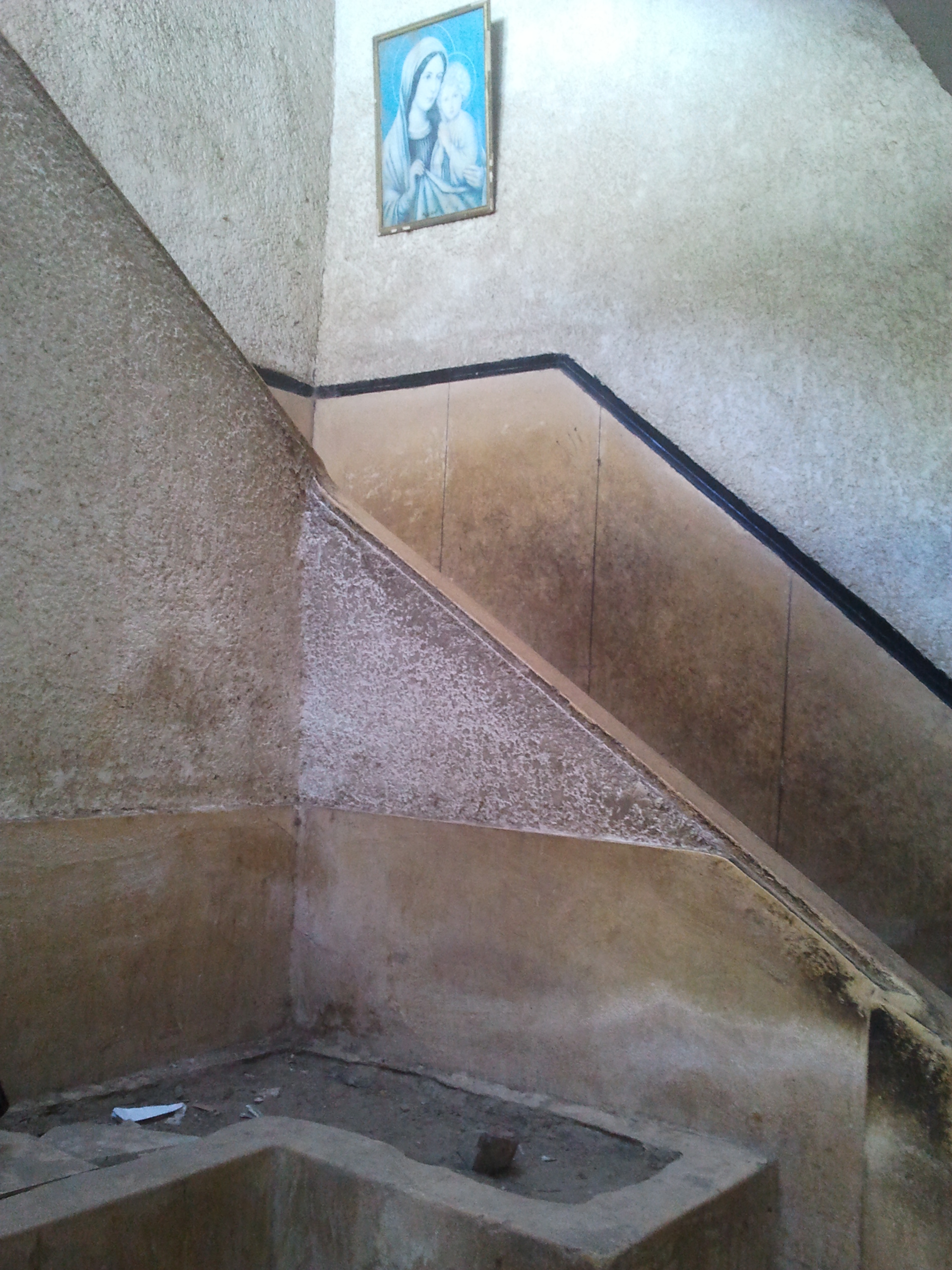
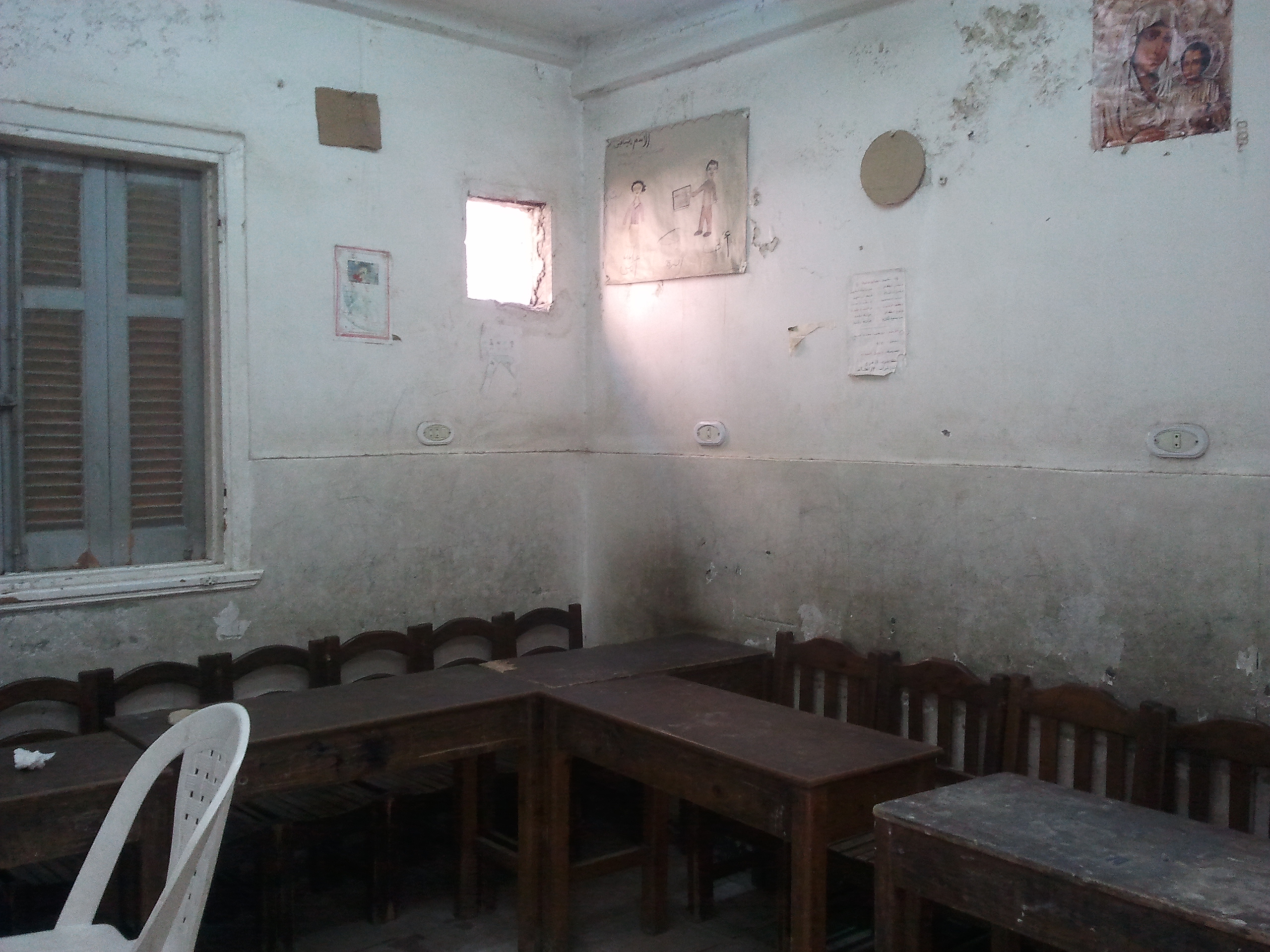
And then I am taken into the former hospital.  Rather than tear it down, which would happen in Germany or anywhere else in the west, they have opted to make use of the space.  The stairs are partially broken through and plaster is crumbling everywhere, but there are plenty of rooms for an after-school program.  There seem to be no insurance issues here.  There are desks for each pupil, sometimes even a blackboard.  I wonder if I will be teaching English in these rooms during the next two weeks.  I have offered to do this.

stairs to the school

stairs to the school

classroom in the old hospital

classroom in the old hospital

I comment on the condition of the building.  “Why tear it down?” says Dr. Beshoy.  “You can see, it works.”

When I return to my room, I find it to be one of the cleanest, most luxurious rooms of the entire center.  But even here, in the bathroom, I have just encountered the biggest cockroach I have ever seen, climbing out of the floor drain.  Ah, well.  I stamp on it and throw the carcass down the toilet.

I hear deafeningly loud music outside, rhythmic, lively, surely not the kind of music Salafists would listen to.  I look out the window.  The gates to the compound are closed.

I spend hours this day in my room, catching up on sleep lost the night before, reading.  What are the sounds I hear?  The call to prayer.  Many times a day.  Children playing, fire crackers popping.  Birds chirping.  Roosters crowing incessantly, day and night.  Car horns beeping, but god only knows where their drivers drive.  I have seen the roads outside.  They are nothing but dirt paths meandering around and through a maze at the feet of a gigantic range of eight-story mountains.  The only things I can see are birds flying, and an occasional child or adult walking to or from the hospital.  I feel pretty safe between these locked gates, but I am also locked in.

Rubies in the Rubbish – Day One

11 Monday Nov 2013

Posted by noreennanz in Uncategorized

≈ Leave a comment

Tags

Cairo, Christianity, Copts, Egypt, pilgrimages, travel

SAMSUNG

Coming back to Cairo always begins in the airport and then continues on the plane.  Today I meet Ellen, an outgoing, attractive granny who looks very un-grandmotherly.  She, like me, is an English teacher.  She tells me she has a mud house in Siwa, a waadi (oasis) in the middle of the Libyan desert.  This oasis, she tells me, is about 30 kilometers long and 8 kilometers wide.  It takes about four hours to get there from Cairo.  Or was it Alexandria?  “It’s easy”, she says.  “There’s a bus that leaves twice a day.  And ask for Ellen.  They’ll find me.”   I think she’s said she paid around €8,000 to the local sheikh for it.  She wanted a house in a warm climate, but couldn’t afford one in Tuscany, so she bought one for a whole lot less in the Egyptian desert.  She’s been living here for about five winters, but her children haven’t yet made it down here for a visit.  “Siwa is perfectly safe,” she tells me.  “It’s inhabited by Berbers, who have nothing to do with these Islamist issues, and they hire guest workers from South Sudan, very peaceful people.”

Each time I’ve been in Egypt (this is the third time), people have expressed admiration for my courage in coming here.  “Are you sure this is wise?”  they ask.  “Don’t you think it’s a bit too dangerous now?”  The other times I was with my husband.  This time I’ll be completely on my own.

They have a point.  This time, Morsi, the first democratically elected prime minister, has been deposed by a military coup, and the Muslim Brotherhood and the Salafists are active in demonstrations, trying to get the power back.  Neither the Brotherhood nor the military is known for their gentle ways.  Recently over 1,000 people were killed in demonstrations.  I don’t intend to get caught in any demonstrations, I say.  But then my husband tells me about areas in Egypt where Islamists are painting, “A Christian lives/works here” on Christian homes and shops owned by Christians.  That sounds a bit off-putting.  Copts being targeted.  I’m going to be living with Coptic nuns for two weeks.

I find two Dutch-speaking women seated next to me on the plane, and we discuss where we’re from and why we’re going to Egypt.  At first they tell me they’re going to travel around Egypt.  Then I learn they are part of a film crew.  They lead me to believe they’re going to film nice places for people to go on vacation.  Then, when I tell them what I’m doing, they tell me they are doing a series on human rights on Dutch television.  They’re on their way to Al Minya, between Cairo and Aswan, where there has been persecution of Christians, particularly Copts.  The subject for this episode is “freedom of religion”.  I’ll be sure to watch it.  They tell me I can find it on the internet under http://www.uitzendinggemistnl, if I click “jij bent sterk”.  Much of the episode will be in English.

I look around the plane.  It’s full of people, and about half of them are Westerners, people with blonde little children, even Americans behind me.  I learn they work at the American University of Cairo.  Either I’m in very good company, or we’re all stark, raving mad.

At the airport, things look the same as ever.  I love this airport, so clean, modern and airy.  It feels almost familiar to be back here.  I know just what to do.  I walk right up to the exchange bank, exchange some Euros for Egyptian pounds and buy a visa sticker for my passport.  I see that the film crew has been sent back to buy a visa.  Even these experts don’t know the ins and outs like I do!

But then, when I leave the customs area, where people come to pick up their friends and loved ones, I find no one to greet me.  No matter, Ellen has become my good friend by now, and she’s friends with half the plane.  She’s just met a nice Egyptian family, Copts, she says, and she introduces them to me.  The wife, when she sees I am not being picked up, offers to phone someone for me.  She reaches Sister Maria, and I know now that for some reason, the person picking me up and I are not in the same place.  Sister Maria tells this woman she will phone my contact person.  A few minutes later, a woman dressed like a nun in a gray habit, holding a placard with my name, rushes over to me.  The Egyptian woman has described my clothing.  I meet Sister Ologaya, who ushers me to a car and a man she introduces as Rohmy.  Either the car, or possibly both the car and the man are Copts, judging from all the pictures of Jesus and all the crosses on the dashboard.

At first, we speed along the freeway.  No traffic jams today.  But then, the road becomes rougher and rougher, reminding me of vacation trips I took as a child with my family into the backwoods.  First a nice freeway, then paved, two-lane state roads, then narrow streets, and finally gravel.  I invariably got sick with asthma attacks after about a half hour of riding on these roads.  Today, the windows in the car are wide open.  We wind through the middle of an outdoor market, around garbage piles, children running, a dog running through a garbage mound, men sawing pieces of wood, women in headdress seated beside roadside stands selling trinkets or fruit, waiting for customers.  We pass a butcher shop with lamb carcasses hanging from the doorway.  I learn that the feast of Abraham being spared from having to offer up his son is still going on.  I thought it was only one day.  No, it runs an entire week.  It’s like having Christmas for an entire week, I hear.  As I sit here in my room typing this, I can hear the calls to prayer, incessant today, intermingling with firecrackers children set off.

I wonder how my lungs will hold out.  At times I smell dust, at others, the sweet scent of fruit, at others, the pungent smell of meat cooking.  My lungs will be fine, I tell myself.  In fact, in the past two months, I have weaned myself off of all asthma medication.  This is an experiment in faith.  I am so sick of being hoarse because of my cortisone inhaler, I want to be free of medication, at least the cortisone, and so I’ve weaned myself off it.  Not many ill effects.  I feel fine.  So I’ve also gone cold turkey with the other, less drastic medication, and felt no effects at all.  My lungs seem to be just fine!  Even after this dust explosion.

I see a building with a sign.  “Coptic Sisters…”  Are we there? I ask.  Yes, we just have to turn the corner, into a sort of gated area.  I’m not sure if I’m in a gated compound, but I know I’m in an area with several buildings, all belonging to the Sisters.  There is even a hospital here.  It is pleasant, as long as you’re not looking for a five-star hotel.  There is plenty of sand and dust here within the compound as well, but there are also palm trees, grass, a walkway with a pergola with flowers and grass on either side, a large vegetable garden, a hospital, and a church with a dining room in it.  First, I meet Sister Marina, who shows me to my room.  Room?  I have the entire floor to myself!  In my room I have a bed, a refrigerator where I can store the apples I brought with me so that I can eat something fresh most days, a table where I can write, and a wardrobe.  I even have a couch, where I can entertain visitors if I get any.  There is a ceiling fan, which Sr. Marina turns on.  It is hot in here, and we’re in the middle of October!

 My room

Sr. Marina’s English isn’t very good, so we don’t talk that much, but she walks me down several flights of stairs.  I see a sort of kiosk outside the building and lots of kids running around, women sitting around, one or two with babies, a man here and there.  I have no idea who these people are or what they are doing here.  I don’t know anything.  Sr. Marina leads me past an entry area to a building – the entry seems to be under construction.  “This is the church,” she says.  I see no sign of a church.  It looks more like an apartment building.  She walks me into a room with two long tables covered with printed plastic tablecloths, and points for me to sit down.”  I have already told her through sign language, waving my arms like wings, and pointing to my mouth, that I ate on the plane and that I am full.  But she says, “A little.”  And brings me a plate, a soup bowl, cutlery, a plate with a ring of rice mixed with vermicelli, a bowl of alphabet noodles and another bowl of what looks like a tomato/green bean soup.  “Eat,” she says.  She brings two pieces of chicken and water.  “Maya,” she explains.  I’m learning Arabic by necessity.  The water and all the food is delicious.

And now I’m on my own, in my room, with the sound of the muezzin and children playing downstairs.  I’m on my own until dinner, which will be served at nine.  In my email correspondence, I have suggested some things to Sister Maria that I could do to help, while here in Cairo.  Very nice, she wrote.  But I haven’t even met Sr. Maria yet.  The sisters are all very nice, but I don’t get the sense, at least on this first day, that they really need me for anything at all.  What will I be doing here?

Welcome back to Egypt, the immigration officer said to me.  I feel very welcome, but what will I be doing for the next two weeks?

Newer posts →

Subscribe

  • Entries (RSS)
  • Comments (RSS)

Archives

  • August 2023
  • August 2022
  • February 2022
  • January 2022
  • December 2021
  • January 2021
  • April 2020
  • March 2020
  • February 2020
  • November 2019
  • October 2019
  • September 2019
  • August 2019
  • July 2019
  • June 2019
  • May 2019
  • April 2019
  • March 2019
  • July 2018
  • April 2018
  • February 2017
  • February 2016
  • July 2015
  • May 2015
  • March 2015
  • December 2013
  • November 2013

Categories

  • Uncategorized

Meta

  • Create account
  • Log in

Create a free website or blog at WordPress.com.

Privacy & Cookies: This site uses cookies. By continuing to use this website, you agree to their use.
To find out more, including how to control cookies, see here: Cookie Policy
  • Subscribe Subscribed
    • Mileage Plus Pilgrim
    • Join 94 other subscribers
    • Already have a WordPress.com account? Log in now.
    • Mileage Plus Pilgrim
    • Subscribe Subscribed
    • Sign up
    • Log in
    • Report this content
    • View site in Reader
    • Manage subscriptions
    • Collapse this bar
 

Loading Comments...