• About
  • Creative Writing
  • Recipes

Mileage Plus Pilgrim

~ Flying through Life

Mileage Plus Pilgrim

Tag Archives: Copts

Rubies in the Rubbish – Sister Maria

18 Monday Nov 2013

Posted by noreennanz in Uncategorized

≈ Leave a comment

Tags

Cairo, Christianity, Copts, Dorothy Day, Egypt, Pilgrimage, Sister Maria, Sisters of St. Mary, Soeur Emmanuelle, travel

Sister Maria (Tesoni Maria, as they call her in Arabic – Tesoni means “Sister”) is the director of the Salam Center.  She is the one I first came into contact with, the one who, at my request, said, “Please come.”

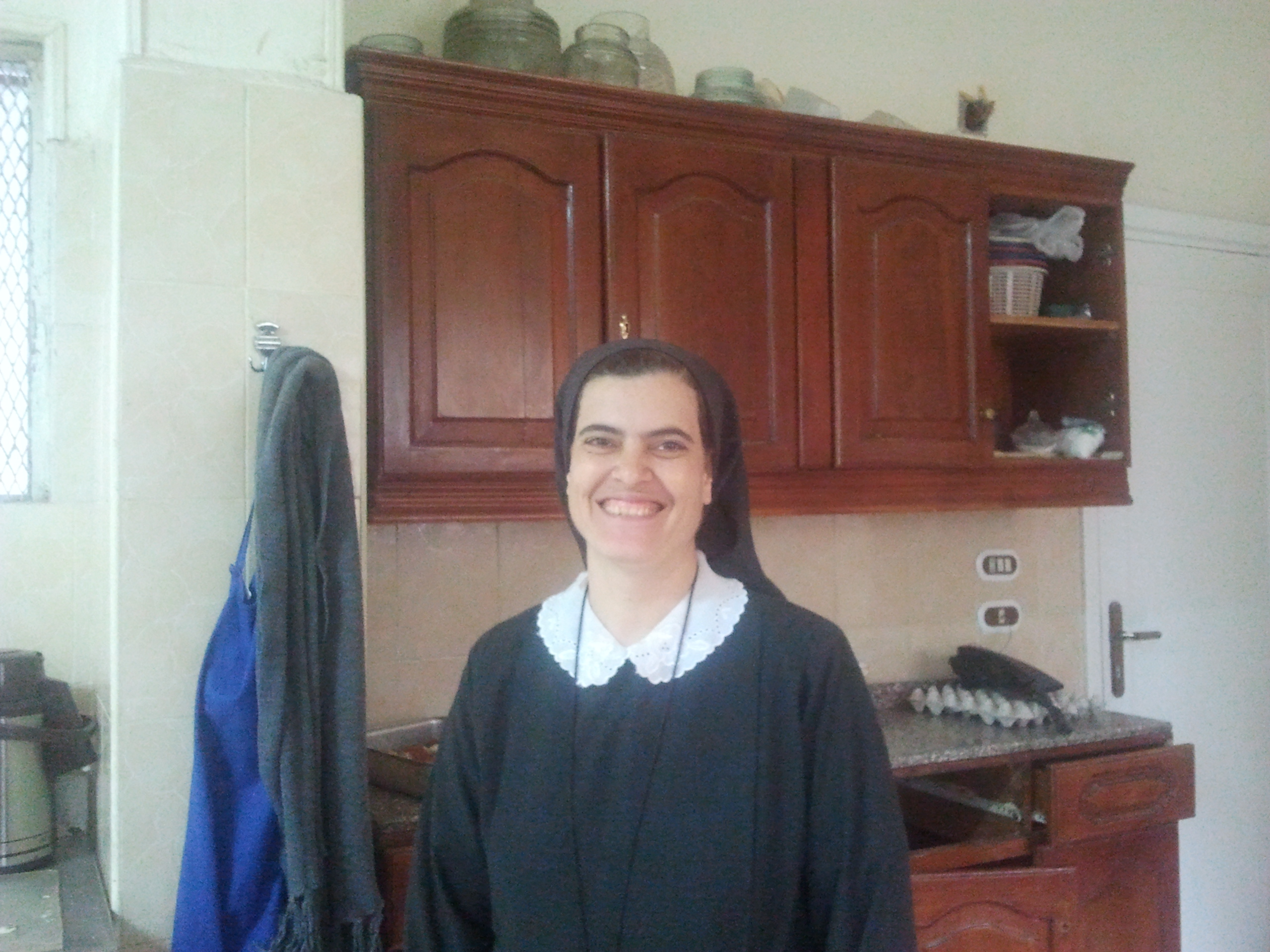
Sister Maria is a soft-spoken, calm woman with kind, soft, yet perceptive eyes.  Her quiet manner would probably cause her not to shine out in a crowd.  This is partly what makes her a hero to me.  I’ve been watching her for almost a week now.  To me, she’s the Mother Teresa of Cairo.
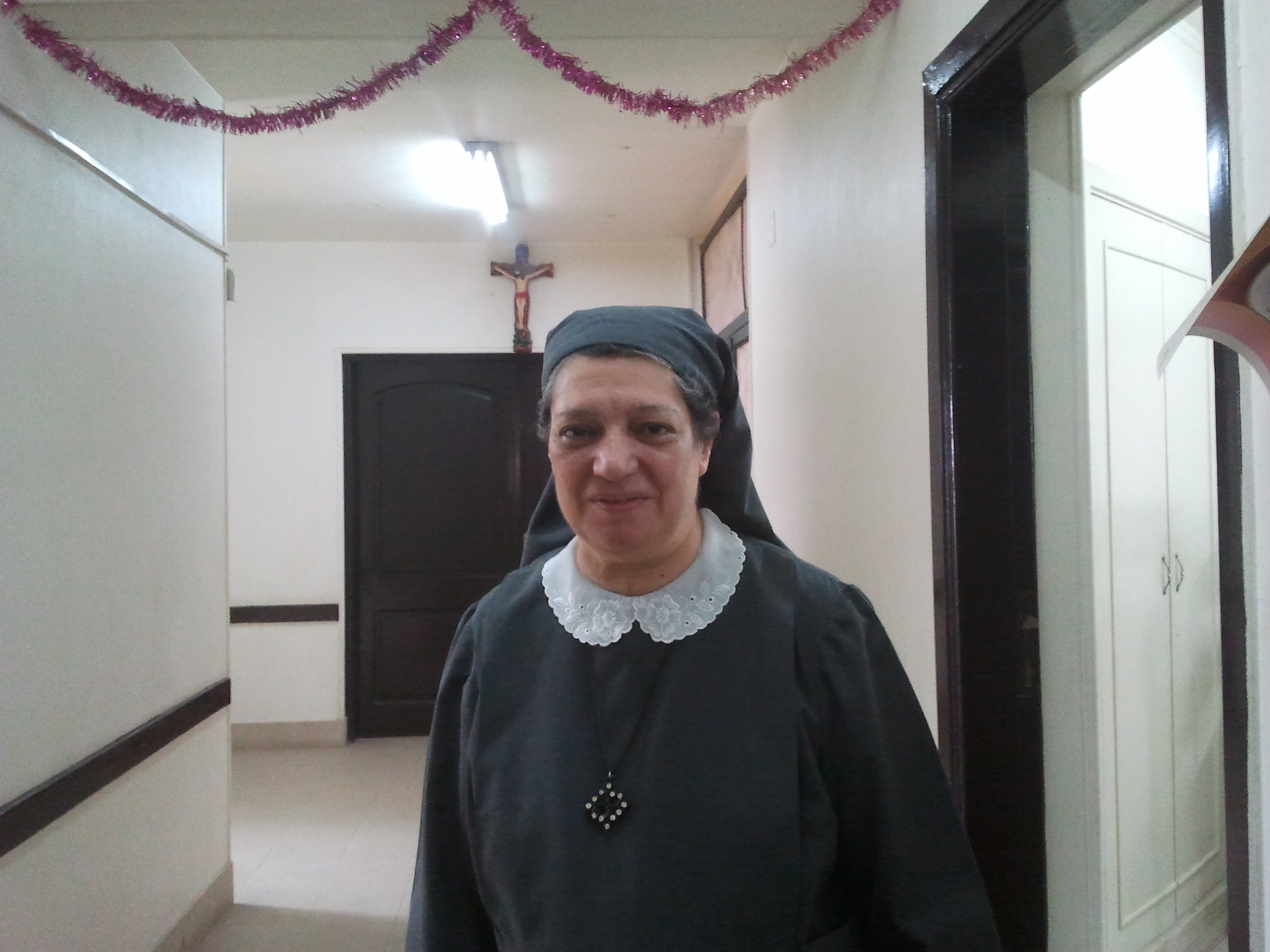
Sister (Tesoni) Maria

Sister (Tesoni) Maria

When she enters the dining room, all conversation ceases.  Not because the sisters are afraid of her, but because in her presence, they realize that in a convent, mealtimes are meant to spent in contemplative silence.  At least, this is the feeling I get while observing the silence in the dining room.  She can probably read me like a book, but it doesn’t matter.  I have nothing to hide.  Besides, she herself is a fascinating book I’m also trying to read.  Silence does not always reign at the table.  Sometimes there is lively talk, and Sister Maria laughs and shares with the others.

I admire the glints of spiritual intelligence that occasionally sparkle our conversations.  I comment on how many girls have some version or other of the name “Mary”.  I have met many girls and women named “Mariem”.  At least one Mary.  A Marina and a Martina.  There’s Marleen, and a few Maria’s, including the Sister.

“I often think about the qualities of this woman who was chosen to be the mother of Jesus,” she says.  “What an amazing person.  I wonder if it is all that meditating on Mary that makes Sister Maria so soft and gentle, so accepting of what life may hand her, so calm and connected.  Not only is her name Maria, but she also belongs to the order of the Sisters of St. Mary.

I tell her about my first trip to Egypt and the visit to the Philae temple in Aswan, where I first heard the story of Isis and Osiris, and how it excited me.  The parallels to the story of the Virgin Mary giving birth to a son, Jesus, who is to be a savior, are so clear.  I tell her how excited I was to hear of the Pharaoh Akhenaten, who introduced monotheism to Egypt.  I found it exciting to hear of a man outside of the Bible stories – an Egyptian who believed in one invisible God, a spirit God, who created the entire universe.

“Yes,” says Sister Maria.  “Some people say that it is because of preparation like this that made it so easy for the Egyptians to become Christians.”

I have watched her arbitrate disputes.  I hear only the name of one of the sisters, and I know someone is complaining about someone else.  Sister Maria listens calmly and gives her input.  She listens to the arguments of the people complaining.  She is not autocratic, not authoritarian; she’s open for discussion, and I have the feeling that her sisters know that she will deal with them fairly.

I think I heard the sisters discussing some topic with Sister Maria yesterday, perhaps political, or theological.  It was a heated discussion, but each sister was free to state her opinions openly.  Sister Maria was authoritative, yet open to whatever it was they were discussing.

I get the sense that she is used to being around dignitaries who come to visit the center.  Twice this week I’ve seen people whose appearance suggests worldly importance.  At these times she chats with them openly and pleasantly.

I once knew another woman in a similar position whose humility also commanded respect, and who, now deceased, is a candidate for sainthood in the Roman Catholic Church –  Dorothy Day, the founder of the Catholic Worker.  To me, Sister Maria should also be made a saint, but she is already so in God’s eyes, and that’s all that really counts.

In the arrogant inexperience my youth (I was only twenty-two when I met Dorothy Day), I didn’t understand some of the things that I saw and now see happening around Sister Maria.  People defer to her.  When I lived with Dorothy Day, I thought the deference she received was inappropriate.  Now, watching Sister Maria’s calm acceptance of it, I think Dorothy was probably annoyed or perhaps ironically amused by it but, knowing how people are, she graciously put up with it.  Both she and Sister Maria chose to live among the poor instead of seeking worldly success.  And yet, choosing to serve the poor and sticking to it, amazing things happen.  There is success when a person commits her life to improving the lives of those who are weaker, persistently continuing the work, whatever the setbacks.  Projects are successful, new projects start, and people’s lives start to turn around.  This success commands the respect of many of those who have achieved worldly success in terms of acclaim, honor and wealth.

I don’t know if Sister Maria is famous.   Not knowing makes it a lot easier for me to talk to her.  She is approachable (after mealtimes), and always understands what I am trying to tell her.  If she is famous, she seems utterly unfazed by it.  She doesn’t talk about herself, only about the people who serve alongside her, and the people they serve.

“You must see the work in the home for the handicapped children,” she tells me.  These, I think, are the very poorest of the poor.  They have been abandoned by almost everybody.  One of the sisters tells me that in Egypt, people are afraid of mentally handicapped people.  Not Sister Maria.  One of them gets to sit outside the hospital every evening and sell snacks to passers-by.  How wonderful that in this center, they are given a position of dignity.

The Salam Center was founded over thirty years ago as a co-project by Soeur Emmanuelle, a French-Belgian Catholic nun known throughout Europe for her work, and by the Coptic Sisters of St. Mary, the order Sr. Maria belongs to.  Sr. Emmanuelle has since passed on, but Sister Maria, who came to the center over twenty years ago, became her friend and colleague, and is now carrying on her work, adding new projects to what Sr. Emmanuelle began.  She oversees every project of this center.  There are many of them.  There’s the hospital, for starters.  There are free schools for the children of the garbage workers.  There are kindergartens, a children’s health clinic, where children are treated and parents instructed in hygiene, nutrition and health hazards.  The clinic educates parents on the harmfulness of female genital mutilation.  There’s the center for the handicapped, a home for the elderly, a team that visits and cares for the elderly who live in their homes.  There is a women’s program, where parents are educated in topics such as gender equality, civil rights, drug prevention, and prevention of female genital mutilation.  Social workers go and visit the homes, helping parents obtain important things they need, whether it be documentation or funding.  The women’s center has seamstresses who teach sewing, so that women can have an income.  There are training programs for young people, where they can learn things like mechanics, computer operating and repair, and hairdressing.

“Everybody I meet is so warm and kind!” I say to Sister Maria.  “Everybody I meet seems to talk about a deep love for Jesus, but it isn’t just talk.  They all seem to show the love I think characterized Jesus.”  She nods her head.  I ask, “Do you interview all the people who come to work here?”  She says yes.  “Are you looking people with open hearts more than the right theology?”  Again she nods her head and says, the one quality she and everyone else involved in the hiring process is looking for is hearts that honor, that want to love and serve the poor.

This is what makes her, to me, a saint.  Because everything this woman is, is about following and serving Jesus Christ.
Rubies in the Rubbish – Day Seven

18 Monday Nov 2013

Posted by noreennanz in Uncategorized

≈ Leave a comment

Tags

Cairo, Christianity, Copts, Egypt, Pilgrimage, Spirituality, the Better Life group, the Better Life team, travel

I am so happy, my heart is so full, I can’t sit still.  I can’t concentrate.  I can’t believe I’m doing the very things I have been longing to do – in Egypt.  My gifts are being used, just like the broken parts of the wheelchairs I see piled up in the parking lot.  And I’m learning to value them.  In Germany I have often thought being an English teacher to be beneath my level of intelligence.  Not only is my life as an English teacher reductive, I keep getting the lowest level students, reducing my vocabulary still further!  My once vast vocabulary has been reduced to a few hundred words.  When I speak to native speakers of English, I think I must sound like a simpleton, my English has become so basic.  But here in Egypt, that is exactly what they need.

This morning, a new thought emerges.  It is so beautiful and new, I think it is God speaking to me:  “These are my beloved children.  I am so pleased that you are open to them, I am opening your heart up, just as you have asked me to do.”  It is as though my openness to the poorest of the poor opens me.  As I close myself to the weakest, the most broken, my heart closes in direct proportion.  What an amazing principle.  I have asked God to open me up more and more to God’s love.  And it is happening.  I tingle.  My heart burns.  The condition for receiving this love is to be open to all of God’s creation.

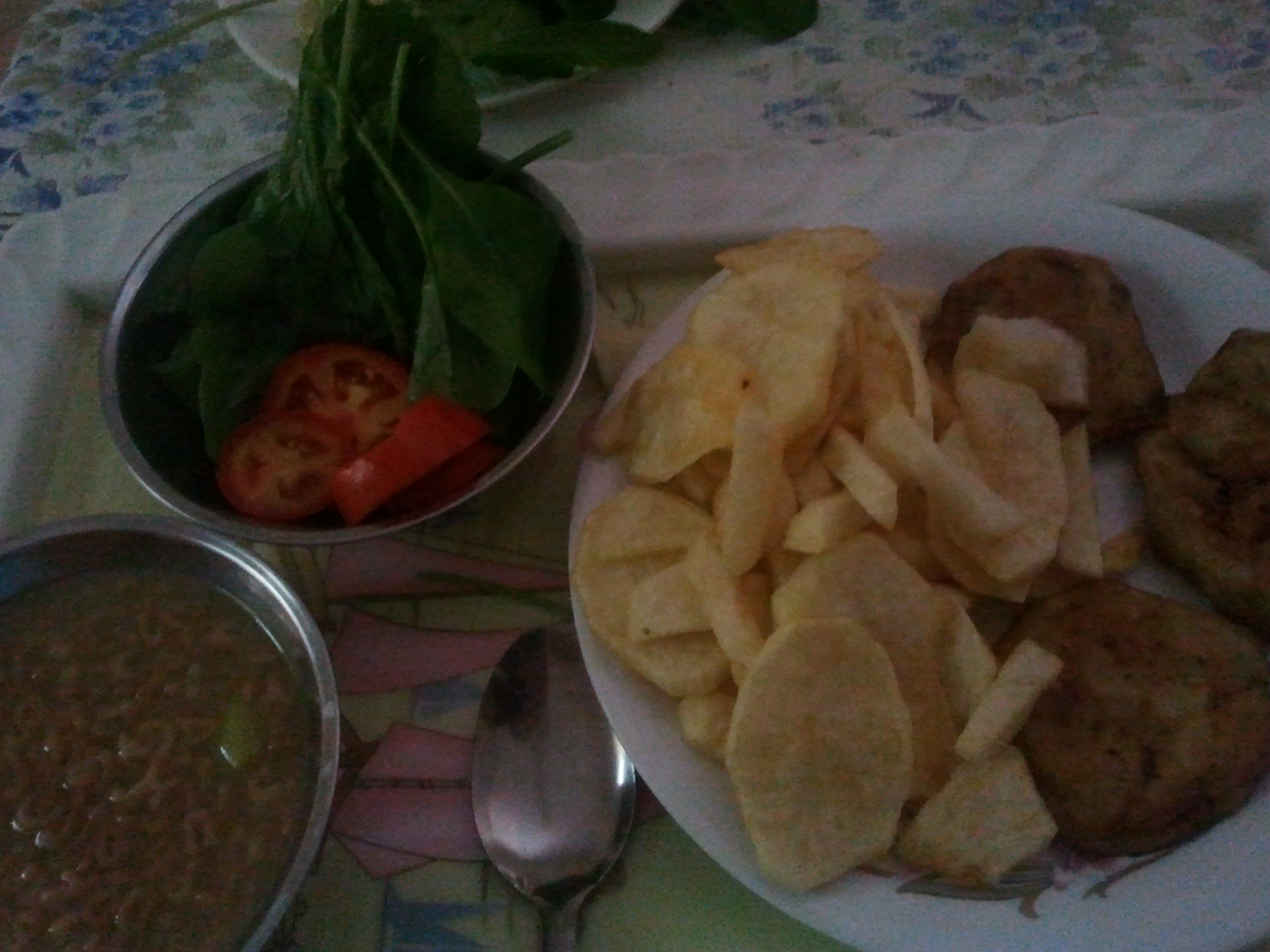
Today is Friday, the Sabbath of the Muslims, and everything is closed.  Most of the sisters are fasting, and there are no activities scheduled for today.  All I can report of this day thus far is that Sister Mariem has prepared a magnificent breakfast for me – breaded fried eggplant, French fries, noodle soup, tomato slices with rucola, and bread with molasses.

Egyptian breakfast

An Egyptian breakfast, made just for me

Sister Ologaya sits across from me, eating foul – cooked fava beans and pita bread, her favorite breakfast.

Each day I am more impressed with these sisters and their work.  I recall a Bible passage about the worth of a woman.  In Proverbs 31:10 it says, “A wife of noble character who can find?  She is worth far more than rubies.”  These women are celibate, but I believe that in the Catholic Church, when a nun makes her vows, she becomes a bride of Christ.  So, these Sisters are also, in a way, wives.  They are beautiful gems, and I find them models of what I admire in a woman.  I find myself calling them rubies – rubies who have chosen to live in the rubble near the rubbish heap.

Sometimes I wander into the dining room and discover a sister or two working in the kitchen.  They’re often humming pretty songs, which I assume are Egyptian songs worshipping God.

One day when I was in the dining room I showed them that I had Egyptian worship music in my computer – music from a group called “Better Life“.  “Oh, I know that group!” they all exclaimed.  Since then, when I come into the dining room to check and write emails, they ask to hear the music, and then translate the lyrics for me.  Sister Marina even owns the same CD as I, and Sister Elleria sings a song for me.  What a beautiful voice she has, and how lovely these songs are.

Each day they overturn assumptions I had made the day before.  Now I know that the entry to the convent is filled with sand piles because they need the sand for laying the terracotta tiles.  There are plans to turn the garden I thought was so messy into a little paradise.  Parts that look as though they are randomly lying around, are actually there for a reason.

The washing machine I thought had been discarded into and defacing the garden was placed there because it is next to where the handicapped children live.  These children are helping to load trucks with things like the washing machine, as well as the wheel chairs now sitting in the parking lot, for repairs.  They are helping load lumber and furniture onto trucks for delivery to a new school/dormitory the Salam center is opening.  Nothing is wasted here – not the gifts of the handicapped children, and not the leftovers from the meals.  Sister Mariem’s dog gets all the chicken bones.  I thought dogs couldn’t eat chicken bones, but this dog does, and is not harmed.

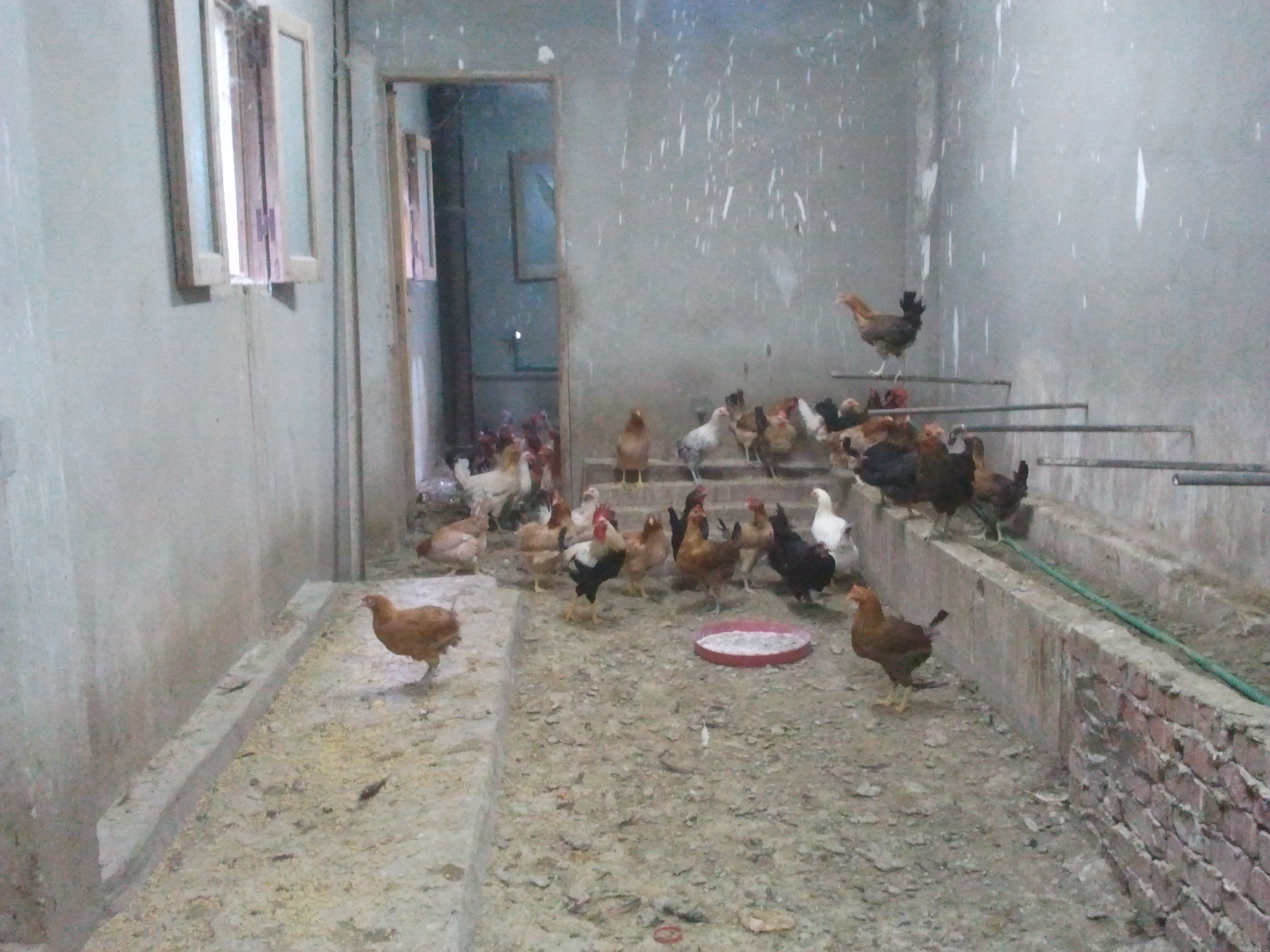
It seems I am not harmed from the food either.  I tried a little rucola the other day, and my stools were fine afterward, so I’ve been increasing my intake of raw vegetables.  I’m still in the best of health.  At breakfast I look at all the food in the garbage and ask if this is for compost.  No, it’s for the chickens.  You have chickens here? I ask.  Oh, yes, they’re Sister Mariem’s chickens.  I ask to see them.

Sister Mariem's chickens

Sister Mariem’s chickens

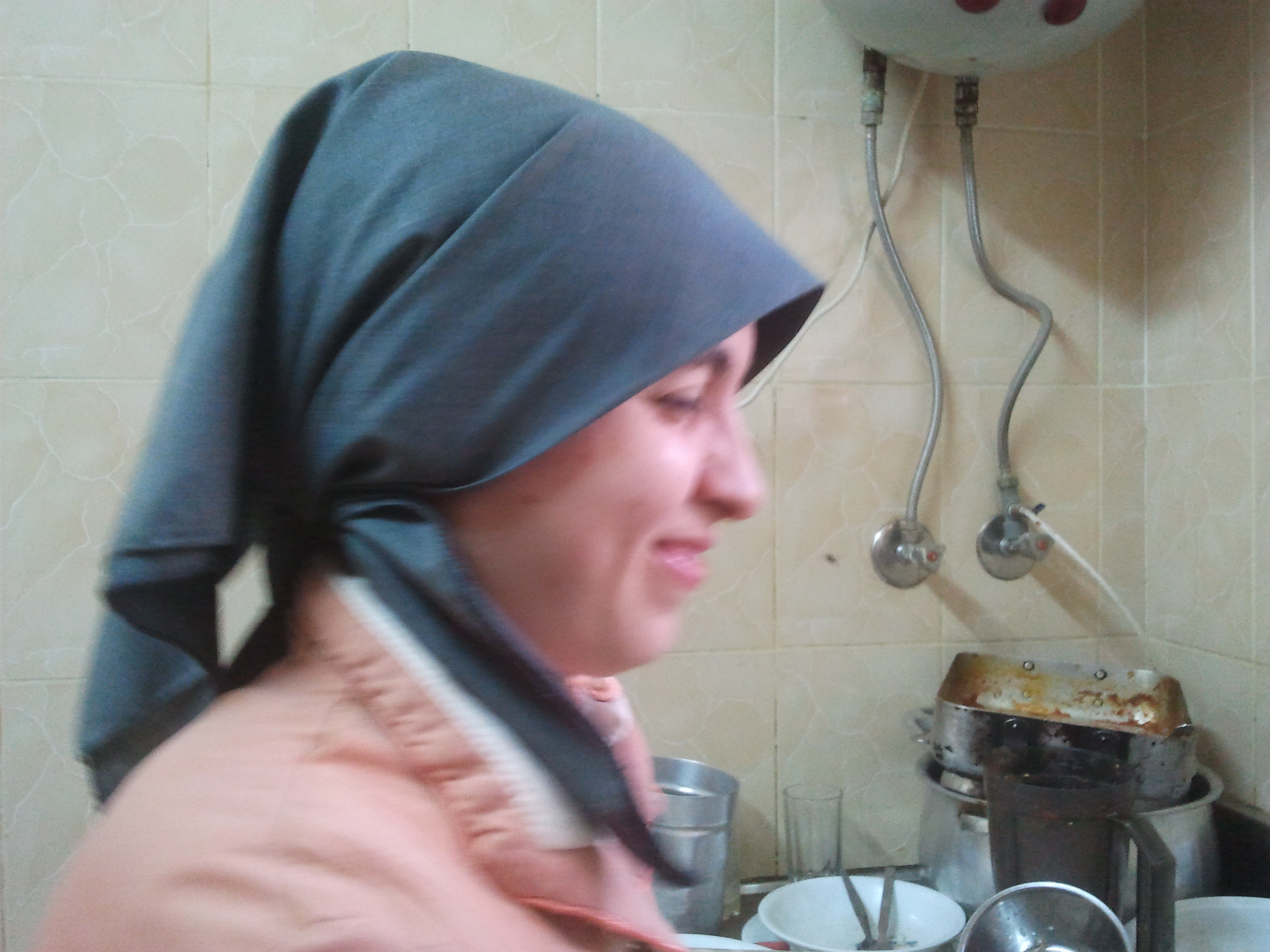
I am ushered outside to a dilapidated building, where the chickens are kept.  We have delicious eggs nearly every day here.  Turns out these eggs are from Sister Mariem’s chickens.  So I ask Sister Mariem, whose English is the best of anyone’s here, if the garden is organic.  “Oh, yes,” she answers.  “We don’t use any chemical fertilizer on the garden.”  I found out that the tap water is safe, just unpalatable.  So the food here is also safe for Westerners to eat.

Sister Mariem

Sister Mariem

One day Sister Ologaya shows me the garden.  We discuss the names for herbs and vegetables.  Sometimes her English fails her, and she resorts to French.  Either way, I’m learning so many new words for these things, I can’t keep track of them all, although I write down and practice new words every day.  Green beans, fava beans, lettuce, cabbage, rucola, molokhaya (the vegetable that tastes like slimy spinach), mint, sage, onions, mango, date and orange trees, and more.  She leads me to a stall, where I discover a beautiful young cow and a goat.  They plan to inseminate them so that next year they can have their own fresh milk.  Knowing the sisters, they’ll probably find a nice male cow somewhere and put the two cows together.  The cats have the run of the garden.  My first day I discovered a cat resting on one of the chairs in the dining room.

Sister Ologaya

Sister Ologaya

I love this place that converts old apartments into chicken stalls, old hospitals into schools, and lets cats run around the dining room.  I find myself, for the first time, wholeheartedly accepting a Christian community.  I feel like I belong here, and that I want to belong to these women who are so full of love and joy.

Rubies in the Rubbish – Day Five

15 Friday Nov 2013

Posted by noreennanz in Uncategorized

≈ Leave a comment

Tags

Cairo, Cairo Education, Christianity, Copts, Education, Egypt, Pilgrimage, travel

Isn’t day five the day you always get frustrated?  I remember this from my zen days, doing week-long meditations.  Day five was always the day when I was in a bad mood.  Day five, when you’re on vacation, and everything starts to become routine, and you notice the things that aren’t right.

The first thing I notice today is that Sr. Maria is nowhere to be seen, and I need a driver to take me to the school.  There is nobody today in the convent dining room who speaks English.  Marsa has her few words, like “I like you”, and “You are beautiful,” and “We are happy to meet you.”  But I want to know where Sister Maria is, and whether I can get a ride to the madrassa.  They’re waiting for me, after all.  Marleen said I could come every day.  They’ll be asking what happened to me.

I reach into my pocket for the phrases I’ve written down on a piece of paper.  Ah, yes, there it is.  “Where is…”  Where is Sr. Maria? I ask Nagette.  She points upstairs and mimics “sleeping” with her hands.  Sr. Maria asleep at 8:30 am?  I can’t believe it.  I decide to go outside and look for Rohmy.  I just saw him on my way to the convent!  But now he is nowhere to be seen.

I walk into the ornamental garden, looking for Rohmy.  From my room, looking down, the garden looks beautiful.  From inside, it is a mess.  There is dirt and dust everywhere, the fountain seems to be broken, and there are little bits of garbage lying around.  There is only one chair in the garden, and it appears to be filthy – and broken.  There is an abandoned washing machine in the middle of the path.  Why doesn’t anybody maintain or fix the things that are broken?

I ask Magdy, the elevator operator, “Feyn Tesoni Maria?”  Today my new word seems to be “where is…?”  He rattles off something in Arabic, and says something in English about two o’clock.  When I ask about Sr. Maria, he says, “Nine or ten o’clock.”  I don’t know how to ask politely in simple English, so I ask, sounding like a commander, “Could you tell Sr. Maria that I would like to see her?”

One of the things I notice here is that there is a lot of sitting around.  Women sit on benches outside the hospital and wait for someone.  The steps of each floor of the hospital are so crowded with people sitting, sometimes I can hardly wriggle through them to walk downstairs.  Why don’t they sit on the chairs in the waiting room?

And it’s not that much different with the workers.  They seem to have plenty of time on their hands.  The other day, a doctor in the ER had enough time to show me the entire complex.  Yesterday, Aowny told me that life is hard in Egypt; people have to work twenty-hour days to support their families.  He told me he has to work from 9 am until 10 pm every day.  Yes, he was on duty.  But he also had a few hours to sit and chat with Sr. Elleria and me.

On my second day here, the lock on the door to my floor of the hospital broke completely.  The door is metal, and the lock as well.  Some of the metal on both the door and the lock appears to be rusty, and screws are loose on both sides of the lock.  I was unable to lock the door.  Behind the door there are offices with valuable office equipment.  It took me two days of asking Sr. Maria before someone actually repaired the lock, and then only from one side.  I have found that if I use the key to pull on the door, I can get in and out once I’ve unlocked it.  But why doesn’t someone repair the entire lock?

I know that new stairs for the convent are being built, but why is there sand everywhere?  Why don’t they pave the parking lot instead of leaving the sand there and letting it blow over everything?

On my floor I can’t turn on the light in the bathroom that doesn’t stink because the light bulb is broken.  There are chairs in the lobby of my dormitory with broken rungs on the back rests or missing seats.  The convent kitchen has cupboard doors missing and knobs broken off.  The knobs on one of the stoves are missing.  But people make do.  As Dr. Boussar said, “You see, it works!”

This morning, since neither Sr. Maria nor Rohmy is anywhere to be found, I have plenty of time on my hands.  How to fill this time?  I decide to clean my room.   But I don’t know how.  There are no buckets anywhere, no mops, no dustpans, although I have found a broom.  I don’t know how they clean rugs here, and my rug is full of sand.  The floor is coated with a film of sandy dust after having lived here for five days.  I ask a girl in the office for someone to help me clean my room.  I find a girl in one of the offices.  It turns out we have already met.  I should remember her, because her name is similar to mine – Shereen.  Almost sounds like Noreen.  But I have met so many people, I can’t remember her well.  Marleen, Sabreen, now Shereen.  I apologize.  She smiles and says it’s okay, and that she will send the cleaning lady in a few minutes.

Soon the cleaning lady arrives.  I show her the bathroom with the broken light bulb.  I tell her the other bathroom stinks, but even I can’t smell it any more.  Have I gotten accustomed to the smell, or is it truly better, after I have poured at least two liters of water down the drain?  I don’t know.  But the cleaning lady won’t let me do a thing.  I learn that there is no vacuum cleaner here, so the cleaning lady simply replaces my rug with one in another room.  She cleans the floor, the toilet, the shower, the sinks.  There are two things that will not happen.  She will not let me clean my room myself, and the light bulb will almost certainly not be replaced.

As I stand around, watching her work, I feel like a bossy colonialist.  I am embarrassed.  But after decades of sacrificing my needs to others, and years of working on myself, I have learned that I need to take care of myself and my needs, and that self-consciousness will lead to only more inhibition.

As I write, I think I sound like a spoiled, petulant Westerner who thinks her culture is superior to this one.  True, there is a strong perfectionist streak in me.  One thing about learning to express my wishes and needs is that I think I have gotten bossier and more dominant than I was when I was compliant and submissive.  So be it.  I have also learned that God loves me as I am, and that I am allowed to be a bit bossy if that is the only way I can find to have my needs met.  As long as I think I’m being reasonable, it should be fine.  I wish the Egyptians would let me clean my room myself.  I wish they could see and wish to replace broken light bulbs and fix smelly drains.  I think they see, and yet they don’t see.  Germans love the friendliness of Americans, but I doubt Germans will ever be known for their friendliness.  I know the Egyptians long for a country that works better, but they don’t seem to know that they have be on the look-out for what needs fixing, and then somehow get working on it.  But maybe this is too much to expect in a country, in a continent, that is known for being laid back.

On my way to lunch, I pass a truck with two very old, dilapidated wheelchairs on a sort of platform in the back of the truck.  A man sitting on a wheelchair is sitting inside the belly of the truck, and two men are trying to repair two wheelchairs that look beyond repair.  I remember something Mohammed, Peter’s and my tour guide on our last trips to Egypt, said:  “Egyptians will salvage anything.”  Maybe the washing machine in the garden is also awaiting repair.  Who am I to judge?

I also learn that Sister Maria was indeed not sleeping.  She left the convent at 6 am today, and was relying on another sister to bring me to my work.  The other sister and I never met up.  No matter, Sister Maria has found work for me in the school here in the compound for this afternoon and evening.

*

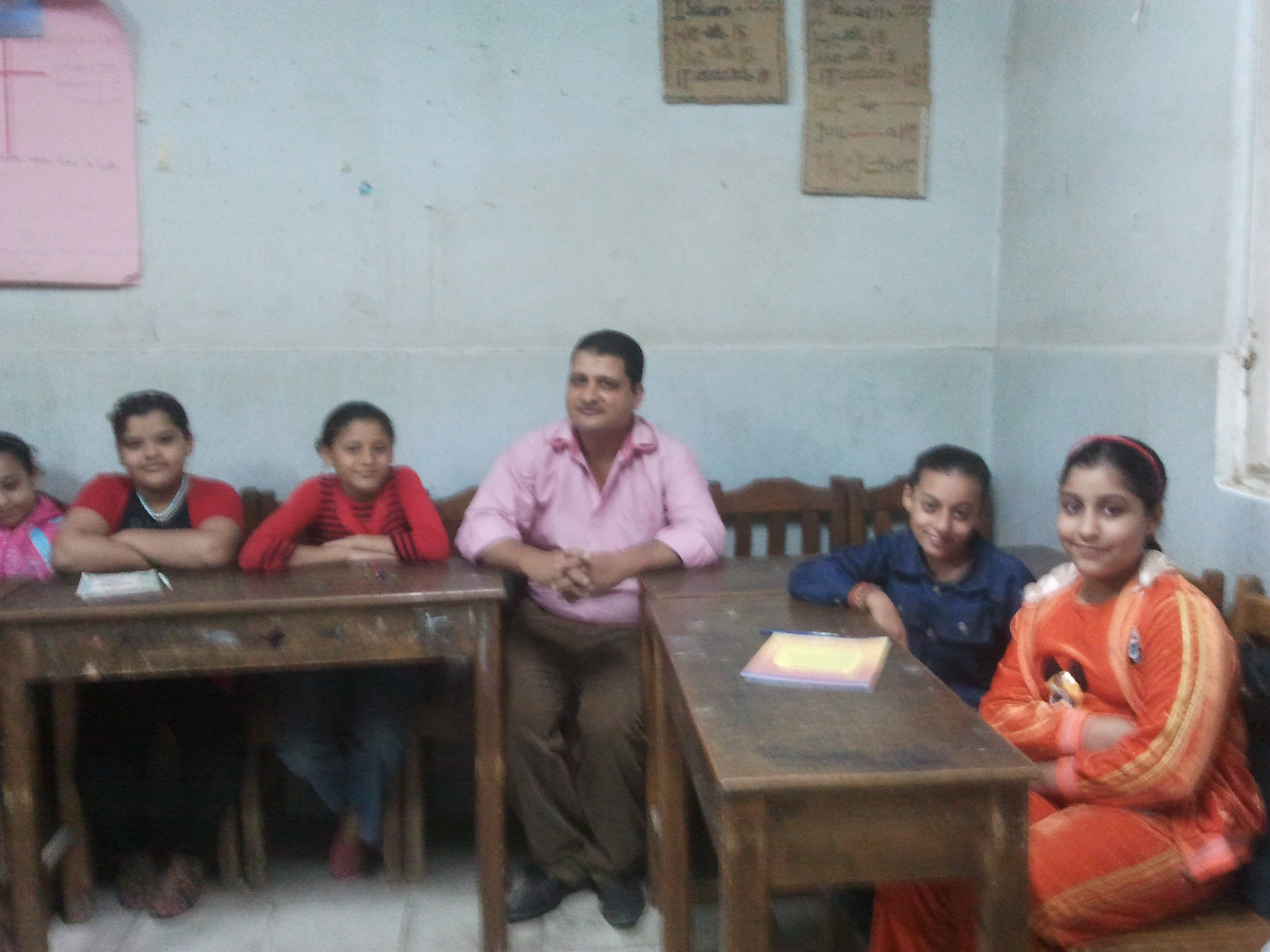
I’ve just spent three hours working with the children, and it is wonderful!  They are so friendly, so eager, so polite.  Their teacher, Reda, allows me to do most of the work teaching the class.  He’s unbelievably humble, asking me how he’s doing as a teacher.  What I see is a really loving man who loves his kids.  Love is what comes across to me the most in this entire center.  I see love wherever I go, whether in the hospital, the schools, or in the convent itself.

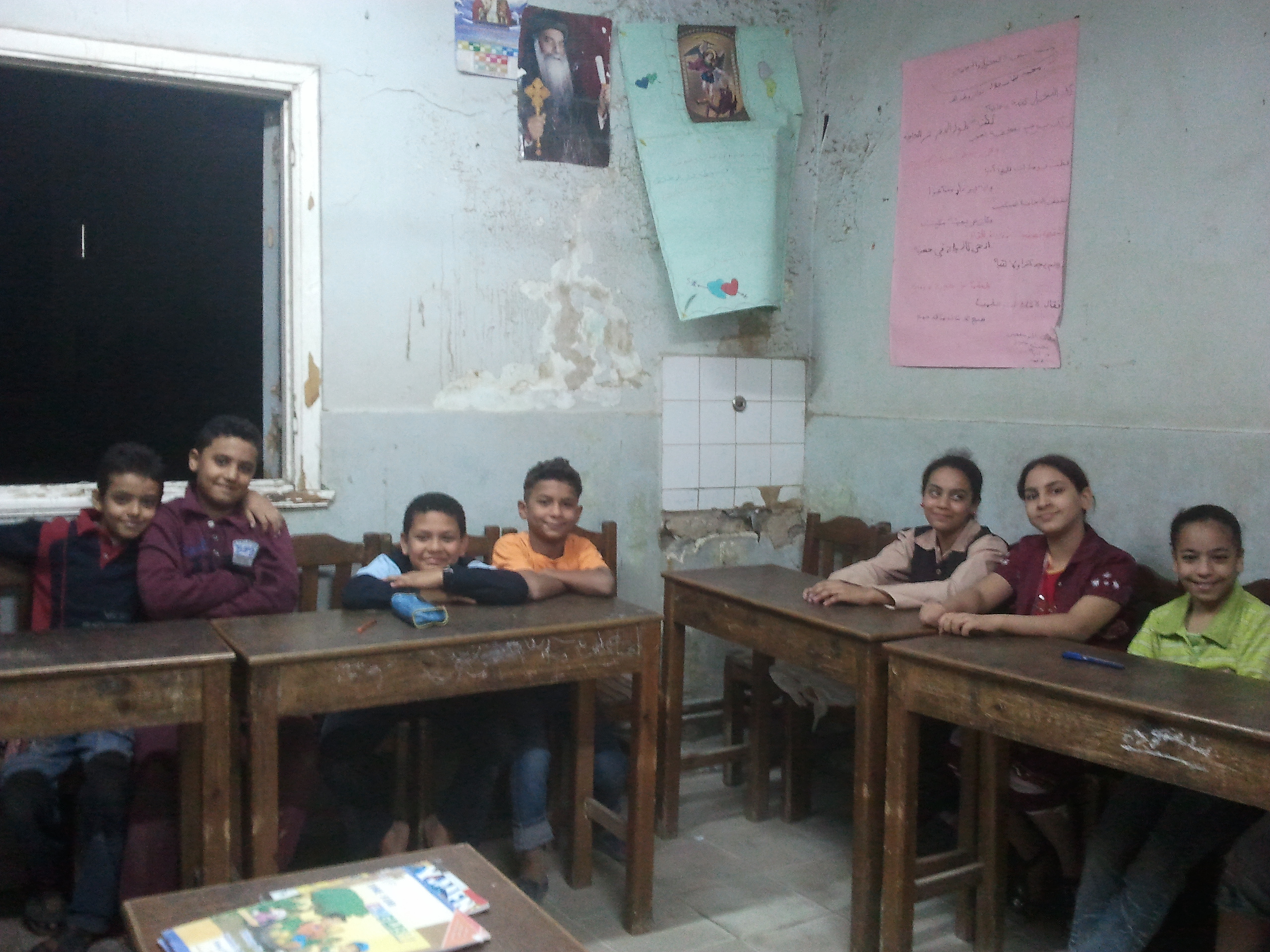
I find myself standing in the same classrooms that looked so incredibly filthy and decrepit on Sunday.  Filled with kids, they are filled to the brim with life and joy.  In Reda’s class, every time a student gets an answer right, everyone claps.  Reda tells me that these kids are weak students.  Their books are meant for private school students at the same level, with role plays like someone calling the operator at the Egyptian Museum, asking when the opening hours are.  These kids will probably never know enough English to be able to call the Egyptian Museum.  I wonder if they’ve ever been to that part of Cairo and seen the mummies.  I live in Germany, but I’ve seen the mummies in the Egyptian Museum.  (They have been there, I later learn.)Image

I teach one of the classes the present continuous form of the verb “to drive”.  I’m driving a car.  This is supposed to be review.  Then we get to the past tense.  I start asking the children, “Did your father drive the car yesterday?”  Child after child answers, “No, he didn’t.”  I look at Reda.  He tells me, “These kids are poor.  They don’t have cars.”    So he and I adapt the question to, “Did your father sit in a bus yesterday?”

Reda tells me that even though these kids are weak, he doesn’t hit or punch them.  The fact that he is telling me this makes me wonder how many teachers in this country hit their pupils.  “These kids are my brothers and sisters,” he says.  I never had a teacher who called us students his or her brothers and sisters.

Reda's (and my) fifth graders

Reda’s (and my) fifth graders

I have to revise what I said about Egyptians not working very hard.  It is nearly 8 pm and Reda is still teaching.  He got up at 4 am today to teach in another school, taught there all day and then came to this school to teach in the evening program.  He’s there every evening, five days a week.  He has to take three buses to get to this school, and he often gives private lessons as well.  Sometimes he only gets four or five hours of sleep because he has to work so hard.  “I’d come here, though, even if they didn’t pay me.”  What would make a person miss out on three hours of sleep, just to be able to work there?  This must be a very special place.

Link

Rubies in the Rubbish – Day Two

12 Tuesday Nov 2013

Posted by noreennanz in Uncategorized

≈ Leave a comment

Tags

Cairo, Christianity, Coptic, Copts, Egypt, Pilgrimage, travel

I had already been to Egypt twice before with my husband.  Once we had a wonderful cruise on the Nile, just after the January 25 revolution.  The sites were empty; we had Egypt to ourselves.  You can read about this trip at my old blogsite: http://noreen-masterpieceinprogress.blogspot.de/2011/11/shukran-means-thank-you.html is the first entry of that series.  It was wonderful and inspiring.  We wanted to go back.  We did, and I wrote a series about that trip beginning here:  http://noreen-masterpieceinprogress.blogspot.de/2012/02/if-youve-drunk-from-waters-of-nileday.html

That was a wonderful trip, too, but not enough for me.  I felt a strong need to come back to Egypt and do some sort of volunteer work, especially as an expression of my Christian faith.  I wanted to do something to help Egyptians to move on in their revolution, to somehow be of assistance in their journey to freedom.  And God did lead both my husband and me to a gathering of like-minded people who also had Egypt on their minds.  I heard about Sister Maria, who runs the Salam Center, I sent her an email asking if I could come, she answered saying yes, and the rest is history – the story you will read here.

*

The beginning stage in a relationship is perhaps the loveliest.  You smile a lot, and everyone is nice to each other.  Wouldn’t it be nice if relationships were always this way?  Here, I struggle with the words.  Of course, I can’t read them in Arabic, but I’m learning to say “good morning”, “good evening”, “see you later”, “what’s your name” and “my name is …”  I write them down on a notepad in my normal Roman script.  That is enough to keep me busy a whole day.  People smile when I attempt to speak Arabic.  They are indulgent with me.  Will we get past the beginning?

I have met Sr. Maria by now.  She sat with me last evening at the dinner table.  I asked her where in Cairo we are.  “We’re in the north of Cairo,” she said.  “This is one of the seven garbage dumping areas of the city.”

Today Sr. Marina takes me on a tour of the hospital and the other buildings connected to the Coptic Sisters’ Center.

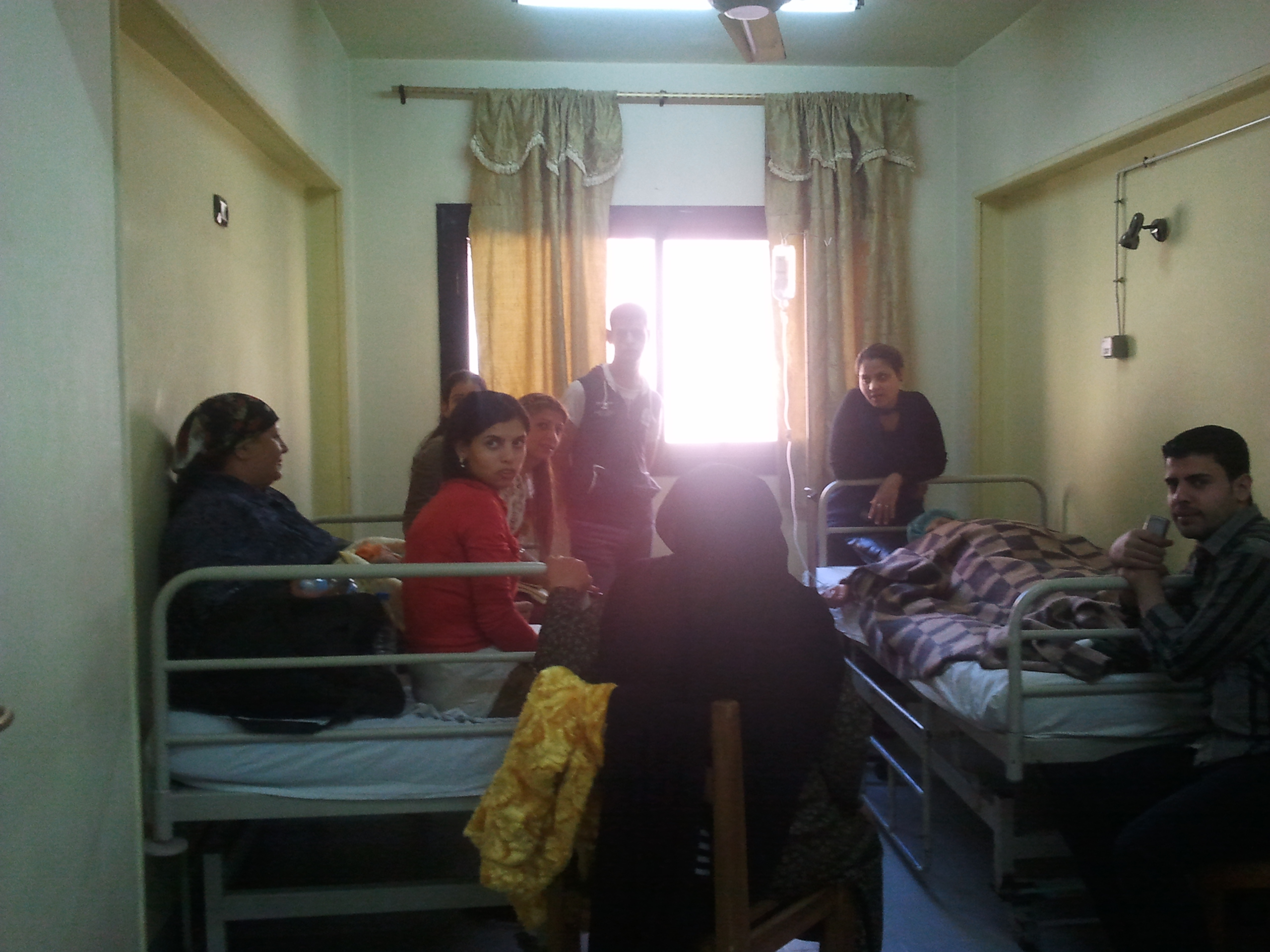
My room is in the hospital building, and today I have already seen that there are also administrative offices on my floor.  Sr. Marina begins with surgery and admissions, on the first floor.  My first impression is of friendly chaos.  Today is a Sunday, officially a holiday, but that doesn’t matter here at the hospital.  Patients, visitors, I don’t know who all, are all sitting on the sandy stairs.  Since many of them are men and some are smoking, I figure they’re on the steps so that the men can smoke.  I see Muslims and Copts.  Everyone smiles at me, a woman in a black gallabia, her head completely covered except for her eyes peering through glasses, touches me on the shoulder and says in English, “Welcome”.  Her eyes are smiling, merry.  And suddenly I am inside the operating theaters.  There are five in this hospital.  There are also a few rooms where patients can stay as in-patients.  Those rooms are spilling over with visitors.  In one room I count nine visitors visiting a child.

SAMSUNG  SAMSUNG

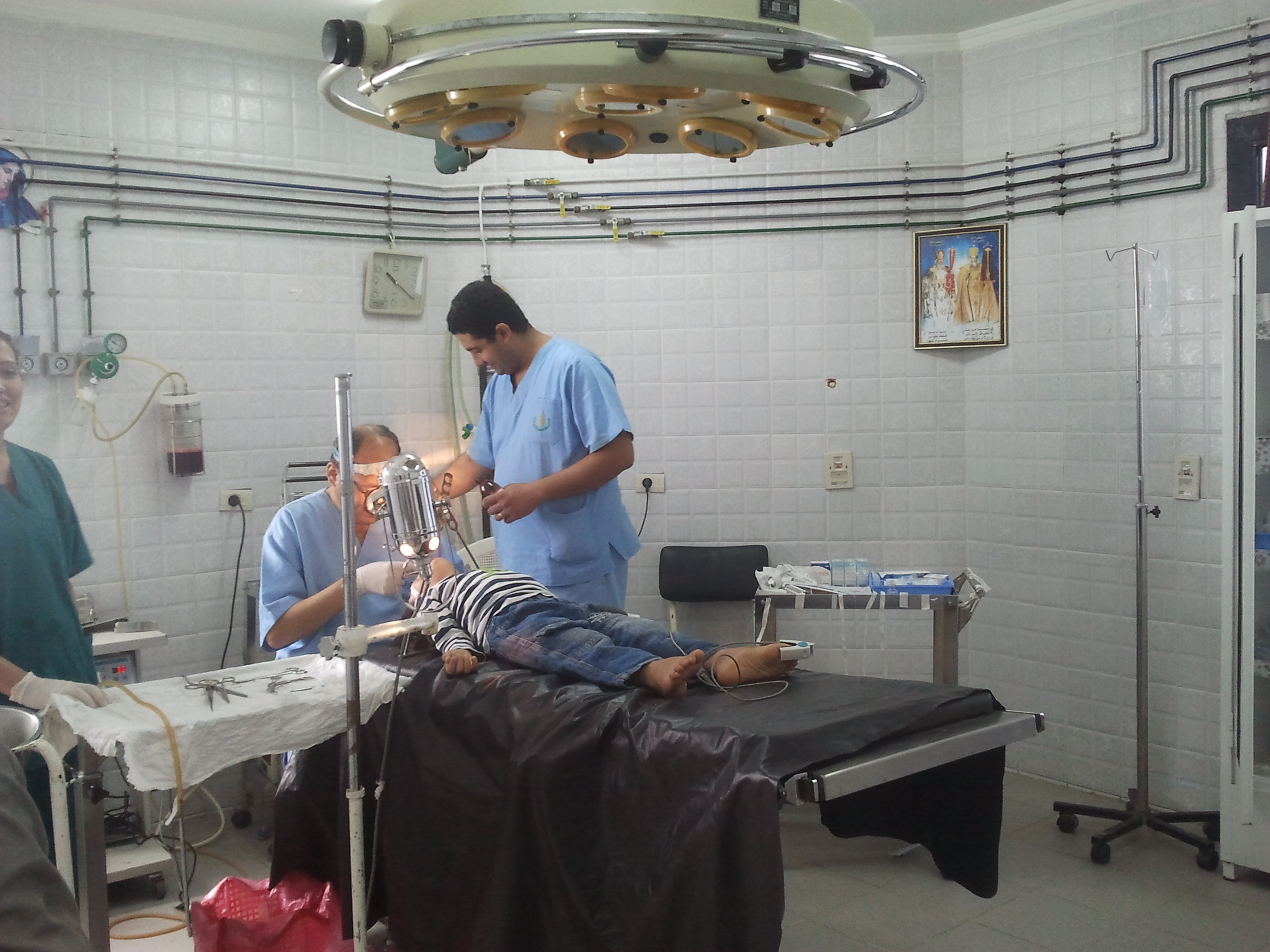
Most of the patients here today seem to be children.  One is having an ENT operation.  I witness my very first caesarian in another room, where I see a woman lying on the operating table, blood flowing all around her.  Somewhere inside her belly, I hear the faint sound of a baby crying.

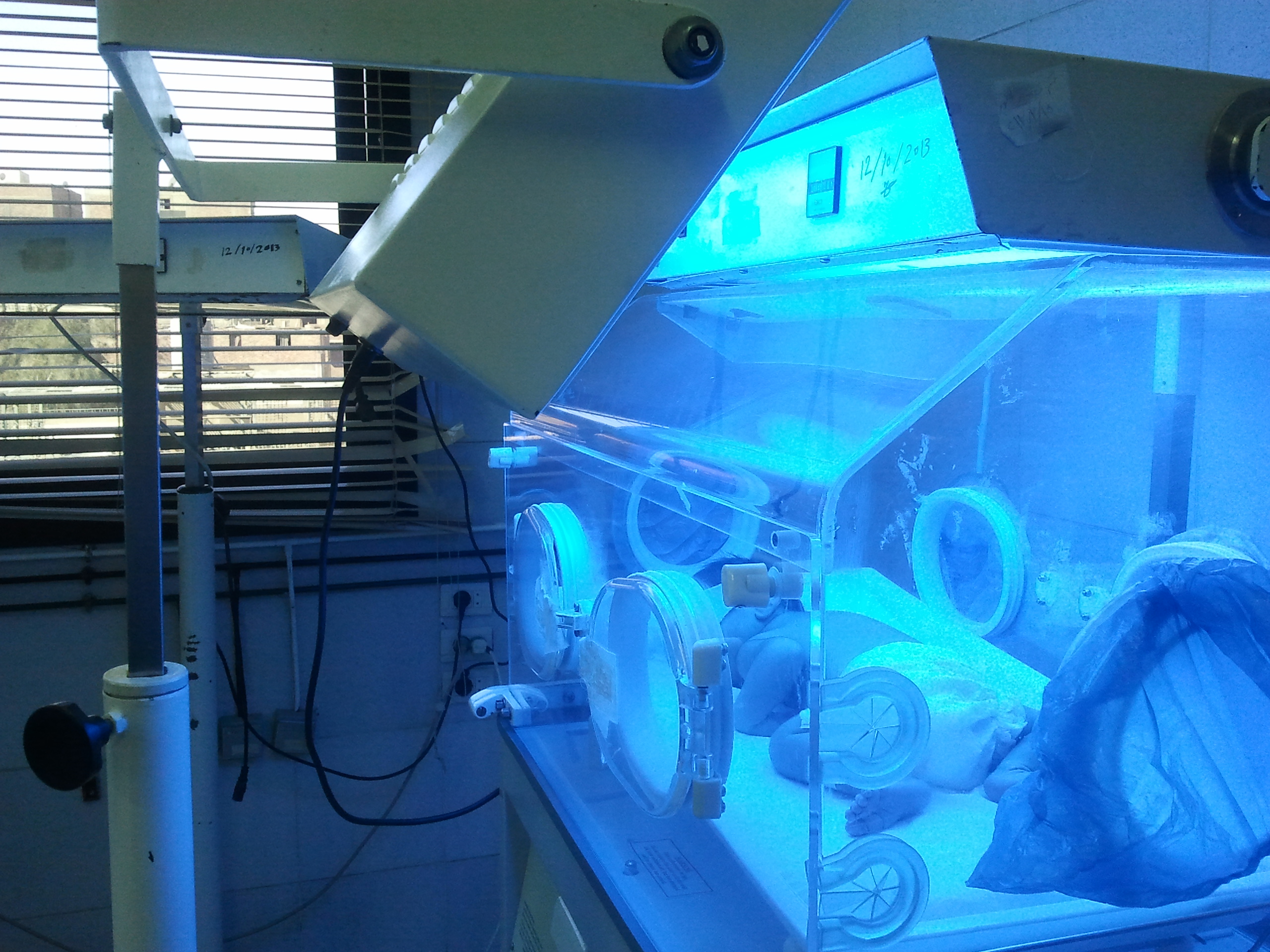
Upstairs, I look inside the neonatal clinic.  All the infants today but one are there because of jaundice.   A doctor and nurse are busy trying to insert a canule into the tiny foot of another infant, whose lung is underdeveloped.  I say a quick prayer for him.

neonatal station

neonatal ward

I see that all the equipment is sterilized, and that is reassuring.  I am also told that I have to put plastic covers over my shoes when I walk in the operating area.  The doctors are dressed in spiffy scrubs and would fit into any hospital in the west.  In all other respects, though, this hospital is unlike any I have ever seen.  In a corner of the each floor where operations take place there is an altar with burning candles, and plastic flower-framed pictures of a blonde Jesus, the now deceased Coptic pope Shenouda and other figures I don’t recognize.  Inside and surrounding the doors of each room thee is always at least one picture taped to the wall – of Mary, Jesus, Pope Shenouda or other holy figures in the Coptic church.

The hospital is bigger than I initially thought, occupying all five floors of this building.  I wonder if the part I’m living in isn’t designated for mothers who have run away with their children from their husbands.  Sister Maria told me yesterday that Egyptian law allows a husband to claim his wife back, even if he has been beating her and/or the children.  The wife has no legal recourse.  Here, the sisters shelter and hide them from their husbands.

Some of the upper floors are out-patient clinics.  One area is the emergency room.  I meet one of the ER doctors, Dr. Beshoy.  Sr. Marina asks him to help guide me through the complex.  Her English isn’t adequate to the task.  Still, it’s good enough to crack a joke.  “His English very good.  My Arabic very good,” she tells me.  I see an opthamology clinic, an X-ray area, an ENT clinic, an orthopedic clinic, a dental clinic, and much more.   All the equipment is there, but the tables or desks are all covered with printed oil paper.  And some of the equipment is a bit rusty.  Instead of gleaming stainless steel waste baskets, they have to do with those flimsy plastic ones you can buy at a one-euro or dollar store.  To ensure privacy for the patients, they have covered some of the windows with red transparent foil.  And everywhere there are pictures of Jesus, Mary, Pope Shenouda and other saints, taped onto the walls and doors.

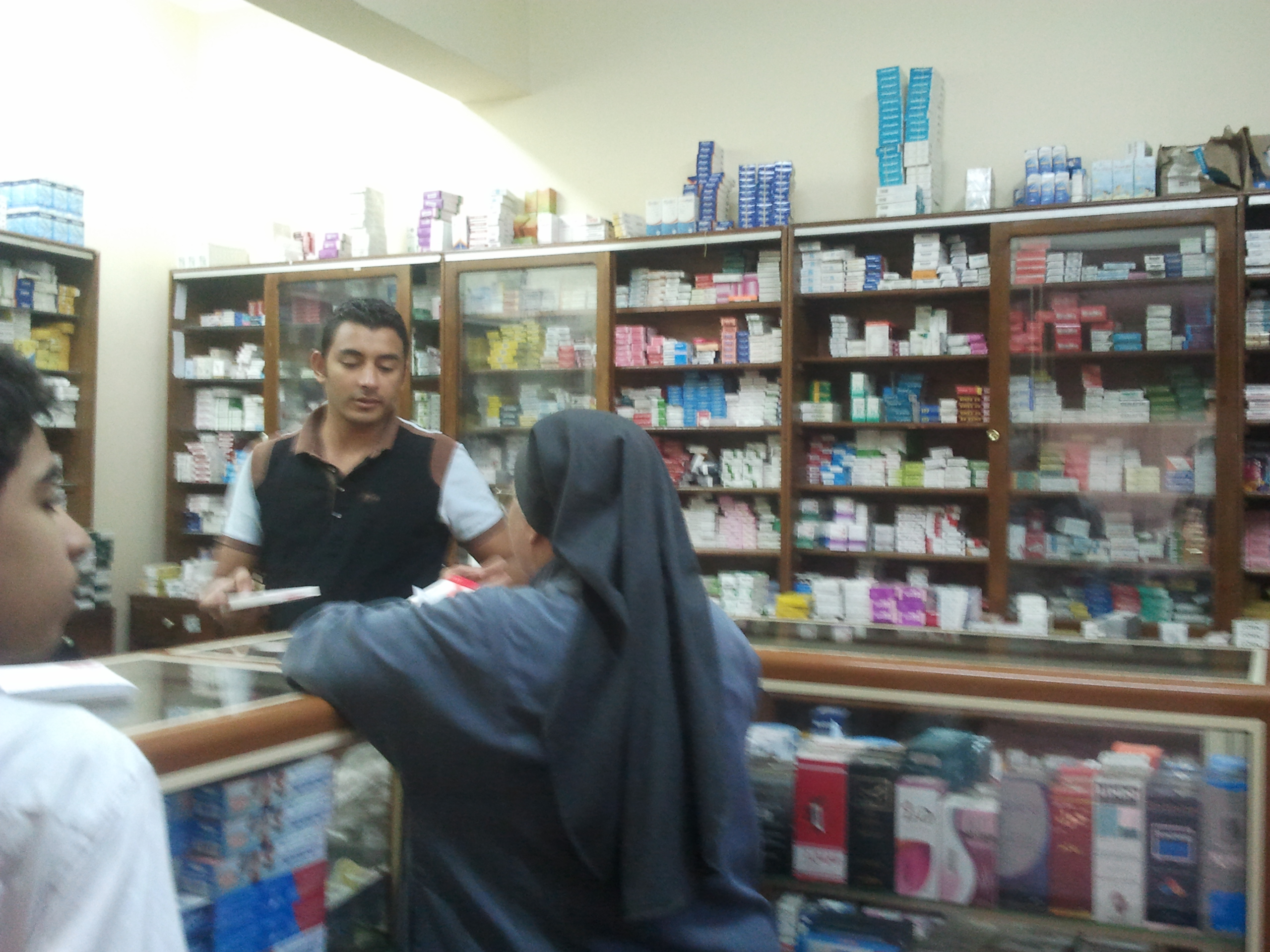
Sr. Marina and Dr. Beshoy take me outdoors to other buildings.  I see a pharmacy.  Someone is buying medication on a Sunday.Hospital pharmacy

Hospital pharmacy

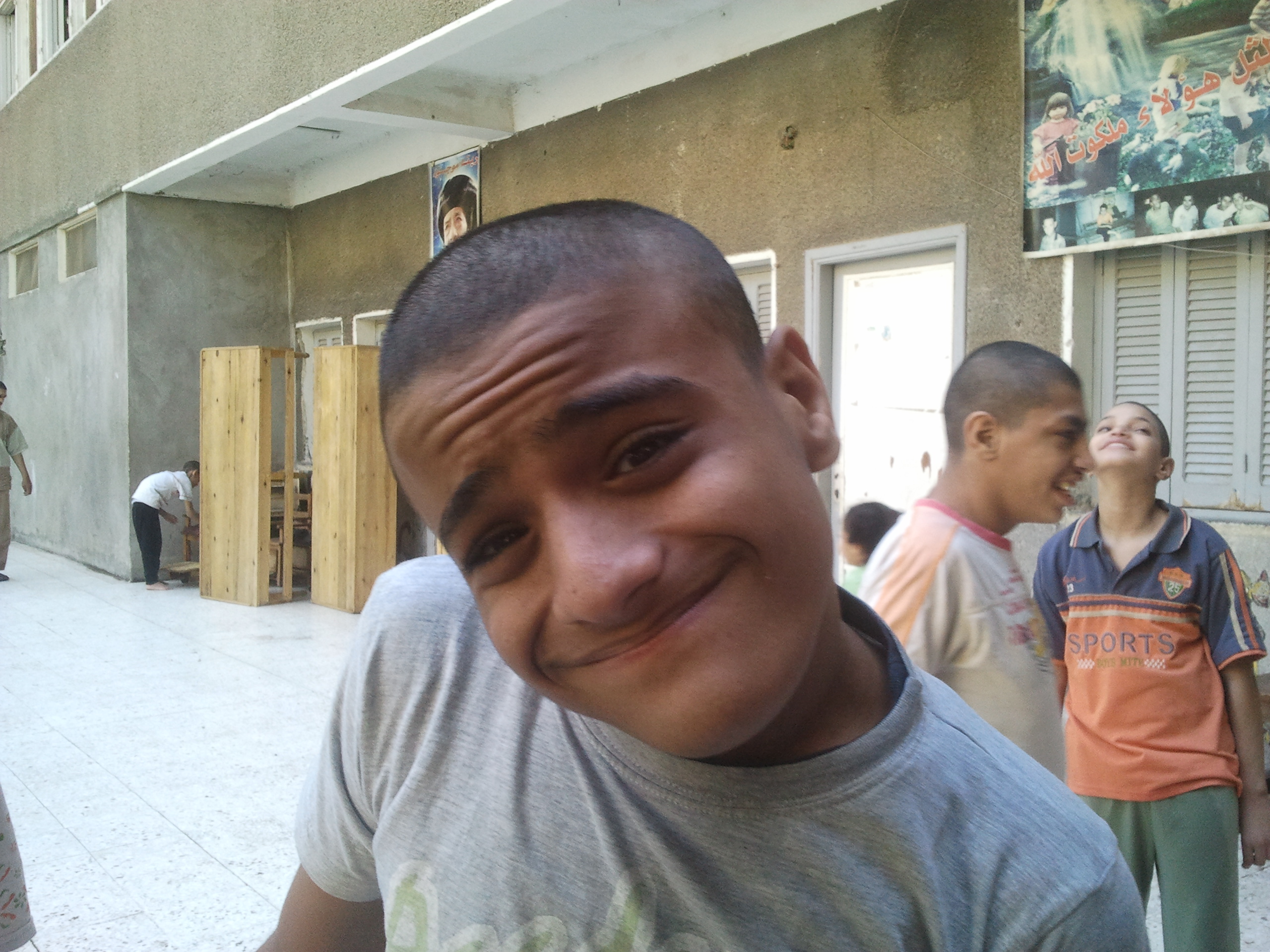
Behind the pharmacy is what looks to be a permanent home for children whose parents are unable to care for them, a sort of orphanage.  These children all appear to me to be mentally retarded.  One boy is obviously microcephalic, for example.   They run to the gate to greet us, and then Dr. Beshoy takes us inside.  They hug us, touch us, hold us by the arms.  They can’t get enough of us!  I begin taking photos of them.  They are enchanted, and each wants to see their photo immediately.

intellectually disabled boy

The pharmacy is at the edge of the compound, and a guard is sitting at a table there, letting people in and out.  I ask about this.  “It’s not very safe here,” says Beshoy.   Indeed.  That’s all I’ve been hearing before my trip.  “About a kilometer from here, some people threw Molotov cocktails into a cathedral and also poured oil on people.  About four were killed.”  I vaguely recall hearing something about this.  “But it’s all safe right now,” he assures me.

guard at the Salam Center

guard at the Salam Center

We greet Sr. Monika, who is instructing some workers working on the granite steps of the church building.  I tell her what Beshoy has told me.  “These workers are Muslims,” she says.  “Most Muslims hate what the extremists do.  Most Muslims like it here.”

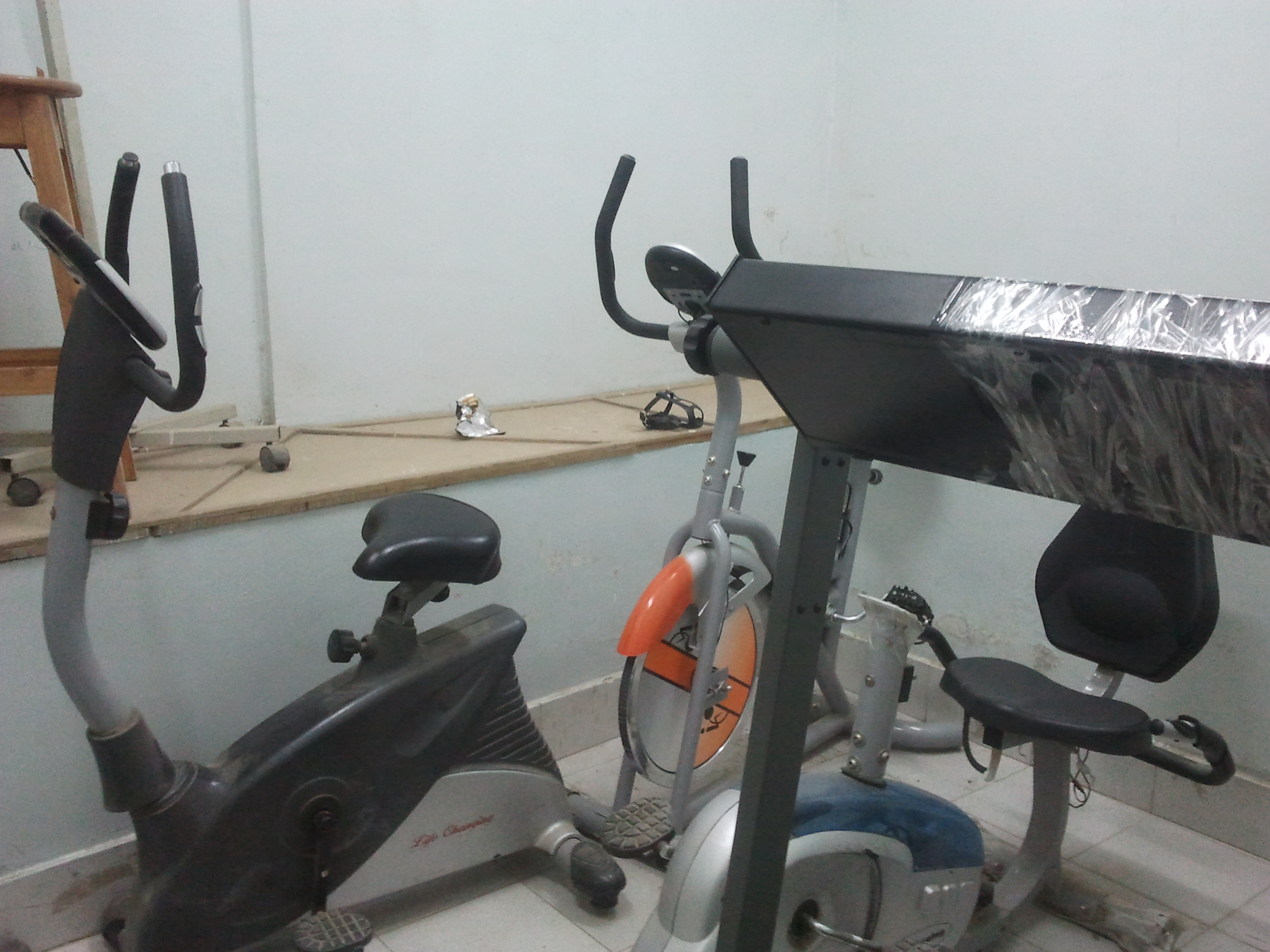
We see the physiotherapy department, tucked into the corner of another building.  It is hard to tell how old the equipment is, but there are machines galore, crammed into a dusty room.  It reminds me of an English lesson I recently taught, where we listened to a discussion on a CD about buying equipment for a company gym.  “We’d better not buy used equipment,” one of the speakers says, “or we’ll have insurance issues.”

 physiotherapy departmentphysiotherapy department

Then we go to the nursery school.  It’s closed today, but the staff are there anyway, cleaning and organizing the school.  “We have both Christian and Muslim children who come here,” the sister who directs the nursery school tells me.  “They all love it here.”

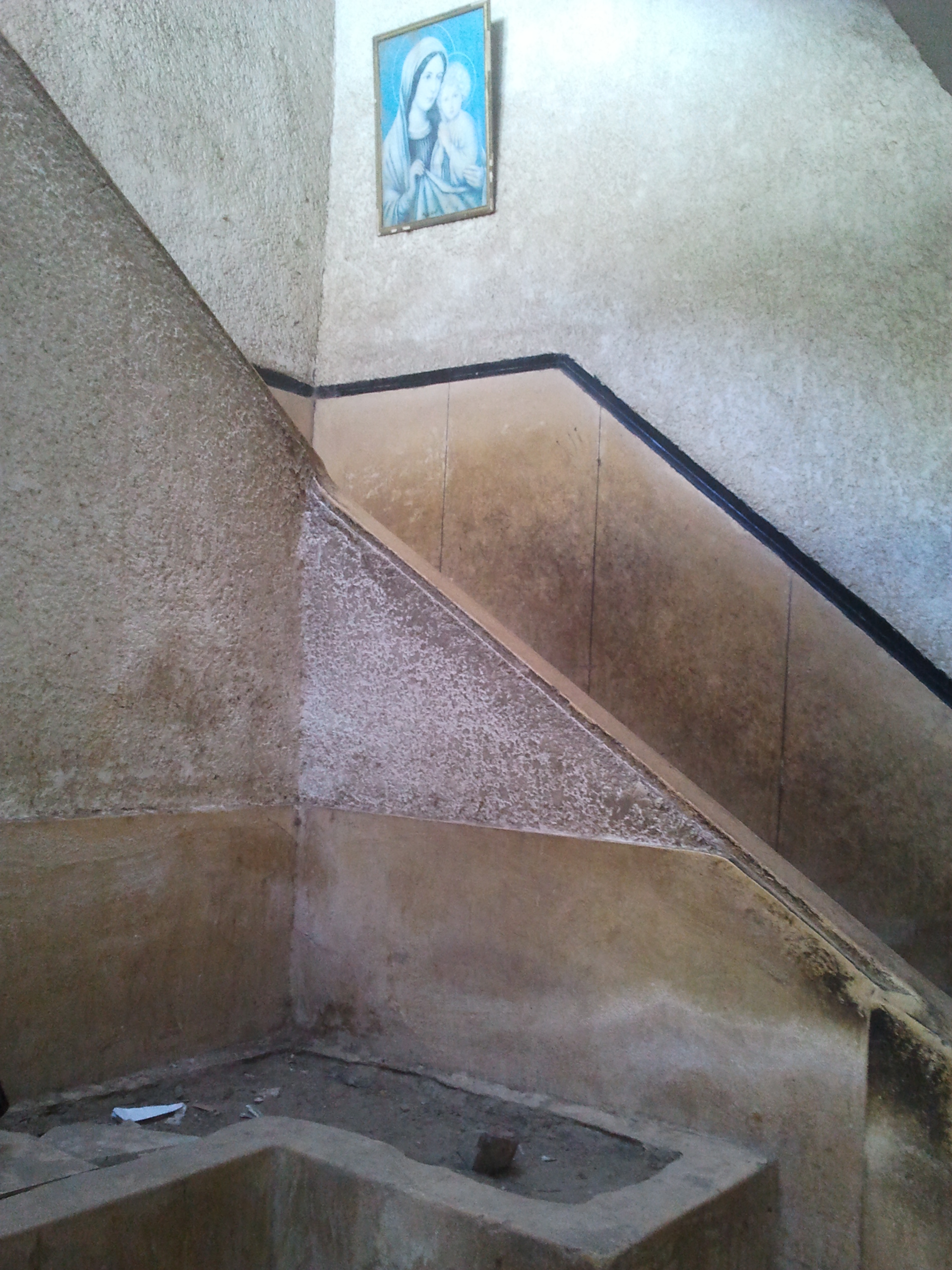
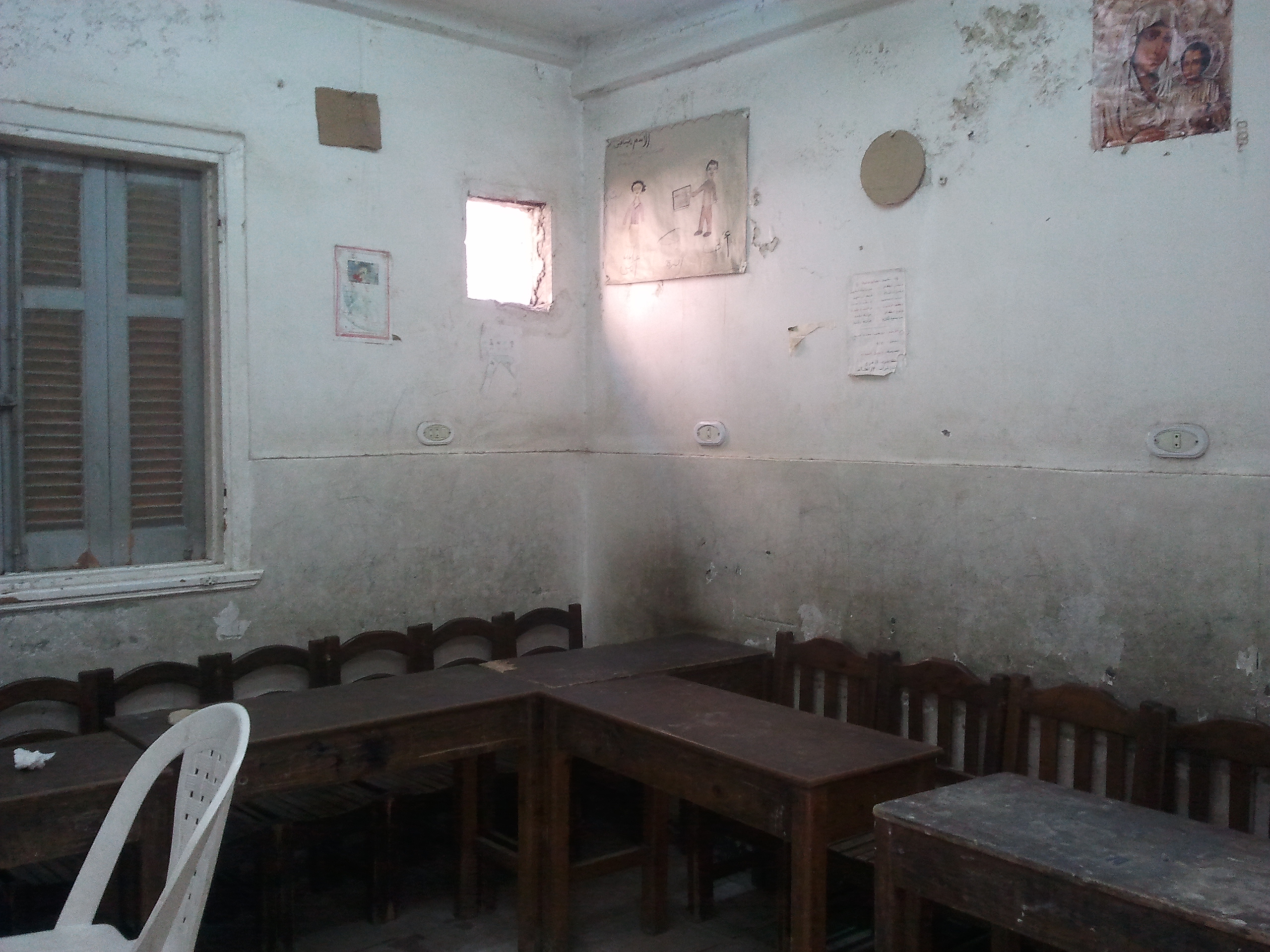
And then I am taken into the former hospital.  Rather than tear it down, which would happen in Germany or anywhere else in the west, they have opted to make use of the space.  The stairs are partially broken through and plaster is crumbling everywhere, but there are plenty of rooms for an after-school program.  There seem to be no insurance issues here.  There are desks for each pupil, sometimes even a blackboard.  I wonder if I will be teaching English in these rooms during the next two weeks.  I have offered to do this.

stairs to the school

stairs to the school

classroom in the old hospital

classroom in the old hospital

I comment on the condition of the building.  “Why tear it down?” says Dr. Beshoy.  “You can see, it works.”

When I return to my room, I find it to be one of the cleanest, most luxurious rooms of the entire center.  But even here, in the bathroom, I have just encountered the biggest cockroach I have ever seen, climbing out of the floor drain.  Ah, well.  I stamp on it and throw the carcass down the toilet.

I hear deafeningly loud music outside, rhythmic, lively, surely not the kind of music Salafists would listen to.  I look out the window.  The gates to the compound are closed.

I spend hours this day in my room, catching up on sleep lost the night before, reading.  What are the sounds I hear?  The call to prayer.  Many times a day.  Children playing, fire crackers popping.  Birds chirping.  Roosters crowing incessantly, day and night.  Car horns beeping, but god only knows where their drivers drive.  I have seen the roads outside.  They are nothing but dirt paths meandering around and through a maze at the feet of a gigantic range of eight-story mountains.  The only things I can see are birds flying, and an occasional child or adult walking to or from the hospital.  I feel pretty safe between these locked gates, but I am also locked in.

Rubies in the Rubbish – Day One

11 Monday Nov 2013

Posted by noreennanz in Uncategorized

≈ Leave a comment

Tags

Cairo, Christianity, Copts, Egypt, pilgrimages, travel

SAMSUNG

Coming back to Cairo always begins in the airport and then continues on the plane.  Today I meet Ellen, an outgoing, attractive granny who looks very un-grandmotherly.  She, like me, is an English teacher.  She tells me she has a mud house in Siwa, a waadi (oasis) in the middle of the Libyan desert.  This oasis, she tells me, is about 30 kilometers long and 8 kilometers wide.  It takes about four hours to get there from Cairo.  Or was it Alexandria?  “It’s easy”, she says.  “There’s a bus that leaves twice a day.  And ask for Ellen.  They’ll find me.”   I think she’s said she paid around €8,000 to the local sheikh for it.  She wanted a house in a warm climate, but couldn’t afford one in Tuscany, so she bought one for a whole lot less in the Egyptian desert.  She’s been living here for about five winters, but her children haven’t yet made it down here for a visit.  “Siwa is perfectly safe,” she tells me.  “It’s inhabited by Berbers, who have nothing to do with these Islamist issues, and they hire guest workers from South Sudan, very peaceful people.”

Each time I’ve been in Egypt (this is the third time), people have expressed admiration for my courage in coming here.  “Are you sure this is wise?”  they ask.  “Don’t you think it’s a bit too dangerous now?”  The other times I was with my husband.  This time I’ll be completely on my own.

They have a point.  This time, Morsi, the first democratically elected prime minister, has been deposed by a military coup, and the Muslim Brotherhood and the Salafists are active in demonstrations, trying to get the power back.  Neither the Brotherhood nor the military is known for their gentle ways.  Recently over 1,000 people were killed in demonstrations.  I don’t intend to get caught in any demonstrations, I say.  But then my husband tells me about areas in Egypt where Islamists are painting, “A Christian lives/works here” on Christian homes and shops owned by Christians.  That sounds a bit off-putting.  Copts being targeted.  I’m going to be living with Coptic nuns for two weeks.

I find two Dutch-speaking women seated next to me on the plane, and we discuss where we’re from and why we’re going to Egypt.  At first they tell me they’re going to travel around Egypt.  Then I learn they are part of a film crew.  They lead me to believe they’re going to film nice places for people to go on vacation.  Then, when I tell them what I’m doing, they tell me they are doing a series on human rights on Dutch television.  They’re on their way to Al Minya, between Cairo and Aswan, where there has been persecution of Christians, particularly Copts.  The subject for this episode is “freedom of religion”.  I’ll be sure to watch it.  They tell me I can find it on the internet under http://www.uitzendinggemistnl, if I click “jij bent sterk”.  Much of the episode will be in English.

I look around the plane.  It’s full of people, and about half of them are Westerners, people with blonde little children, even Americans behind me.  I learn they work at the American University of Cairo.  Either I’m in very good company, or we’re all stark, raving mad.

At the airport, things look the same as ever.  I love this airport, so clean, modern and airy.  It feels almost familiar to be back here.  I know just what to do.  I walk right up to the exchange bank, exchange some Euros for Egyptian pounds and buy a visa sticker for my passport.  I see that the film crew has been sent back to buy a visa.  Even these experts don’t know the ins and outs like I do!

But then, when I leave the customs area, where people come to pick up their friends and loved ones, I find no one to greet me.  No matter, Ellen has become my good friend by now, and she’s friends with half the plane.  She’s just met a nice Egyptian family, Copts, she says, and she introduces them to me.  The wife, when she sees I am not being picked up, offers to phone someone for me.  She reaches Sister Maria, and I know now that for some reason, the person picking me up and I are not in the same place.  Sister Maria tells this woman she will phone my contact person.  A few minutes later, a woman dressed like a nun in a gray habit, holding a placard with my name, rushes over to me.  The Egyptian woman has described my clothing.  I meet Sister Ologaya, who ushers me to a car and a man she introduces as Rohmy.  Either the car, or possibly both the car and the man are Copts, judging from all the pictures of Jesus and all the crosses on the dashboard.

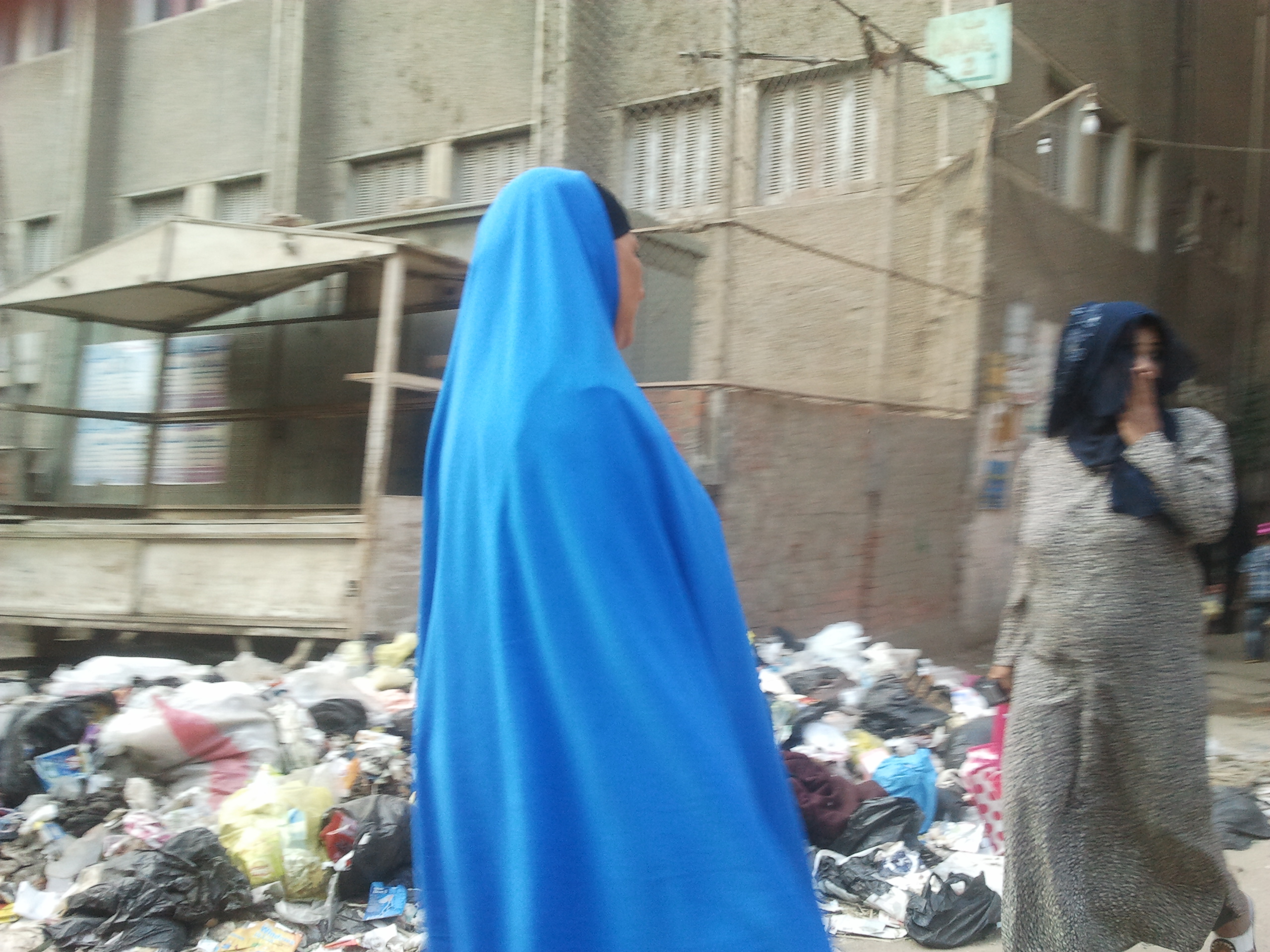
At first, we speed along the freeway.  No traffic jams today.  But then, the road becomes rougher and rougher, reminding me of vacation trips I took as a child with my family into the backwoods.  First a nice freeway, then paved, two-lane state roads, then narrow streets, and finally gravel.  I invariably got sick with asthma attacks after about a half hour of riding on these roads.  Today, the windows in the car are wide open.  We wind through the middle of an outdoor market, around garbage piles, children running, a dog running through a garbage mound, men sawing pieces of wood, women in headdress seated beside roadside stands selling trinkets or fruit, waiting for customers.  We pass a butcher shop with lamb carcasses hanging from the doorway.  I learn that the feast of Abraham being spared from having to offer up his son is still going on.  I thought it was only one day.  No, it runs an entire week.  It’s like having Christmas for an entire week, I hear.  As I sit here in my room typing this, I can hear the calls to prayer, incessant today, intermingling with firecrackers children set off.

I wonder how my lungs will hold out.  At times I smell dust, at others, the sweet scent of fruit, at others, the pungent smell of meat cooking.  My lungs will be fine, I tell myself.  In fact, in the past two months, I have weaned myself off of all asthma medication.  This is an experiment in faith.  I am so sick of being hoarse because of my cortisone inhaler, I want to be free of medication, at least the cortisone, and so I’ve weaned myself off it.  Not many ill effects.  I feel fine.  So I’ve also gone cold turkey with the other, less drastic medication, and felt no effects at all.  My lungs seem to be just fine!  Even after this dust explosion.

I see a building with a sign.  “Coptic Sisters…”  Are we there? I ask.  Yes, we just have to turn the corner, into a sort of gated area.  I’m not sure if I’m in a gated compound, but I know I’m in an area with several buildings, all belonging to the Sisters.  There is even a hospital here.  It is pleasant, as long as you’re not looking for a five-star hotel.  There is plenty of sand and dust here within the compound as well, but there are also palm trees, grass, a walkway with a pergola with flowers and grass on either side, a large vegetable garden, a hospital, and a church with a dining room in it.  First, I meet Sister Marina, who shows me to my room.  Room?  I have the entire floor to myself!  In my room I have a bed, a refrigerator where I can store the apples I brought with me so that I can eat something fresh most days, a table where I can write, and a wardrobe.  I even have a couch, where I can entertain visitors if I get any.  There is a ceiling fan, which Sr. Marina turns on.  It is hot in here, and we’re in the middle of October!

 My room

Sr. Marina’s English isn’t very good, so we don’t talk that much, but she walks me down several flights of stairs.  I see a sort of kiosk outside the building and lots of kids running around, women sitting around, one or two with babies, a man here and there.  I have no idea who these people are or what they are doing here.  I don’t know anything.  Sr. Marina leads me past an entry area to a building – the entry seems to be under construction.  “This is the church,” she says.  I see no sign of a church.  It looks more like an apartment building.  She walks me into a room with two long tables covered with printed plastic tablecloths, and points for me to sit down.”  I have already told her through sign language, waving my arms like wings, and pointing to my mouth, that I ate on the plane and that I am full.  But she says, “A little.”  And brings me a plate, a soup bowl, cutlery, a plate with a ring of rice mixed with vermicelli, a bowl of alphabet noodles and another bowl of what looks like a tomato/green bean soup.  “Eat,” she says.  She brings two pieces of chicken and water.  “Maya,” she explains.  I’m learning Arabic by necessity.  The water and all the food is delicious.

And now I’m on my own, in my room, with the sound of the muezzin and children playing downstairs.  I’m on my own until dinner, which will be served at nine.  In my email correspondence, I have suggested some things to Sister Maria that I could do to help, while here in Cairo.  Very nice, she wrote.  But I haven’t even met Sr. Maria yet.  The sisters are all very nice, but I don’t get the sense, at least on this first day, that they really need me for anything at all.  What will I be doing here?

Welcome back to Egypt, the immigration officer said to me.  I feel very welcome, but what will I be doing for the next two weeks?

Newer posts →

Subscribe

  • Entries (RSS)
  • Comments (RSS)

Archives

  • August 2023
  • August 2022
  • February 2022
  • January 2022
  • December 2021
  • January 2021
  • April 2020
  • March 2020
  • February 2020
  • November 2019
  • October 2019
  • September 2019
  • August 2019
  • July 2019
  • June 2019
  • May 2019
  • April 2019
  • March 2019
  • July 2018
  • April 2018
  • February 2017
  • February 2016
  • July 2015
  • May 2015
  • March 2015
  • December 2013
  • November 2013

Categories

  • Uncategorized

Meta

  • Create account
  • Log in

Create a free website or blog at WordPress.com.

Privacy & Cookies: This site uses cookies. By continuing to use this website, you agree to their use.
To find out more, including how to control cookies, see here: Cookie Policy
  • Subscribe Subscribed
    • Mileage Plus Pilgrim
    • Join 94 other subscribers
    • Already have a WordPress.com account? Log in now.
    • Mileage Plus Pilgrim
    • Subscribe Subscribed
    • Sign up
    • Log in
    • Report this content
    • View site in Reader
    • Manage subscriptions
    • Collapse this bar
 

Loading Comments...